Tools & materials you'll need
Affiliate linksAs an Amazon Associate FixlyGuide earns from qualifying purchases — at no extra cost to you. Prices and availability are accurate as of publication and subject to change.
Quick Answer
If your air conditioner isn't turning on and you've noticed that only one room in your house is getting uncomfortably hot, the initial culprit is often a tripped circuit breaker, a miscalibrated or dead thermostat, or a safety mechanism triggered by a clogged condensate drain line. These issues prevent the entire AC unit from receiving power or operating correctly, leading to localized heating despite other rooms potentially feeling somewhat cooler due to residual effects or independent systems like window units.
The Problem
You're experiencing the classic summer nightmare: your air conditioner isn't kicking on, and to make matters worse, one specific room in your home is noticeably hotter than the rest. This isn't just an inconvenience; it can lead to discomfort, potential damage to sensitive electronics in that room, and the lingering worry of a costly repair. The perplexing part is why only one room feels the brunt of the heat. This symptom often guides us toward electrical supply issues, thermostat malfunctions, or specific safety mechanisms that, when triggered, shut down the entire system but manifest most acutely in areas far from the cooling source or those with poor air circulation.
It's easy to jump to conclusions about refrigerant leaks or compressor failure, but more often than not, the solution is much simpler and can be resolved with a bit of DIY troubleshooting. Understanding the basic components of your AC system and how they interact will empower you to diagnose and potentially fix the issue, saving you time and money.
How It Works
To understand why your AC might not be turning on and affecting only one room, it's helpful to grasp the fundamental operation of a central air conditioning system. Your AC system is primarily composed of two main units: the outdoor condenser unit (housing the compressor, condenser coil, and fan) and the indoor evaporator unit (containing the evaporator coil and blower fan), typically part of your furnace or air handler. These units work in tandem, connected by refrigerant lines and electrical wiring.
When you set your thermostat to a cooling temperature below the ambient room temperature, it sends a low-voltage signal to the control board in your indoor unit. This board, in turn, energizes the blower fan to pull warm indoor air over the cold evaporator coil. The refrigerant inside the coil absorbs heat from the air, changing from a low-pressure liquid to a low-pressure gas. This now-heated refrigerant then travels to the outdoor condenser unit.
The compressor in the outdoor unit pressurizes the gaseous refrigerant, raising its temperature significantly. This hot, high-pressure gas then flows through the condenser coil, where the outdoor fan helps dissipate its heat into the surrounding air. As the refrigerant loses heat, it condenses back into a high-pressure liquid and returns to the indoor unit through an expansion valve, ready to absorb more heat.
Simultaneously, the indoor blower fan pushes the now-cooled air through your home's ductwork system and out through supply registers into various rooms. A crucial component in this cycle is the condensate drain line. As warm, humid air passes over the cold evaporator coil, moisture condenses on the coil's surface – much like a cold glass sweats on a hot day. This condensate drips into a drain pan and flows out through the condensate line, typically exiting outside or into a household drain. Many systems have a safety float switch in the drain pan or along the line. If this line clogs, the water level rises, tripping the switch and shutting down the entire AC system to prevent water damage. This safety mechanism is a common, often overlooked, reason for an AC not turning on.
If one room is hotter, it could be a symptom of restricted airflow to that specific room due to a closed vent, blocked ductwork, or a system-wide shutdown affecting the distribution of cool air unevenly.
Step-by-Step Fix
1. Check the Thermostat — The starting point for any AC issue.
- Verify Settings: Ensure your thermostat is set to 'Cool' mode and the temperature is set at least 5 degrees Fahrenheit below the current room temperature. Sometimes, it's accidentally switched to 'Heat' or 'Fan Only'.
- Power & Batteries: If it's a digital thermostat with a blank or dim display, change the batteries. Even hardwired thermostats can have backup batteries that affect functionality. If it's a smart thermostat, ensure it's connected to Wi-Fi and updated. A dead thermostat means no signal to the AC.
- If this doesn't work: Consider a loose wire connection at the thermostat's backplate (shut off power at the breaker first!), or a faulty thermostat. You can temporarily bypass the thermostat by removing its faceplate and touching the 'R' (power) and 'Y' (cooling) wires together (if your system is conventional, not heat pump). If the AC kicks on, the thermostat is likely the issue.
2. Inspect the Circuit Breaker — Your AC's main power switch.
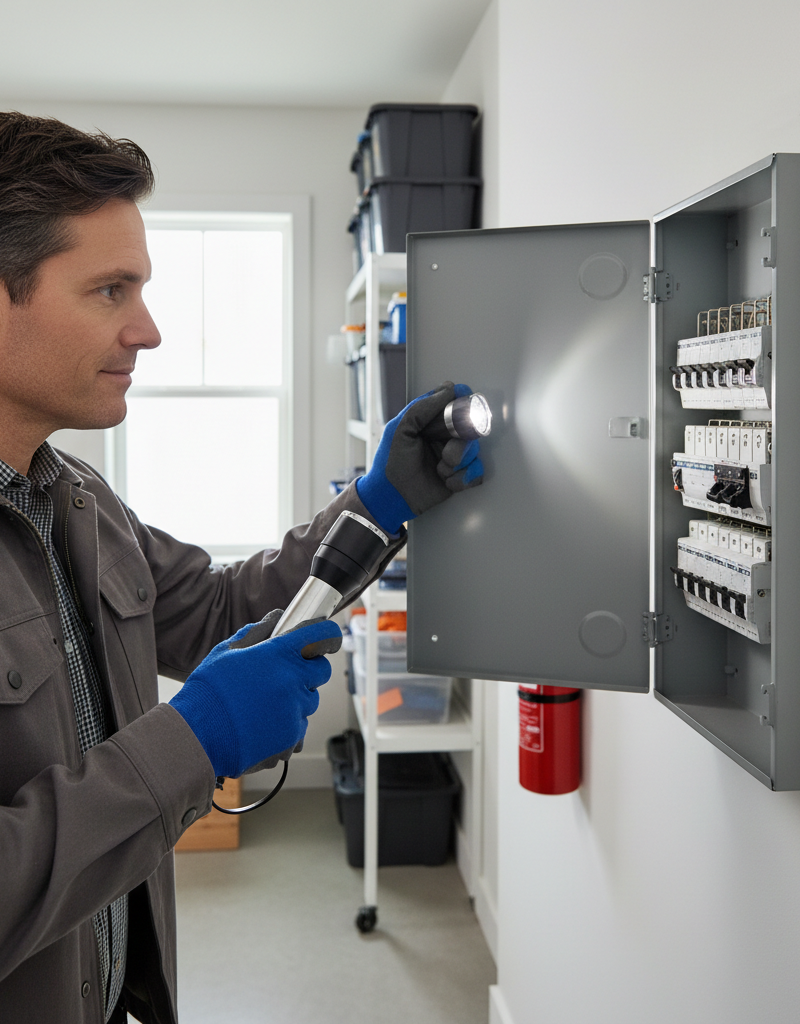
- Locate Breaker Panel: Find your home's electrical service panel, usually in a basement, garage, or utility closet.
- Identify AC Breaker(s): Look for breakers labeled 'AC', 'Furnace', 'Air Handler', or 'Compressor'. Central AC units typically have two breakers: one for the outdoor unit (often a large 2-pole 30-60 amp breaker) and one for the indoor furnace/air handler (a smaller 15-30 amp breaker). Sometimes these are separate.
- Reset Tripped Breakers: If any of these breakers are in the 'tripped' position (usually halfway between 'On' and 'Off'), firmly push them to 'Off' and then back to 'On'. A tripped breaker cuts power, preventing the AC from starting. A breaker can trip due to an electrical surge, an overloaded circuit, or a short circuit in the AC unit.
- Wait & Listen: After resetting, wait 5-10 minutes before expecting the AC to come on. Many units have a built-in delay to protect the compressor.
- If it trips again immediately: This indicates a significant electrical short or overload within the AC unit. STOP here and call a licensed HVAC technician. Repeatedly resetting a tripping breaker is dangerous.
3. Check the Condensate Drain Line & Float Switch — A common, overlooked safety shutdown.
- Locate Indoor Unit: Find your indoor air handler or furnace. You'll see a white or clear PVC pipe draining away from the evaporator coil's drain pan.
- Inspect for Clogs: Look for standing water in the drain pan. If the pan is full, the drain line is likely clogged. Algae, mold, and sludge are common culprits. The safety float switch (a small device often in the drain pan or inline with the pipe) will rise with the water level, shutting off the AC.
- Clear the Clog: You can often clear a minor clog by pouring a cup of distilled vinegar (do NOT use bleach as it can damage the coil) down the access port of the drain line (usually a T-shaped vent cap). Let it sit for 30 minutes, then flush with water. A wet/dry vac can also be used to suction the clog out from the exterior drain exit. Ensure the pan is empty before attempting to restart the AC.
- Reset Float Switch: After clearing, ensure the float switch is in the 'down' position. Some systems have a manual reset button near the drain pan or on the unit's control board.
- If it regularly clogs: This indicates a persistent algae problem. Regular pouring of vinegar (monthly during cooling season) can help prevent future clogs.
4. Examine the Outdoor Disconnect Switch — A local cutoff for the outdoor unit.
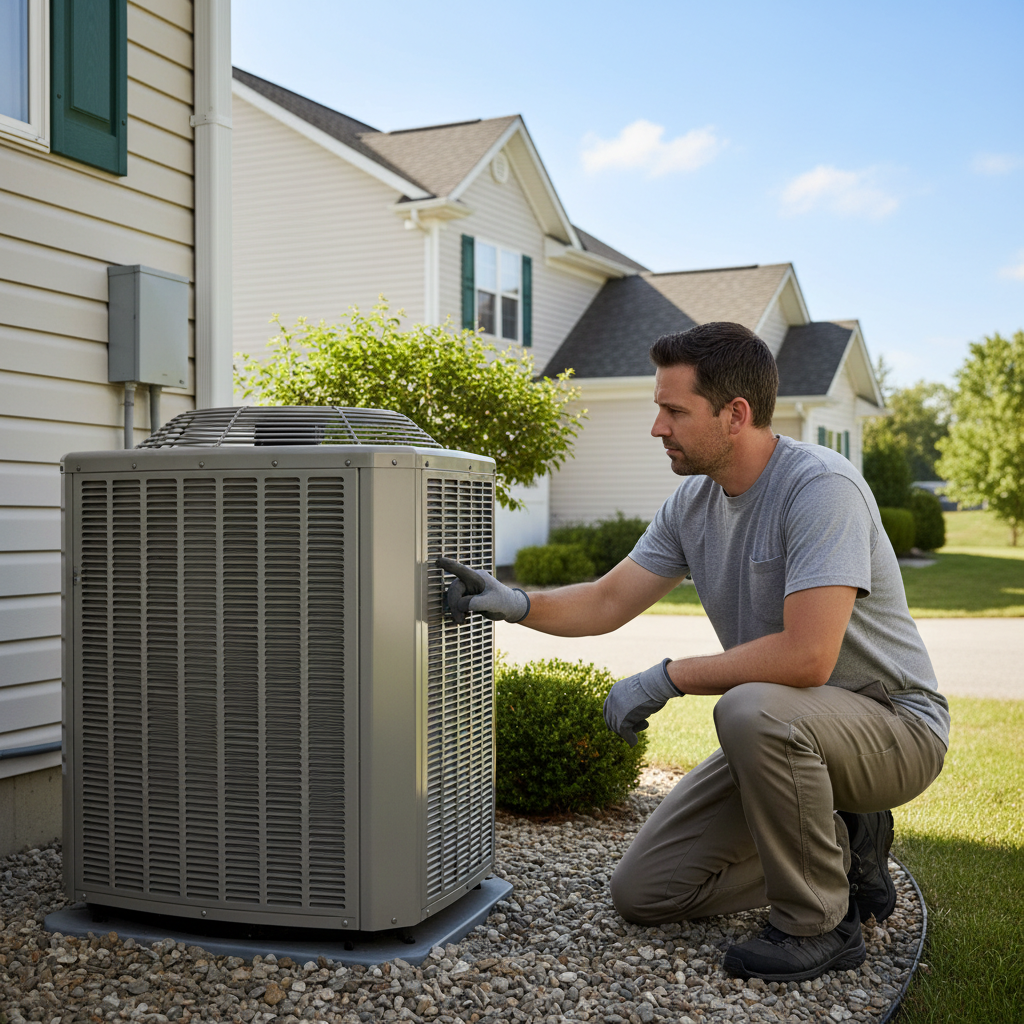
- Locate Disconnect: Near your outdoor condenser unit, you'll find a small gray or metal box mounted on the wall. This is the electrical disconnect switch.
- Check Position: Open the cover and ensure the switch or handle inside is in the 'On' position. Sometimes, it's accidentally flipped 'Off' during yard work or if someone was servicing another outdoor appliance.
- If it's off: Simply flip it back to 'On'. This provides power directly to the outdoor compressor and fan.
5. Inspect the Outdoor Unit's Contactor — The 'start button' for your compressor.
- SAFETY FIRST: Turn OFF the power to the outdoor unit BEFORE opening any panels. The disconnect switch is essential here.
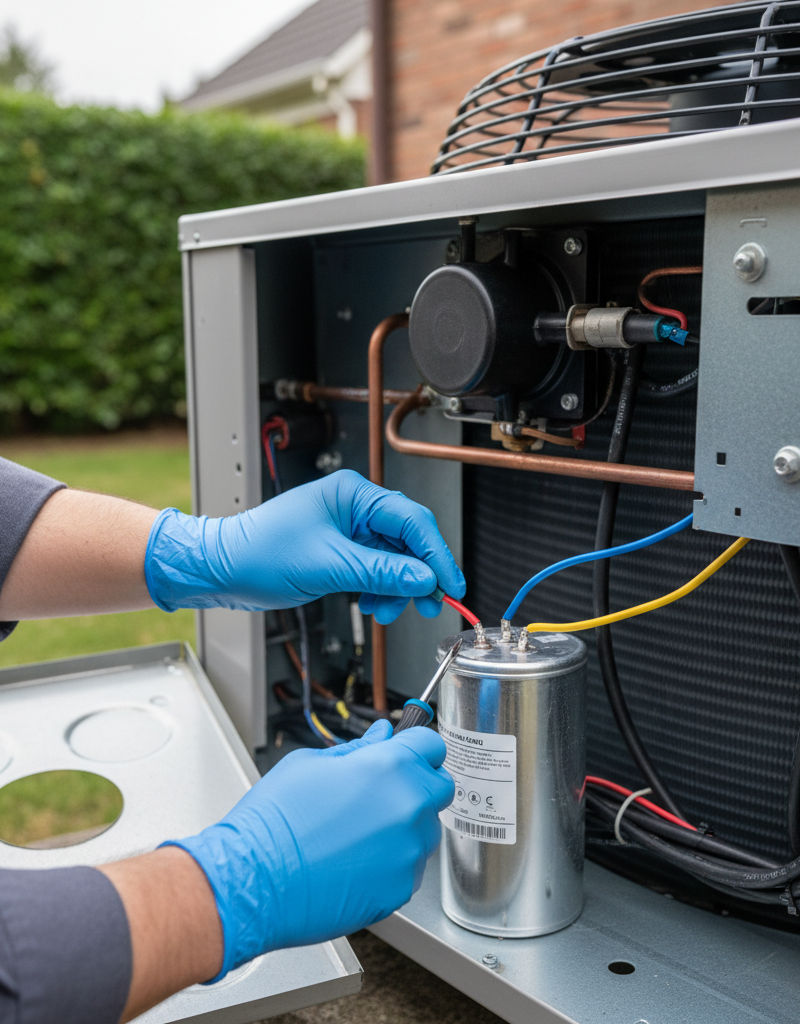
- Locate Contactor: Remove the access panel on the outdoor unit (usually the one protecting the electrical components). The contactor is a small, rectangular component with thick wires connected to it, featuring a small plunger or button in the center.
- Check for Issues: Look for burn marks, pitting, or debris on the contactor. Gently (and safely, with power OFF) push the plunger in. It should move freely. If it's stuck or doesn't spring back, it might be faulty and preventing the compressor from starting.
- If it's faulty: While you can technically replace a contactor yourself, it involves high voltage wiring. It's best to call an HVAC professional for this component.
6. Check Airflow at Vents in the Hot Room — A simple common sense check.
- Open Vents Fully: Go to the hot room and ensure all supply registers (vents where cool air comes out) are fully open. Sometimes they are inadvertently closed or blocked by furniture.
- Clear Blockages: Make sure no furniture, rugs, or curtains are obstructing the airflow from the vents.
- Return Air Vents: Also, ensure the return air vents (the larger grilles where air is pulled back into the system) in the house are not blocked. Restricted return air can starve the system, leading to inefficient cooling or even system shutdown.
Common Causes
- Tripped Circuit Breaker: The most common culprit. Overloads or minor electrical glitches can trip the breaker, cutting power to the AC. This can sometimes be exacerbated if the AC is older and drawing more current, or if other high-draw appliances are on the same circuit (less common for dedicated AC circuits but can happen with indoor fan breakers).
- Faulty Thermostat: A dead battery, incorrect settings, or internal wiring issues can prevent the thermostat from sending the 'cooling' signal to the AC system.
- Clogged Condensate Drain Line: Algae and sludge naturally build up in the drain line. When it clogs, the overflow safety switch activates, shutting down the entire AC system to prevent water damage indoors.
- Blown Fuse in disconnect box: Less common than a tripped breaker, but fuses can blow in the outdoor disconnect box, especially during power surges.
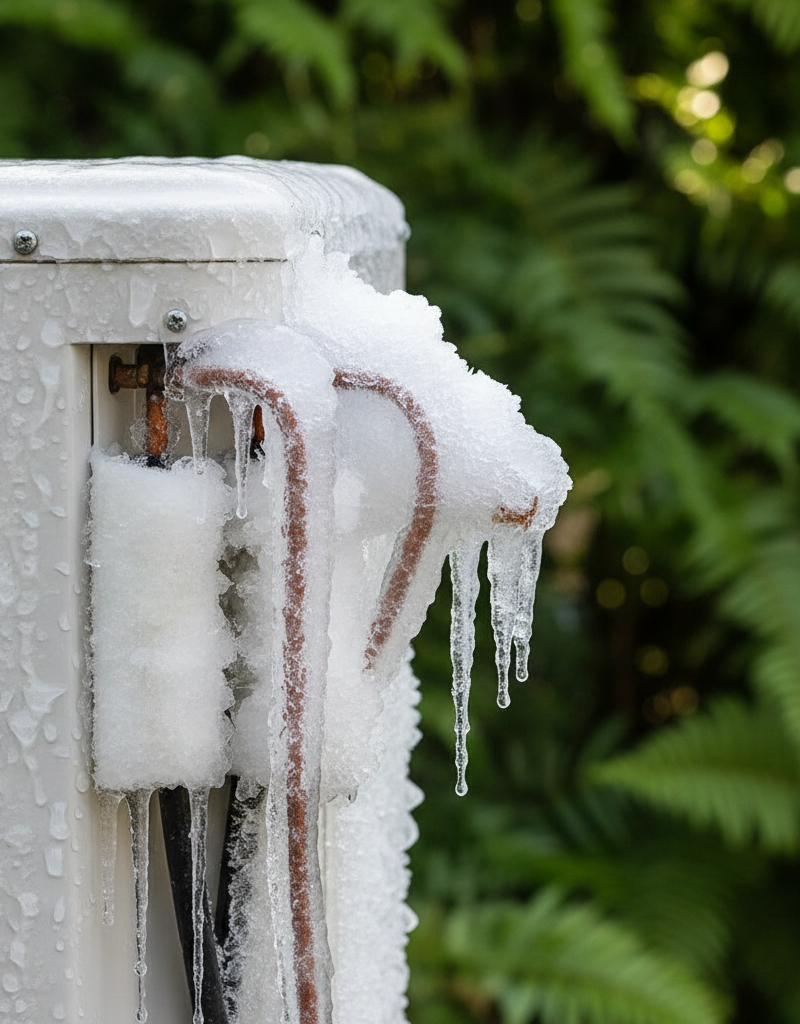
- Dirty Air Filter: While it rarely causes a complete shutdown, a severely clogged air filter drastically restricts airflow, leading to reduced cooling capacity and potentially causing the evaporator coil to freeze up. A frozen coil will prevent effective cooling and can lead to a system shutdown.
- Run Capacitor Failure: The run capacitor in the outdoor unit provides an electrical
Related Articles
Keep troubleshooting with these hand-picked guides from FixlyGuide:
- The #1 Mistake Homeowners Make When Their AC Won't Turn On (And the Easy Fix) — Learn the most common oversight homeowners make when their AC won't turn on and how to troubleshoot basic issues to restore cooling.
- The #1 Mistake Homeowners Make When Their AC Won't Turn On (And the Easy Fix) — Learn the most common reason your air conditioner won't turn on and how to diagnose and fix it with simple steps.
- The #1 Reason Your AC Blows Warm Air (And It's Not What You Think) — A dirty air filter is often the overlooked culprit behind an air conditioner blowing warm air, hindering its ability to cool your home effi…
- The Hidden Reason Your AC Freezes — And Why Most Homeowners Get It Wrong — Discover the surprising truth behind why your outdoor AC unit is freezing up and the common mistake homeowners make when trying to fix it.
- Why Your Thermostat Lies: The Real Reason Your Home Won't Hit the Set Temperature — Discover why your thermostat struggles to reach the set temperature and learn actionable steps to diagnose and fix common HVAC issues.
- Why Does Only One Room Have Flickering Lights? The Real Culprit — Flickering lights in a single room often point to a loose connection, a faulty bulb, or an overloaded circuit, rather than a whole-house el…
Frequently asked questions
Why would my AC not turn on but the fan works?+
If your AC fan runs but the compressor (outdoor unit) doesn't engage, it often points to an issue with the run capacitor, the contactor, or low refrigerant levels. The fan runs off a separate circuit, so its operation doesn't guarantee the cooling cycle is functional.
What's the first thing to check if my AC won't turn on?+
Always start with the thermostat. Ensure it's set to 'Cool,' the temperature is low enough, and the batteries are fresh. Then, check your home's circuit breaker panel for any tripped breakers related to the AC or furnace.
Can a clogged drain line really stop my entire AC?+
Yes, absolutely. Most modern AC systems have a safety float switch in the condensate drain pan or line. If the line clogs and water backs up, this switch will trip, shutting down the entire AC system to prevent costly water damage. Clearing the clog will usually allow the system to restart.
How often should I clean my AC drain line?+
It's recommended to clean your AC condensate drain line at least once per cooling season, ideally in the spring before heavy use begins. If you live in a humid climate or have experienced prior clogs, consider cleaning it every 3-4 months during the cooling season using diluted vinegar.
Discussion
Loading comments…