
Tools & materials you'll need
Affiliate linksAs an Amazon Associate FixlyGuide earns from qualifying purchases — at no extra cost to you. Prices and availability are accurate as of publication and subject to change.
Quick Answer
A sticky interior door is a common household nuisance, often caused by changes in humidity, a shifting house, or simply loose hardware. The good news is, most sticking door issues can be resolved quickly and easily by a homeowner with basic tools. Your first steps should always involve checking and tightening hinge screws, as this often remedies the problem. If that doesn't work, identifying where the door is binding against the frame will guide you to either adjust the hinges or judiciously sand down the problem area.
The Problem
You push your interior door open, and it scrapes or grinds against the frame or the floor, making an annoying sound and requiring extra effort. Perhaps it only sticks in the summer months, or maybe it's a year-round battle. This isn't just an irritation; constant friction can damage the door's finish, wear down the frame, and even make it difficult to open or close securely. Over time, ignored sticking can lead to more significant damage to the door or its frame, requiring more extensive and costly repairs.
How It Works
To understand why a door sticks, it helps to understand its components and how they interact. A typical interior door consists of the door slab itself, the door frame (jamb, stops, and casing), hinges, and a latch mechanism. The door hangs on two or three hinges, allowing it to pivot smoothly within the frame opening. The critical element here is the 'reveal' – the small, consistent gap (typically 1/8 inch or 3mm) around all sides of the door slab and the frame. This reveal allows the door to open and close freely without friction.
Wood, being a hygroscopic material, absorbs and releases moisture from the air. When humidity is high, wood swells; when it's low, wood shrinks. This natural expansion and contraction, especially prevalent in older homes or homes without consistent climate control, is a primary culprit for sticking doors. A door that fits perfectly in the dry winter might swell and bind in the humid summer. Beyond humidity, houses settle over time. Slight shifts in the foundation or structural framing can cause the door frame to become out of square, altering the reveal and causing the door to bind. Even issues as simple as loose hinge screws or a poorly installed strike plate can throw the door off-kilter. The hinges themselves are crucial; they are designed to hold the door firmly in place. If the screws loosen, or if a hinge leaf bends, the door will sag or shift, leading to friction against the jamb or header.
Step-by-Step Fix
Before you start, gather your tools. Clear the area around the door to give yourself plenty of working space.
-
Diagnose the Sticking Point — Identify where the door binds.
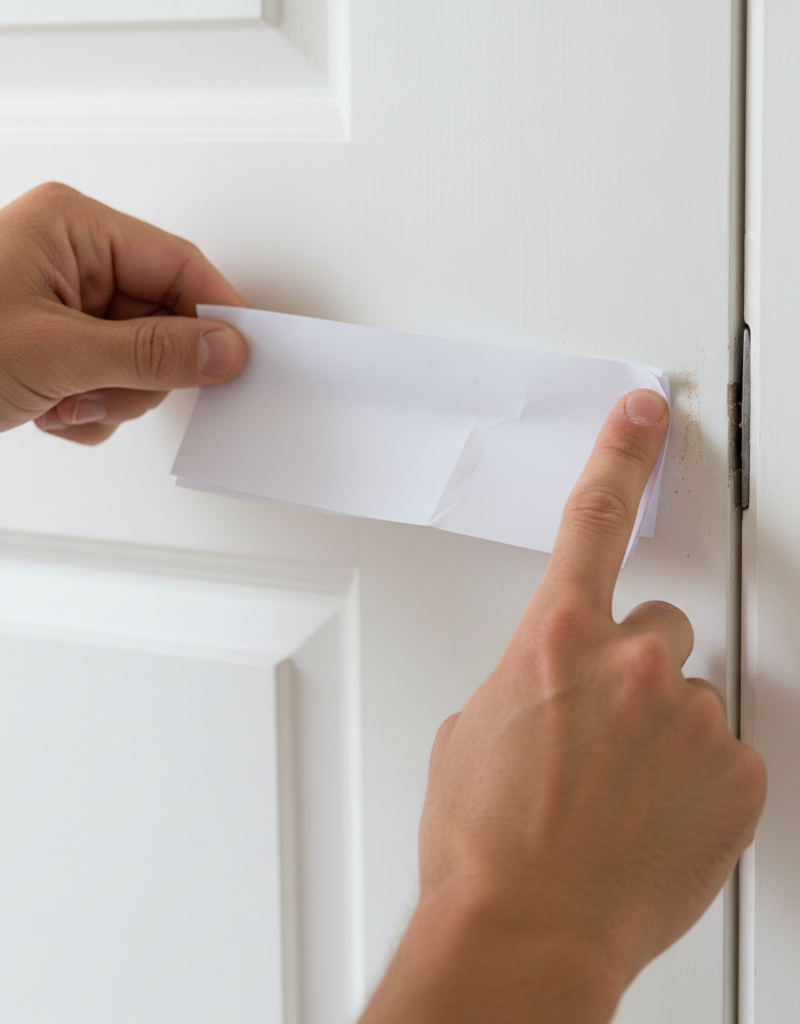
- Open and close the door slowly several times. Pay close attention to where it makes contact with the frame or the floor. Is it the top corner, the side jamb, or the bottom edge? Listen for scrapes and look for scuff marks or worn paint. You can often see shiny spots on the door or frame where it's rubbing. If you're unsure, try sliding a piece of paper or a thin business card around the door's edge while it's closed – it will get stuck where the door is binding.
- Safety Note: Be mindful of pinch points when operating the door.
-
Check Hinge Screws — Tighten any loose screws.
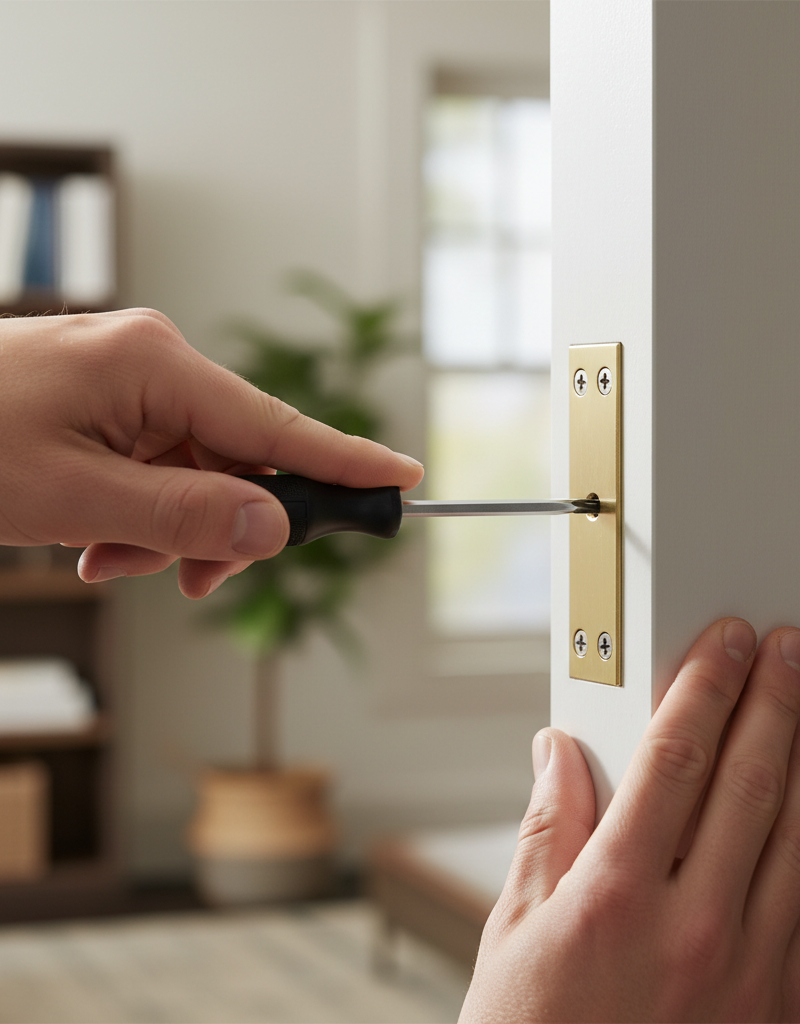
- Open the door wide to access both hinge leaves. Use a Phillips head screwdriver (or appropriate bit for power drill) to firmly tighten all screws on both the door side and the frame side of each hinge. Sometimes, older screws can be stripped and won't tighten. If this happens, remove the stripped screw, insert a wooden toothpick or two (or a glue-coated wooden golf tee) into the hole, break it off flush, and reinsert the screw. The wood filler will give the screw new purchase. Alternatively, replace stripped screws with longer, slightly thicker screws (e.g., 2.5-inch screws for the frame side to bite into the stud).
- If this doesn't work: Proceed to the next step.
-
Adjust Hinges (Shimming) — Use shims to reposition the door.
- If the door is binding on the latch side (the side opposite the hinges), the hinges might be too far recessed, or the frame has shifted. To pull the door closer to the hinge side, you can shim out the hinge. For the top hinge, remove a few screws from the frame side of the hinge. Carefully tap a thin cardboard shim (like from a cereal box) or a plastic shimming washer behind the hinge leaf, then re-tighten the screws. This pushes the door slightly away from the hinge jamb at the top. You might need to experiment with one or two shims per hinge.
- To push the door further into the frame (if it's binding on the hinge side), you can try driving one of the innermost hinge screws deeper into the stud behind the jamb. Sometimes, replacing a standard 3/4-inch hinge screw with a 2.5-3 inch screw will pull the jamb slightly inward, pulling the door with it.
- If this doesn't work: The binding might be more significant, requiring sanding.
-
Determine Binding Location for Sanding — Mark the exact area to remove material from.
- If tightening and shimming don't resolve the issue, you'll need to remove material from the door itself or the frame. Close the door as far as it will go and mark clearly with a pencil or chalk where the door is touching the frame or floor. If it's a side or top bind, look for scuff marks. If it's the bottom, you'll see wear on the threshold or floor.
-
Remove the Door (if necessary) — Carefully lift the door off its hinges.
- For significant sanding or planing, it's best to remove the door. With another person, use a hammer and a nail punch (or a large nail) to tap the hinge pins upwards from the bottom of each hinge. Remove all pins. Have your assistant steady the door as you remove the last pin, then lift the door straight up and off its hinges. Place it on sawhorses or a protected flat surface.
- Safety Note: Doors are heavy. Always get assistance to avoid injury or damage. Be careful not to pinch fingers.
-
Sand the Binding Area — Remove small amounts of wood evenly.
- For side or top binds: Use 80-100 grit sandpaper on a sanding block (for flat areas) or a power sander (carefully, for larger areas) to remove material from the marked spot. Sand with the grain of the wood. Periodically test-fit the door to avoid over-sanding. For minor binds, you might be able to sand the very edge of the door without removing it, though this is messier and less precise. Feather the edges so the sanded area blends in well.
- For bottom binds: If the door scrapes the floor or threshold, use a belt sander or a hand plane to remove material evenly from the bottom edge. Measure carefully and make small, even passes. Remember, you can always remove more material, but you can't put it back.
- If this doesn't work: If significant material needs to be removed, consider a hand plane or professional help.
-
Rehang the Door (if removed) — Align hinges and insert pins.
- With your assistant, carefully align the hinge leaves on the door with the hinge leaves on the frame. Insert the hinge pins, tapping them gently down with a hammer until fully seated. Test the door's operation.
-
Refinish the Sanded Area — Protect the exposed wood.
- Once the door operates smoothly, lightly sand the entire door's edge with 180-220 grit sandpaper for a smooth finish. Clean off all dust. Then, apply primer and paint to match the existing finish. This protects the exposed wood from future moisture damage and ensures a uniform appearance.
Common Causes
- Humidity Fluctuations: This is the #1 cause. Wood absorbs moisture and swells during high humidity, causing the door to expand and bind in the frame. In drier conditions, the wood shrinks, often resolving the issue or causing new gaps.
- Loose Hinge Screws: Over time, the constant movement of opening and closing a door can loosen the screws holding the hinges to the door or the frame. Even a millimeter of play can cause the door to sag and bind.
- House Settling: All homes settle to some degree. This settling can cause door frames to become out of square (racked), leading to binding at the top latch-side corner or along the vertical jamb.
- Foundation Issues: More severe settling or foundation problems can lead to significant shifts in door frames, causing persistent and worsening sticking. This often comes with other signs like wall cracks.
- Improper Installation: A door that was never properly hung in the first place might have insufficient reveal, leading to sticking from day one.
- Excessive Paint/Finish: Sometimes, too many layers of paint or thick finish on the door's edges or the frame can build up, effectively reducing the reveal and causing binding.
Common Mistakes
- Ignoring Loose Hinges: Often, homeowners jump straight to sanding when merely tightening hinge screws would solve the problem. Always check hinges first.
- Over-Sanding: It's tempting to take off a lot of material at once, but you can't put it back. Remove small amounts and test frequently. A little goes a long way.
- Sanding Without Proper Diagnosis: Don't just randomly sand an edge. Pinpoint the exact binding location to avoid unnecessary work and potential damage.
- Forgetting to Refinish: Leaving sanded, unfinished wood exposed will make it more susceptible to moisture absorption, leading to the same sticking problem (or worse) in the future.
- Using the Wrong Tools: Attempting to pry or force the door can cause damage to the door, frame, or hinges. Use appropriate tools for adjustments and material removal.
- Attempting Major Frame Adjustments: If the frame itself is significantly out of square due to structural issues, attempting a DIY fix without addressing the underlying cause will be a temporary solution at best and could worsen the problem.
Cost & Time Breakdown
| Task | DIY Cost | Pro Cost | Time |
|---|---|---|---|
| Tighten Hinge Screws | $0–$5 | $50–$100 | 5–15 minutes |
| Shim Hinges | $0–$10 | $75–$150 | 15–30 minutes |
| Sand Door Edge (minor) | $5–$20 | $100–$200 | 30–60 minutes |
| Sand Door (removed, repainted) | $20–$50 | $150–$300+ | 1–3 hours |
| Replace Hinges | $10–$30 | $100–$200 | 30–60 minutes |
Tips & Prevention
- Maintain Consistent Humidity: Using a dehumidifier in humid environments (like basements or during summer months) or a humidifier in very dry conditions can help stabilize the wood moisture content of your doors and reduce warping. Aim for relative humidity between 40-50%.
- Regular Hinge Checks: Periodically (e.g., bi-annually during spring and fall cleaning) inspect your door hinges and tighten any loose screws before they become a major issue. This is a quick preventative measure that takes minutes.
- Lubricate Hinges: Apply a small amount of silicone spray lubricant, WD-40, or even a few drops of household oil to hinge pins if they squeak. This won't fix sticking due to binding, but it ensures smooth operation.
- Proper Painting Technique: When painting doors, avoid thick coats on the edges. Paint thin, even layers and allow them to dry completely between coats. Also, be careful not to paint hinges or fill hinge screw holes, which can impede future adjustments.
- Check for Foundation Issues: If multiple doors throughout your home are sticking, or if you notice other signs like cracks in walls or ceilings, it might indicate a more serious foundation issue. Address these promptly with a professional.
- Consider Door Type: Hollow-core doors are generally less susceptible to warping than solid wood doors, but can still swell. Solid wood doors, while durable, are more prone to humidity-related expansion and contraction.
When to Call a Professional
While many sticking door issues are DIY-friendly, there are times when calling a professional carpenter or handyman is the smartest choice. If you've tightened all screws, attempted shimming, and carefully sanded but the door still binds, the problem might be more complex than you can handle. This is especially true if the door frame itself appears significantly out of square, cracked, or damaged. If the sticky door is just one symptom among many, such as widespread sticking doors, new cracks in walls, or uneven floors, you may have a foundation issue that requires an expert. A structural engineer or foundation specialist can properly diagnose and recommend repairs for underlying structural problems. Additionally, if the door is an expensive or custom solid wood door, and you're hesitant to sand or plane it yourself, a professional can often make precise adjustments without risking damage to a valuable asset, ensuring the door maintains its integrity and appearance. They have specialized tools and experience to plane or shave doors with precision, often without needing to remove the door from its hinges completely.
Related Articles
Keep troubleshooting with these hand-picked guides from FixlyGuide:
- The Surprising Reason Your Interior Door Sticks (It's Not Always Humidity) — Before you blame humidity, learn the common culprits behind a sticking interior door and how to fix them with simple DIY steps.
- The Secret Reason Your Interior Door Sticks (It's Not Always Humidity) — Before you blame humidity, learn the true culprits behind a sticky interior door and how to fix them with simple DIY steps.
- The 3 Hidden Reasons Your Door Won't Latch (And the Easy Fixes) — Discover the surprising reasons your interior door isn't latching and how to quickly diagnose and fix the issue with simple tools.
- The Secret Reason Your Interior Door Sticks (It's Not Always Humidity) — Before you blame humidity, learn the less obvious culprits behind a sticking interior door and how to fix it with simple steps.
- The 3 Hidden Reasons Your Door Won't Latch (And the Easy DIY Fixes) — Frustrated by a door that refuses to latch? Discover the common culprits behind this annoying problem and learn simple, effective DIY fixes…
- The 3 Hidden Reasons Your Gas Burner Won't Light (Beyond a Clog) — Before you call a technician, discover the most common culprits behind a gas stove burner that refuses to ignite and learn how to fix them…
Get the print-ready PDF of this guide
A clean, ad-free, printable version you can keep on your phone or pin to the workshop wall. We'll also send occasional weekly tips matched to your home situation.
- Print-optimized layout
- Tools, materials & every step included
- Unsubscribe anytime
Frequently asked questions
Why does my door only stick in the summer?+
Doors, especially those made of wood, absorb moisture from the air. In the humid summer months, the wood expands, causing the door slab to swell and bind against the door frame. As humidity decreases in drier seasons, the wood shrinks, and the sticking often resolves itself.
Can I fix a sticking door without removing it?+
For many common issues like loose hinges or minor binding, yes. Tightening hinge screws, shimming hinges, or even light sanding of the door's edge can often be done with the door in place. However, for significant material removal or precise planing, it's usually best and safer to remove the door.
What tools do I need to fix a sticky door?+
Typically, you'll need a Phillips head screwdriver, a hammer, a nail punch (or large nail) for hinge pins, thin cardboard or plastic shims, 80-100 grit sandpaper with a sanding block, a pencil, and potentially a hand plane or belt sander for more significant material removal. Safety glasses are also recommended.

Discussion
Loading comments…