Tools & materials you'll need
Affiliate linksAs an Amazon Associate FixlyGuide earns from qualifying purchases — at no extra cost to you. Prices and availability are accurate as of publication and subject to change.
Quick Answer
Overseeding is the process of spreading new grass seed over an existing lawn to improve its density and appearance. This vital lawn care practice can transform a sparse, weak lawn into a vibrant, thick carpet of green. The key to successful overseeding lies in proper soil preparation, choosing the right seed, and diligent post-seeding care, particularly consistent watering, to encourage germination and establishment of the new grass.
The Problem
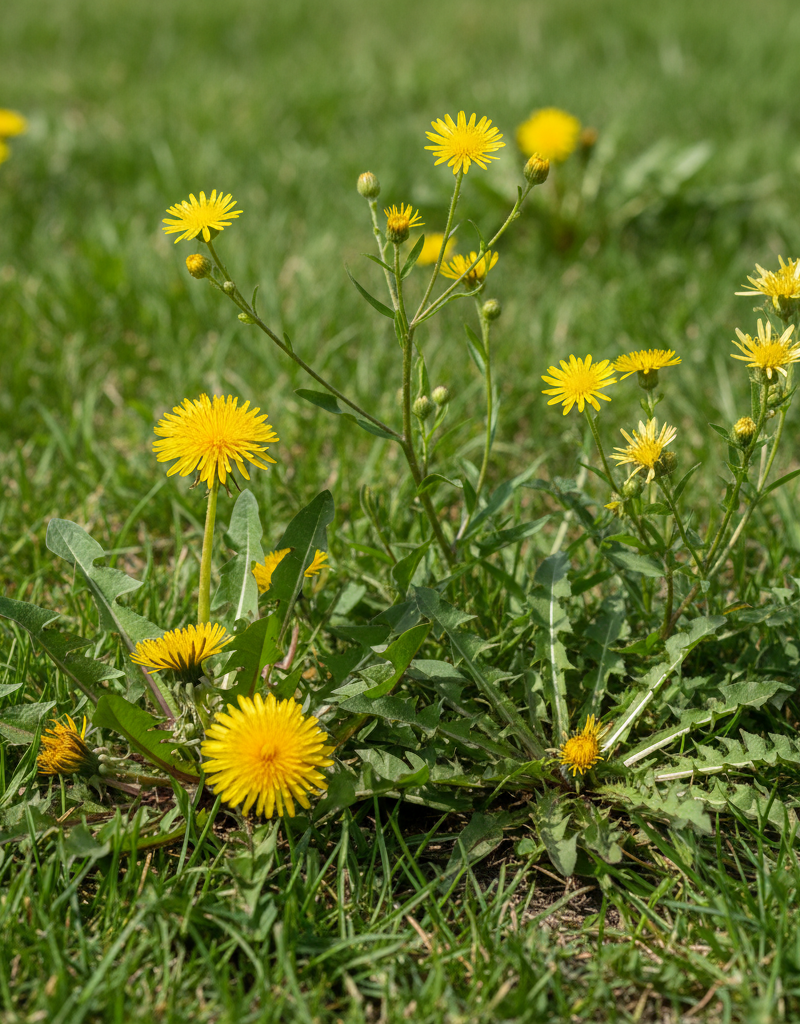
Many homeowners struggle with lawns that are thin, patchy, or simply lack the lush density they desire. This isn't just an aesthetic issue; a thin lawn is more susceptible to weeds, pests, and diseases because there's less competition from healthy grass. Over time, factors like heavy foot traffic, environmental stress, disease, or simply the natural aging of grass plants can lead to thinning. Without intervention, these areas expand, creating an open invitation for less desirable plants to take root and further degrade your lawn's health and appearance.
How It Works
Grass plants, like all living organisms, have a lifespan. Even perennial grasses thin out and lose vigor over time. Overseeding essentially rejuvenates the lawn by introducing new, vigorous grass plants. When you spread new seed, you're aiming to fill in bare spots, increase the overall density of the turf, and often introduce newer, more resilient grass varieties that can better withstand local stressors like drought or disease. The process begins with preparing the soil to create an optimal seedbed. This usually involves removing thatch and aerating, which allows the new seeds to make good contact with the soil, receive adequate moisture, and access nutrients. Once the seeds are sown, they require consistent moisture and moderate temperatures to germinate. As new seedlings emerge, they compete with existing grass and weeds for resources, eventually establishing a stronger, thicker turf that is more resistant to common lawn problems. This revitalized lawn not only looks better but also functions as a healthier ecosystem, better able to defend itself.
Step-by-Step Fix
Step 1: Mow Low and Dethatch — Prepare your lawn for new growth.
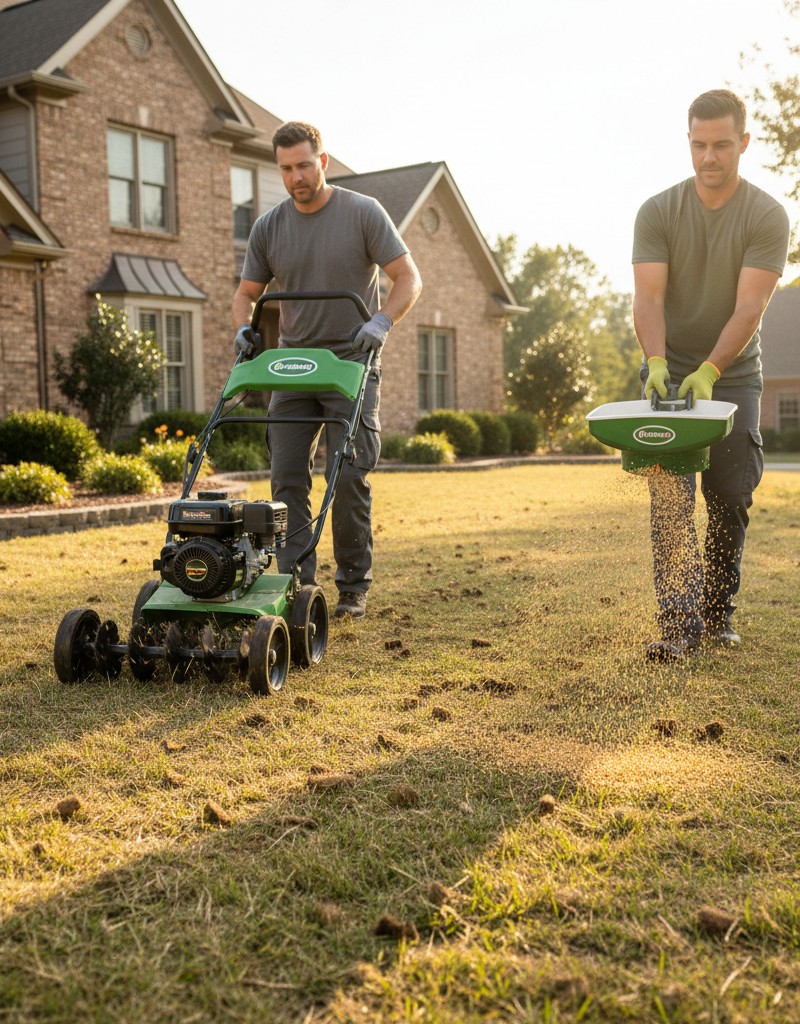
Start by mowing your existing lawn to a height of 1-2 inches, significantly lower than your usual cut. This exposes the soil surface to the new seeds and reduces competition from existing grass. After mowing, remove any excessive thatch – the layer of dead grass and organic matter that accumulates on the soil surface. Dethatching can be done with a rake for light thatch or a power dethatcher for thicker layers. Aim to expose at least 50% of the soil.
- Tools: Lawn mower, dethatching rake or power dethatcher.
- Time: 1-2 hours, depending on lawn size and thatch thickness.
Step 2: Aerate the Soil — Improve air, water, and nutrient penetration.
Aeration is crucial for successful overseeding. Use a core aerator (rentable from most hardware stores) to pull out small plugs of soil, creating channels for air, water, and nutrients to reach the developing grass roots. This also helps reduce soil compaction, which is a major hinderance to new seed germination. Go over your lawn once or twice, ensuring good coverage.
- Safety: Wear sturdy shoes when operating a core aerator. Clear the lawn of any debris that could be snagged.
- If this doesn't work: If your soil is extremely hard and compacted, consider a second pass with the aerator a few days later.
Step 3: Repair Bare Spots — Give new seeds the best start.
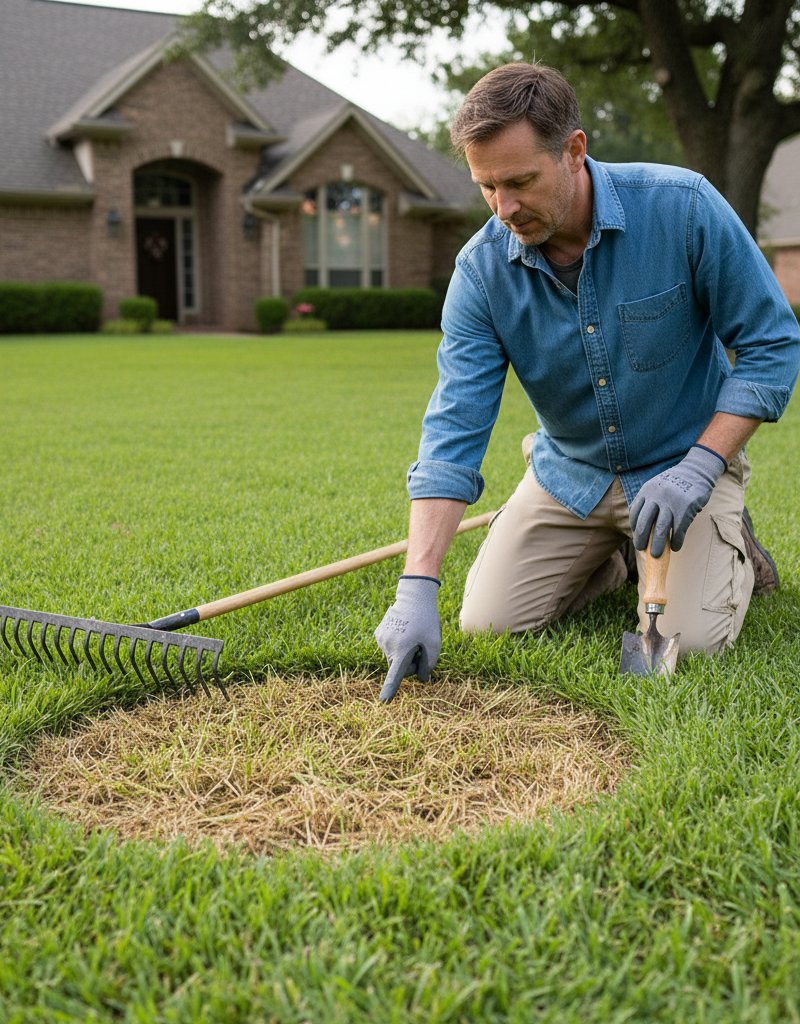
For any severely bare or damaged areas, rough up the soil with a rake to create a loose seedbed. You might also add a thin layer (1/4 inch) of fresh topsoil or compost to these areas to provide a nutrient-rich foundation for the new seeds. Ensure the edges blend smoothly with the existing lawn.
Step 4: Select and Spread Seed — Choose the right grass for your yard.
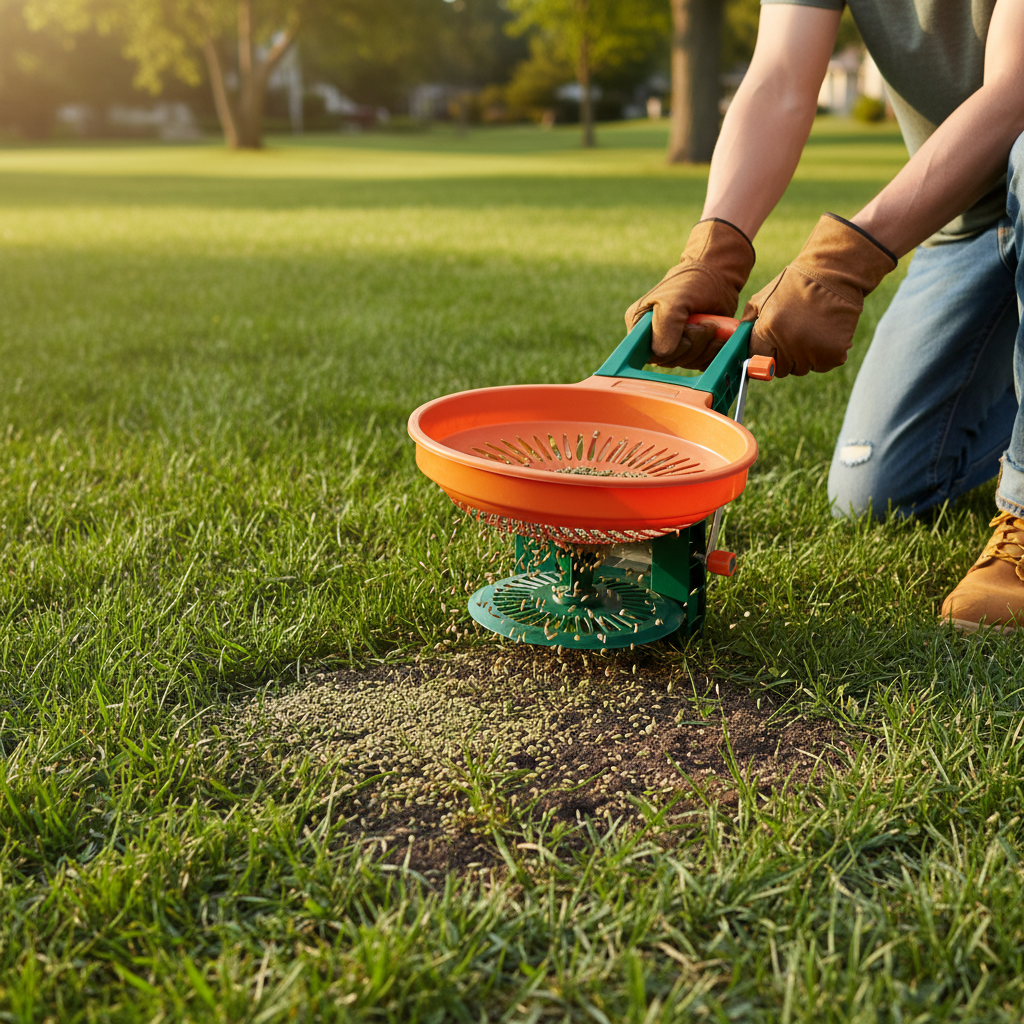
Choose a high-quality grass seed blend appropriate for your climate and sun exposure (e.g., cool-season grasses like fescue or rye for northern areas; warm-season grasses like Bermuda or zoysia for southern areas). Use a broadcast spreader for even distribution. Apply half the recommended amount walking in one direction, then apply the remaining half walking perpendicular to the first pass. This cross-hatch pattern helps prevent streaking.
- Tools: Broadcast spreader.
- Tip: Check the seed bag for specific coverage rates. Don't overapply, or seedlings will compete too much.
Step 5: Apply Starter Fertilizer — Fuel new growth.
Immediately after spreading the seed, apply a starter fertilizer. These fertilizers are specially formulated with higher phosphorus content to promote root development in new seedlings. Again, use a broadcast spreader and follow the product's application rates carefully to avoid burning new sprouts.
- Material: Scotts Turf Builder Starter Food for New Grass or similar.
Step 6: Lightly Rake (Optional, but Recommended) — Ensure seed-to-soil contact.
After spreading seed and starter fertilizer, lightly rake the entire lawn. The goal is to gently work the seeds into the top 1/8 to 1/4 inch of soil, improving seed-to-soil contact. Avoid burying them too deeply, as they need light to germinate.
Step 7: Water, Water, Water — The most critical step for germination.
This is arguably the most crucial step. New grass seeds need consistent moisture to germinate. For the first 2-3 weeks, water newly seeded areas lightly but frequently (2-3 times a day for 5-10 minutes) to keep the top inch of soil consistently moist, not soggy. Reduce watering frequency as seedlings mature, transitioning to deeper, less frequent watering.
- "Mistake:" Letting the seed dry out even once during germination can kill it.
- Tip: If you have an automated sprinkler system, adjust it for shorter, more frequent cycles.
Step 8: First Mow and Ongoing Care — Nurture your new lawn.
Wait to mow until the new seedlings have reached a height of at least 3-4 inches. When you do mow, set your mower to a higher setting to avoid stressing the young grass. Continue regular watering as the lawn establishes. Avoid applying herbicides for at least 6-8 weeks after overseeding, as they can harm new grass.
Common Causes
- Aging Grass: Even perennial grasses have a lifespan. Over time, individual grass plants naturally weaken and die, leading to thinning.
- Heavy Traffic: Persistent foot traffic, pets, or vehicle use compacts the soil and wears down grass over time, preventing healthy growth.
- Nutrient Deficiency: Lack of essential nutrients in the soil can stunt grass growth and lead to sparse areas.
- Pests and Diseases: Insect infestations (like grubs) or fungal diseases can severely damage large sections of a lawn, creating bare patches.
- Environmental Stress: Drought, excessive heat, shade, or extreme cold can weaken grass, making it more prone to thinning.
- Improper Mowing: Cutting grass too short stresses the plants and reduces their ability to photosynthesize, leading to weaker growth.
Common Mistakes
- Skipping Soil Preparation: Many homeowners just throw seed down. Without dethatching and aerating, seeds won't make good soil contact and germination rates will be poor.
- Wrong Time of Year: Overseeding at the incorrect time (e.g., in the peak heat of summer for cool-season grasses) leads to incredibly low success rates. Timing is everything.
- Insufficient Watering (or Overwatering): New seeds need consistent moisture to germinate. Letting them dry out for even a day can kill them. Conversely, overwatering can cause disease or wash away seeds.
- Not Using Starter Fertilizer: Regular lawn fertilizer isn't ideal for new seedlings. A starter fertilizer with high phosphorus specifically promotes the critical root development needed for new grass.
- Mowing Too Soon or Too Short: Cutting tender new seedlings too early or too short will stress and potentially kill them before they've had a chance to establish a strong root system.
- Applying Weed Killer Too Early: Most herbicides will kill new grass seedlings along with the weeds. Wait at least 6-8 weeks before applying any weed control products.
Cost & Time Breakdown
| Task | DIY Cost | Pro Cost | Time |
|---|---|---|---|
| Dethatching (DIY) | $0-$30 (rake) | $150–$300 | 1–2 hours |
| Aerating (DIY) | $40–$80 (rental) | $150–$350 | 1–3 hours |
| Grass Seed (quality) | $30–$100 | Included | 30–60 min |
| Starter Fertilizer | $20–$50 | Included | 20–40 min |
| Watering (initial 3 wks) | $10–$50 (water bill) | Included | Daily check |
| Total Estimated | $90–$260 | $450–$1000+ | 3–6 hours active |
Tips & Prevention
- Best Time to Overseed: For cool-season grasses (fescue, rye, bluegrass), early fall (late August to mid-October) is ideal. For warm-season grasses (Bermuda, zoysia), late spring to early summer is best. This allows new grass to establish before extreme temperatures.
- Mow High Regularly: Maintain a mowing height of 2.5 to 3.5 inches for most grasses. Taller grass shades the soil, retains moisture, and promotes deeper root growth, making it more resilient.
- Regular Soil Testing: Test your soil every 2-3 years to determine nutrient deficiencies and pH imbalances. Adjust with appropriate amendments to support healthy grass growth.
- Proper Fertilization Schedule: Follow a consistent fertilization schedule for your grass type, applying the right nutrients at the right time to maintain vigor.
- Water Deeply and Infrequently: Once established, water your lawn deeply (6-8 inches of soil penetration) but less frequently. This encourages roots to grow deeper, making the turf more drought-tolerant.
- Control Thatch Buildup: Periodically dethatch your lawn if thatch exceeds 1/2 inch to ensure water and nutrients can reach the soil.
When to Call a Professional
While overseeding is a manageable DIY project, consider calling a professional if your lawn issues extend beyond simple thinning. If your lawn has significant compaction issues that a rented aerator can't resolve, widespread drainage problems, or persistent pest and disease infestations that you can't identify or control, a lawn care professional can offer expert diagnostics and tailored solutions. Additionally, if you have a very large property or limited time, hiring a professional can ensure the job is done correctly and efficiently, giving you the lush lawn you desire without the heavy labor and time commitment. They also have access to commercial-grade equipment and specialized knowledge that can provide superior results in challenging situations.
Related Articles
Keep troubleshooting with these hand-picked guides from FixlyGuide:
- The #1 Mistake Killing Your Thin Lawn (And How to Fix It in a Weekend) — Overseeding your lawn can transform it from thin and patchy to lush, but many homeowners make a crucial mistake that hinders success. Learn…
- The #1 Mistake Killing Your Lawn's Grass (and How to Fix Patchy Spots) — Discover the most common reason for patchy grass and learn how to revive your lawn with targeted, easy-to-follow steps.
- The #1 Mistake Killing Your Thin Lawn (and How to Fix It in a Weekend) — Overseeding a thin lawn is crucial for a lush yard, but a common mistake can ruin your efforts before they even begin. Learn how to diagnos…
- The #1 Mistake Killing Your Lawn's Grass (and 3 Simple Fixes) — Patchy grass can ruin your lawn's appearance, but often the cause is a common mistake that's easy to correct with the right approach.
- The #1 Mistake Killing Your Lawn's Thatch (And How to Fix Patchy Grass) — Patchy grass often stems from an overlooked problem: excessive thatch. Learn how to diagnose and correct thatch issues to restore a healthy…
- The #1 Mistake Homeowners Make When Sealing a Deck (and How to Fix It) — Prevent costly damage and extend your deck's life by avoiding common sealing errors and following a simple, effective resealing process.
Frequently asked questions
How often should I overseed my lawn?+
For most established lawns, overseeding every 1-3 years is sufficient to maintain density and introduce new, resilient grass varieties. If your lawn experiences heavy traffic or frequent stress, annual overseeding might be beneficial.
What is the best grass seed for overseeding?+
The 'best' grass seed depends on your climate zone (cool-season or warm-season grass), sun exposure, and desired lawn usage. Always choose a high-quality blend that matches your existing grass or improves its characteristics, such as drought tolerance or shade resistance.
Can I just scatter grass seed without preparing the soil?+
While you *can* scatter seed without preparation, success rates will be significantly lower. Proper soil contact is crucial for germination, and without dethatching and aerating, many seeds will simply dry out, be eaten by birds, or fail to root properly.
Discussion
Loading comments…