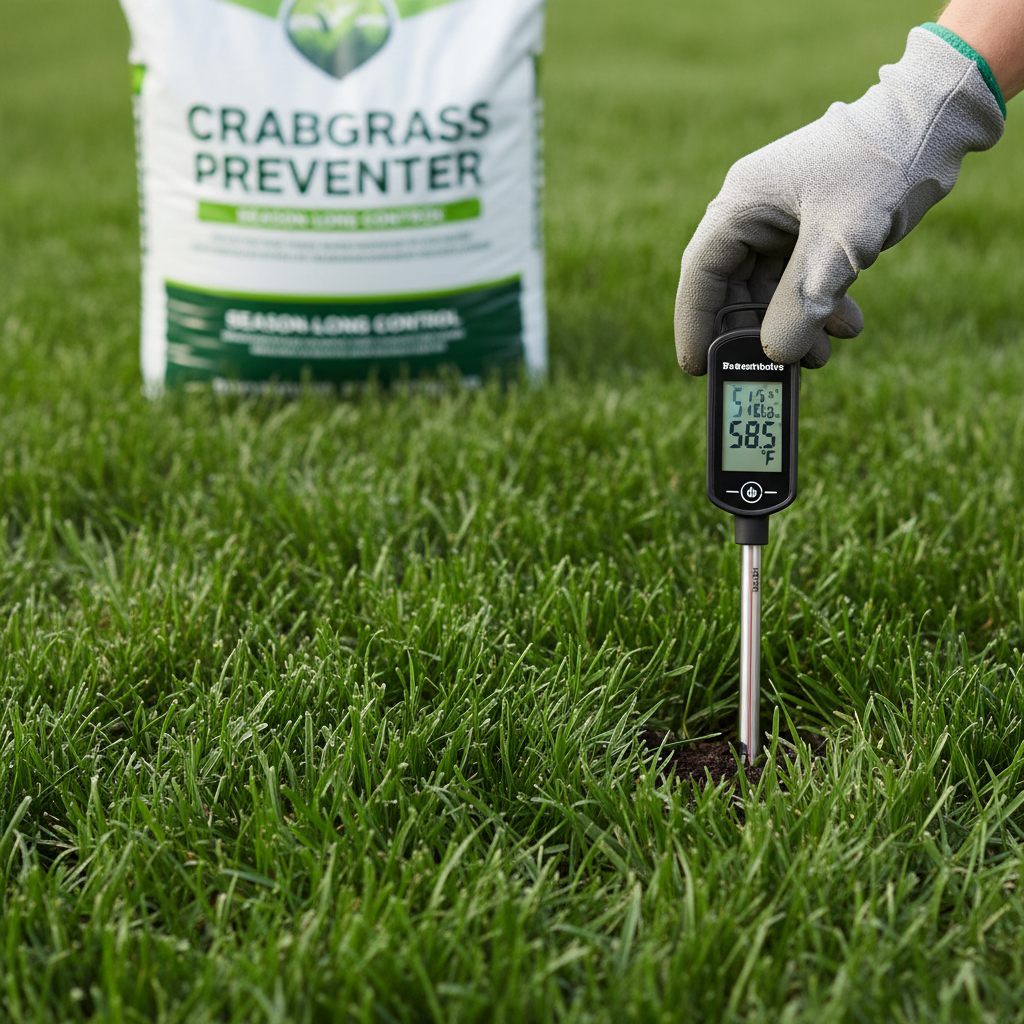
Tools & materials you'll need
Affiliate links- AmazonGranular pre-emergent herbicideAppropriate for your lawn type and target weeds
As an Amazon Associate FixlyGuide earns from qualifying purchases — at no extra cost to you. Prices and availability are accurate as of publication and subject to change.
Quick Answer
Pre-emergent herbicides are a homeowner's secret weapon against weeds, but their success hinges entirely on precise timing. The golden rule for spring application is to apply when soil temperatures consistently hit 50–55°F for several days. This typically coincides with the blooming of certain indicator plants like forsythia or when dogwoods begin to bud out. For a fall application to control winter annuals, aim for soil temperatures dropping to 70°F and below. Monitoring soil temperature, understanding your local climate, and knowing your weed targets are vital to creating an impenetrable barrier against unwanted invaders, saving you time, money, and frustration.
The Problem
Every homeowner dreams of a lush, green, weed-free lawn. Yet, despite diligent fertilizing and watering, many still battle an endless parade of crabgrass, dandelions, and other stubborn weeds each year. The root of this frustration often lies not in the choice of weed killer, but in the timing of its application, specifically when it comes to pre-emergent herbicides. Applying pre-emergent too early, too late, or without understanding the specific weed life cycles in your region can render the product almost useless. Instead of a preventive shield, you're left with an expensive, ineffective treatment and a lawn still overrun with newly sprouted weeds that then require more aggressive, post-emergent solutions.
This common mistake leads to wasted product, wasted effort, and ultimately, a less enjoyable outdoor space. Without proper timing, the chemical barrier designed to stop weed seeds from germinating simply isn't in place when it's needed most, allowing thousands of weed seeds to sprout unchecked. Understanding the science behind seed germination and how pre-emergents interact with soil and climate is the key to breaking this cycle and unlocking a truly weed-resistant lawn.
How It Works
Pre-emergent herbicides function by creating a subtle chemical barrier on or just below the soil surface. When applied correctly, this barrier disrupts the early stages of seed germination. As weed seeds sprout, they absorb the herbicide, which then inhibits cell division in the root tip or shoot, essentially stopping the seedling's growth before it can even emerge from the soil. Think of it like a microscopic force field preventing tiny plants from establishing themselves.
Crucially, pre-emergents do not prevent seed germination itself, nor do they kill existing weeds. Their power lies purely in prevention. They are selective in their action, formulated to target broadleaf and grassy weed seeds without harming established turfgrass. However, because they inhibit root development, they should not be used when you plan to overseed or lay new sod, as they will prevent desirable grass seeds from germinating as well.
The effectiveness of a pre-emergent is heavily dependent on it being present in the soil at sufficient concentrations when weed seeds begin to germinate. Different weed species germinate at different soil temperatures. For instance, crabgrass, one of the most common and persistent lawn weeds, typically germinates when soil temperatures at a 2-4 inch depth consistently reach 50-55°F for several consecutive days. Other weeds, like henbit and chickweed (winter annuals), germinate in the fall when soil temperatures cool down. This thermal trigger is why timing is paramount. Apply too early, and the herbicide may degrade or be washed away before the prime germination window. Apply too late, and the weed seeds will have already sprouted, bypassing the herbicide's protective layer entirely. Environmental factors like rainfall are also critical. A light rain or irrigation after application helps move the granular product into the soil, activating the barrier.
Step-by-Step Fix
1. Identify Your Target Weeds — Before you do anything, know your enemy. * Different pre-emergents target different types of weeds (grassy vs. broadleaf). Common grassy weeds include crabgrass and foxtail. Common broadleaf weeds include dandelions and clover. Most homeowner products are formulated for broad-spectrum weed control, but specialized products exist. Knowing your most problematic weeds helps you select the right product and critically, anticipate their germination windows. * If you're unsure: Take clear photos of the weeds in your lawn to a local garden center or extension office for identification, or use an online plant identification app.
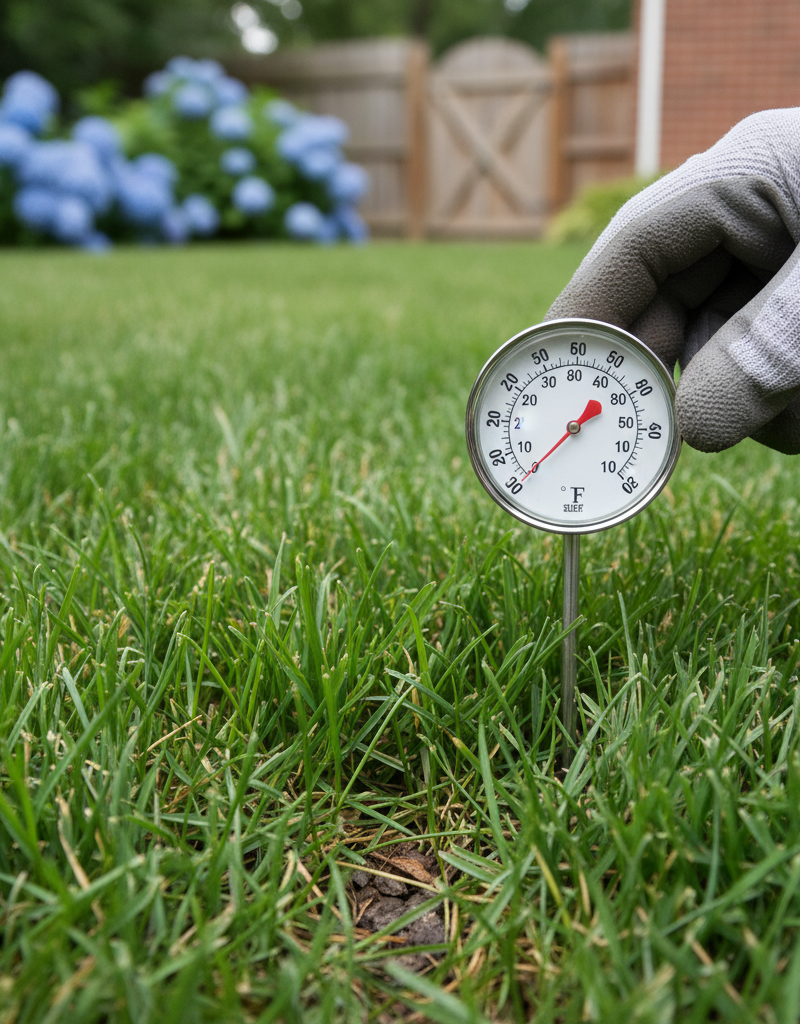
2. Monitor Soil Temperatures — This is the single most critical factor. * Purchase a soil thermometer. This inexpensive tool is your best friend for pre-emergent timing. * Insert the thermometer 2-4 inches deep into a representative area of your lawn. Check it daily in late winter/early spring and late summer/early fall, preferably in the morning. * For spring application (crabgrass, summer annuals): Look for soil temperatures consistently holding between 50-55°F for 3-5 consecutive days. This is the optimal window for crabgrass and many other summer annual weeds. * For fall application (winter annuals like henbit, chickweed): Aim for soil temperatures dropping below 70°F and heading towards the low 60s/high 50s. This generally occurs in late August through October, depending on your climate. * Indicator plants: As a secondary guide, observe local plants. Forsythia shrubs blooming vividly often signal that soil temperatures are approaching the spring target. When dogwood trees just begin to bud or bloom, it's also a good indicator. However, always prioritize soil temperature readings over visual cues, as plant bloom times can vary more with air temperature than soil temperature.
3. Select the Right Pre-Emergent Product — Match the product to your needs. * Read product labels carefully. Some pre-emergents are combined with fertilizer (weed & feed), which can be convenient for a single application but might not be optimal if your lawn doesn't need fertilizing at that exact moment. * Look for active ingredients like prodiamine, pendimethalin, or dithiopyr, which are common and effective. Granular products are generally easier for homeowners to apply evenly with a spreader. * Important Note: If you plan to overseed your lawn in the spring or fall, avoid applying pre-emergent, as it will prevent new grass seed from germinating. Wait until your new grass is established (at least 2-3 mowings) before considering pre-emergent, or opt for a pre-emergent specifically formulated for new grass (e.g., containing mesotrione if seeding cool-season grass).
4. Prepare Your Lawn — A clean slate for maximum effectiveness. * Mow your lawn to its regular height a day or two before application. Remove any excessive leaf litter or debris that could block the granular product from reaching the soil. * Avoid dethatching or aerating immediately before or after pre-emergent application, as these activities can break the chemical barrier, allowing weeds to germinate.
5. Calibrate Your Spreader — Even application is key. * Use a broadcast or drop spreader for granular products. Refer to the specific product label for the recommended spreader settings for your chosen product and spreader type. * Calibration Tip: To ensure even coverage, consider applying half the recommended amount in one direction (e.g., north-south) and the other half perpendicular to the first pass (e.g., east-west). This
Related Articles
Keep troubleshooting with these hand-picked guides from FixlyGuide:
- The #1 Timing Mistake That Makes Pre-Emergents Useless (And How to Fix It) — Applying pre-emergent weed control at the wrong time is the most common reason for failure, leading to wasted product and persistent weeds.
- The #1 Timing Mistake That Makes Pre-Emergents Fail (And How to Fix It) — Applying pre-emergent weed control at the wrong time is the most common reason for failure, leading to a lawn full of weeds.
- The #1 Mistake Killing Your Summer Lawn (And How to Fix It in a Weekend) — Overwatering is the silent killer behind many yellow summer lawns, often mistaken for drought. Learn how to diagnose and correct drainage i…
- The #1 Mistake Killing Your Thin Lawn (And How to Fix It in a Weekend) — Overseeding your lawn can transform it from thin and patchy to lush, but many homeowners make a crucial mistake that hinders success. Learn…
- The #1 Mistake Killing Your Thin Lawn (and How to Fix It in a Weekend) — Overseeding a thin lawn is crucial for a lush yard, but a common mistake can ruin your efforts before they even begin. Learn how to diagnos…
- The 4 Hidden Reasons Your Entire Home Has Low Water Pressure (And the Easy Fixes) — Low water pressure throughout your entire home can be a frustrating and often misunderstood problem, with several common culprits. Learn to…
Frequently asked questions
When is the best time to apply pre-emergent in the spring?+
The ideal time for spring pre-emergent application is when soil temperatures at a 2-4 inch depth consistently reach 50-55°F for several days. This often coincides with the blooming of forsythia and aims to target crabgrass and other summer annual weeds before they germinate.
Can I apply pre-emergent if I'm planning to overseed my lawn?+
No, generally you should not apply standard pre-emergents if you plan to overseed. Pre-emergents create a barrier that prevents *all* seed germination, including desirable grass seeds. If overseeding is necessary, you'll need to wait until the new grass is established (after 2-3 mowings) or select a specialized product formulated to allow new grass growth while preventing weeds (e.g., containing mesotrione).
How long does pre-emergent last in the soil?+
Most homeowner pre-emergent products provide 8-12 weeks of weed control. The exact duration depends on the active ingredient, application rate, rainfall, and soil type. It's often recommended to apply a second, lighter application 6-8 weeks after the first if your region has a long growing season or varied weed germination times.
What happens if I apply pre-emergent too late?+
If you apply pre-emergent too late, after weed seeds have already germinated and emerged from the soil, the product will be largely ineffective. Pre-emergents prevent germination; they do not kill existing weeds. At this point, you'll need to switch to a post-emergent herbicide to tackle the sprouted weeds.

Discussion
Loading comments…