Tools & materials you'll need
Affiliate links- AmazonScrewdriver (flathead or Phillips)To remove drain cover, if applicable
- AmazonCup-style plungerStandard plunger for sink/tub drains
- AmazonWire coat hangerFor improvised hook, or purpose-built plastic 'zip-it' tool
- AmazonNeedle-nose pliersTo bend hanger, or assist with drain cover
- AmazonHandheld drain auger (snake)1/4-inch cable, 15-25 ft length, for deeper clogs
- AmazonChannel-lock pliers or adjustable wrenchTo loosen P-trap slip nuts
- AmazonScrub brush or old toothbrushFor cleaning P-trap interior
As an Amazon Associate FixlyGuide earns from qualifying purchases — at no extra cost to you. Prices and availability are accurate as of publication and subject to change.
Quick Answer
Most shower drain clogs are caused by a combination of hair, soap scum, and everyday grime. You can effectively clear these blockages using simple tools like a drain snake, pliers, or a plunger, often without needing any harsh chemical drain cleaners. Mechanical removal is usually the quickest and safest method for a lasting fix, directly addressing the blockage rather than dissolving it, which can sometimes damage pipes.
The Problem
There's nothing quite like standing in ankle-deep water during what's supposed to be a refreshing shower. A slow or completely stopped shower drain is a common, frustrating household issue. While many immediately reach for a bottle of chemical drain cleaner, these solutions are often temporary, can damage your pipes over time, and pose significant safety risks. The real problem often lies in a build-up of hair, soap scum, and even mineral deposits deep within the drainpipe, forming a tenacious, slimy plug that chemical liquids struggle to penetrate effectively. Understanding the nature of this blockage is the first step toward a lasting, non-chemical solution that's safer for you and your plumbing.
How It Works
Your shower drain system is relatively simple but effective. Water flows from your showerhead, down the tub or shower pan, through a drain opening, and into a P-trap. The P-trap is a U-shaped pipe section designed to hold a small amount of water, creating a barrier that prevents sewer gasses from entering your home. From the P-trap, the water continues down a branch drain line, which connects to the main waste stack of your home's plumbing system, eventually leading to the sewer or septic tank.
Clogs typically form in two primary locations: directly at the drain opening (around the strainer or stopper assembly) or inside the P-trap. Hair is the primary culprit, tangling with soap scum, conditioners, and even small pieces of debris (like fragments of bar soap, labels from bottles, or nail clippings). This creates a sticky, fibrous mat that gradually restricts water flow. Over time, mineral deposits from hard water can also contribute, encrusting onto the inside of the pipes and providing more surfaces for the hair and soap scum to latch onto. Chemical drain cleaners attempt to dissolve this organic matter, but they often struggle with dense hair clogs and can leave behind caustic residue. Mechanical methods, on the other hand, physically remove or break up the blockage, restoring the full diameter of the pipe.
Step-by-Step Fix
When tackling a clogged shower drain, start with the least invasive methods and progress to more robust solutions if needed. Always work carefully to avoid damaging your plumbing.
1. Clear the Drain Cover — Remove visible obstructions and prepare the area.
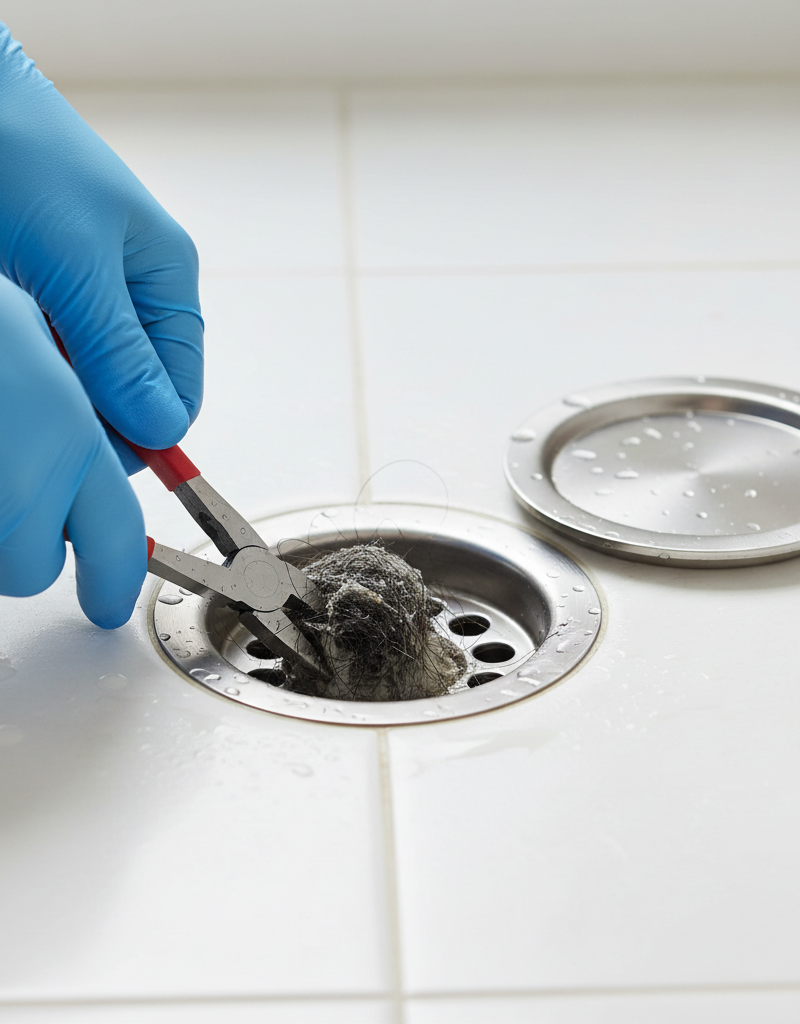
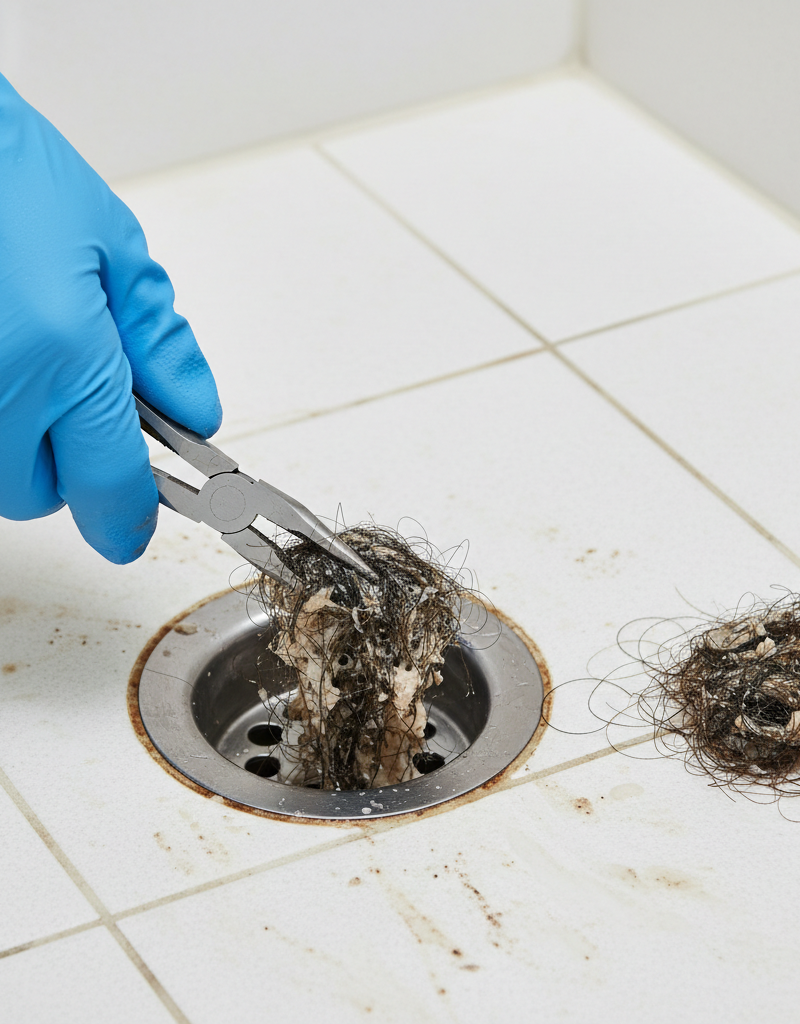
Begin by removing any hair or debris visible on or around the drain cover. For most shower drains, this involves prying up a simple strainer. Some drains may have a screw-in cover or a pop-up stopper that needs to be unscrewed or lifted out. Use a screwdriver (flathead or Phillips, depending on the screw type) if necessary. Wear gloves to handle any slimy debris. This step alone can often improve drainage if the clog is minor and superficial.
- Tools: Screwdriver (flathead or Phillips), needle-nose pliers, gloves.
- Safety: Always wear utility gloves to avoid contact with bacteria and grime.
2. The Plunger Attack — Create suction to dislodge the clog.
Fill the shower pan with an inch or two of water. This water helps create a seal around the plunger. Place a cup-style plunger directly over the drain, ensuring a good seal. Plunge vigorously for 15-20 seconds, maintaining the seal, then quickly pull the plunger up to break the suction. Repeat this process several times. The sudden pressure changes can often dislodge less stubborn clogs. If the water drains, flush with hot water for a few minutes.
- Tools: Standard cup plunger.
- If this doesn't work: Move on to manual removal with a snake or hook.
3. The Bent Wire Hanger Trick — Hook out visible hair clumps.
Straighten out a wire coat hanger, then bend one end into a small hook. Carefully insert the hooked end into the drain opening. Twist and maneuver the hanger, trying to snag hair and gross goop. Slowly pull the hanger back out, hopefully bringing a significant portion of the clog with it. You might be surprised (and disgusted) by what you retrieve. Repeat several times until no more debris comes out.
- Tools: Wire coat hanger, needle-nose pliers (to bend the hanger), gloves.
- Safety: Do not force the hanger. It could scratch or damage PVC pipes if used too aggressively.
4. Drain Snake / Augur — Reach deeper, more stubborn clogs.
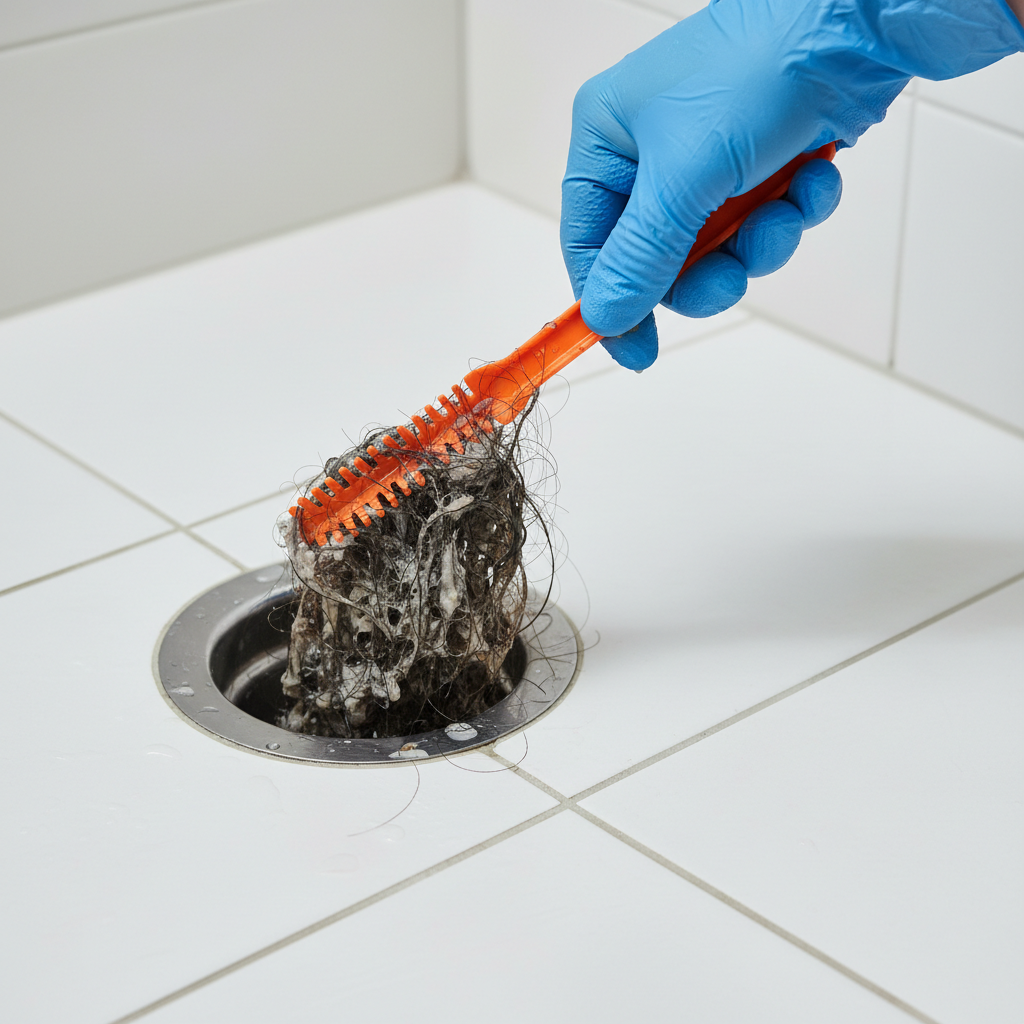
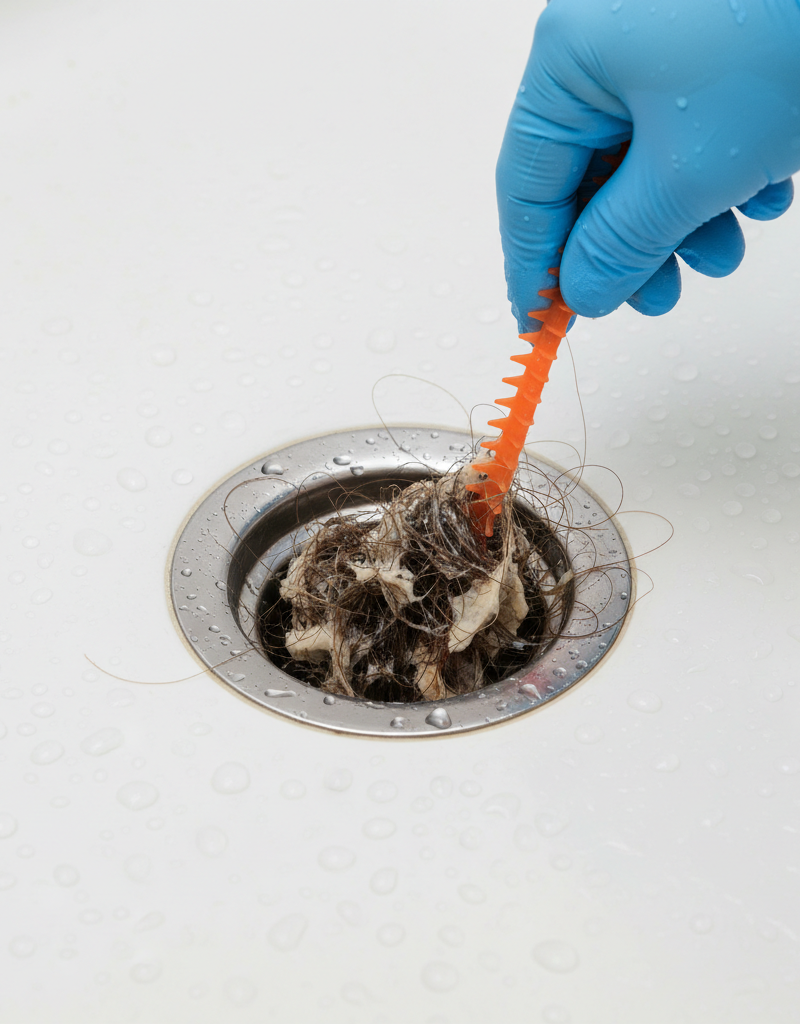
A drain snake (also called a drain auger or zip-it tool) is specifically designed for this purpose. Push the snake's head into the drain opening. For a zip-it tool, simply feed it down. For a traditional hand auger, push the cable in until you meet resistance, then rotate the handle clockwise to allow the corkscrew end to grab the clog. Continue feeding and rotating until the clog is broken up or pulled free. Slowly pull the snake out, cleaning any debris as you go. Repeat until the drain flows freely. The snake can typically reach beyond the P-trap to address clogs in the branch line.
- Tools: Handheld drain auger (1/4-inch cable, 15-25 ft length) or plastic zip-it drain cleaner.
- Safety: Wear sturdy gloves. Go slowly to avoid scratching drainpipe interiors. Never use a power auger on delicate residential drains unless you are a professional.
5. Clean the P-Trap — The ultimate clog stronghold.
If the above steps fail, the clog is likely lodged in the P-trap, or just beyond it. This requires opening the trap. First, place a bucket or old towels directly under the P-trap to catch water and debris. Using channel-lock pliers or an adjustable wrench, loosen the slip nuts on both ends of the P-trap. Carefully remove the P-trap. Expect some water to drain out. Use a scrub brush, old toothbrush, or even the wire hanger to clear out any accumulated gunk from inside the trap and the connecting pipes. Inspect the trap and pipes for any cracks or damage before reassembling.
- Tools: Bucket, old towels, channel-lock pliers or adjustable wrench, scrub brush or old toothbrush.
- Safety: Be prepared for foul-smelling water. Do not overtighten slip nuts during reassembly, as this can crack plastic pipes. Hand-tighten, then use pliers for a quarter turn.
- If this doesn't work: The clog might be deeper in the main line. Time to call a professional.
6. Flush with Hot Water & Dish Soap — Final rinse and maintenance.
Once the clog is cleared and water flows freely, pour a kettle of very hot (but not boiling) water down the drain. Follow this with a cup of liquid dish soap, then another kettle of hot water. The hot water helps to flush away any remaining grease and soap scum, and the dish soap acts as a lubricant, helping to keep the pipes clear. This is an excellent preventative measure to perform monthly.
- Materials: Kettle of hot water, liquid dish soap.
- Safety: Use caution with hot water to avoid burns. Do not use boiling water if you have PVC pipes, as extreme heat can deform them. Very hot tap water or water just off the boil is fine.
Common Causes
- Hair Accumulation: The single biggest culprit. Hair binds together, creating a fibrous web that catches other debris.
- Soap Scum Buildup: Residue from bar soap and body washes adheres to pipe walls, trapping hair and dirt.
- Hard Water Minerals: Scale from mineral-rich water can build up inside pipes, narrowing the diameter and providing a rough surface for clogs to form.
- Foreign Objects: Small items like bottle caps, labels, or even small toys can accidentally fall into the drain and cause an obstruction.
- Grease and Oils: While less common in showers, using hair products or conditioners with heavy oils can contribute to scum buildup over time.
Common Mistakes
- Pouring Chemical Drain Cleaners Down the Drain: These are corrosive, can damage various pipe materials, and when they fail to clear a clog, they leave a dangerous caustic solution for the next person (or plumber) to deal with.
- Using Too Much Force with a Snake or Hanger: Aggressively pushing a metal tool can scratch or even puncture PVC pipes, leading to leaks.
- Ignoring Slow Drains: A slow drain is a warning sign. Addressing it early prevents minor blockages from becoming severe, difficult-to-clear clogs.
- Not Protecting the Drain: Failing to use a hair catcher or drain screen allows hair and debris to enter the drain relentlessly, guaranteeing future clogs.
- Over-tightening P-Trap Nuts: When reassembling a P-trap, overtightening the plastic slip nuts can crack them, leading to leaks. Hand-tighten, then give a quarter-turn with pliers.
- Using Boiling Hot Water on PVC Pipes: While hot water is good for flushing, extremely hot, boiling water can soften and deform PVC pipes, especially older ones.
Cost & Time Breakdown
| Task | DIY Cost | Pro Cost | Time |
|---|---|---|---|
| Minor Clog (Plunger/Hanger) | $0–$5 | N/A | 10–20 mins |
| Moderate Clog (Drain Snake/Zip-It) | $5–$30 | N/A | 30–60 mins |
| P-Trap Cleaning | $0–$10 | N/A | 45–90 mins |
| Deep Clog (Professional Service) | N/A | $150–$400 | 1–3 hours |
| Preventative Maintenance | $0–$10 annually | N/A | 5–10 mins/month |
Tips & Prevention
- Install a Drain Protector: The most effective preventative measure is a good hair catcher or drain screen. These inexpensive devices sit over or in the drain opening and catch the vast majority of hair and debris before it can enter the pipe. Clean them after every few showers.
- Regular Hot Water Flush: Once a week, pour a kettle of very hot tap water (not boiling, especially for PVC pipes) down the drain for a minute or two. This helps melt away minor soap scum and grease buildup.
- Baking Soda and Vinegar: As a natural, non-toxic preventative, once a month, pour 1/2 cup of baking soda down the drain, followed by 1/2 cup of white vinegar. Let it sit for 30 minutes to an hour (or even overnight), then flush thoroughly with hot water. The fizzing action can help dislodge minor buildup.
- Avoid Bar Soap Buildup: Liquid body wash tends to create less soap scum than traditional bar soap. If you prefer bar soap, ensure good ventilation in the bathroom to help dry out soap residue more quickly.
- Clean Hair from Brushes Before Showering: Brush your hair before you shower to remove loose strands that would otherwise go down the drain.
- Consider a Water Softener: If you have exceptionally hard water, a whole-house water softener can reduce mineral buildup in all your plumbing, including shower drains.
When to Call a Professional
While many shower clogs are DIY-friendly, there are specific situations where calling a licensed plumber is the safest and most efficient course of action. If you've tried mechanical methods like plunging and snaking and the drain still won't clear, the clog might be deeper in your main branch line or even the main waste stack, requiring specialized equipment like a power auger or hydro-jetting. Persistent odors or gurgling sounds from multiple drains (toilet, sink, shower) often indicate a more significant blockage in the main sewer line that affects the entire house. Furthermore, if you suspect damage to your pipes, such as leaks or cracks that might have been caused by excessive force during a DIY attempt, a professional can diagnose and repair the issue properly. A professional plumber has the expertise and tools to clear stubborn clogs safely without damaging your home's plumbing infrastructure, providing a lasting solution and peace of mind.
Related Articles
Keep troubleshooting with these hand-picked guides from FixlyGuide:
- The Nasty Truth About Your Slow Shower Drain (And the DIY Fix) — A slow shower drain is more than an annoyance; it's often a sign of a blockage that chemical solutions can worsen. Learn how to clear it sa…
- The #1 Mistake Homeowners Make Unclogging a Shower Drain (and 5 Better Fixes) — Shower drains get clogged with hair and soap scum, but harsh chemicals often worsen the problem; learn safe, effective DIY methods.
- The 90-Second Trick to Unclogging Any Shower Drain (No Chemicals Needed) — Learn how to quickly and safely clear a clogged shower drain using simple tools and household items, avoiding harsh chemicals.
- The 5-Minute Trick to Clear Any Shower Drain Clog (Without Nasty Chemicals) — Learn how to quickly and safely clear a shower drain clog using simple tools and techniques, avoiding harsh chemical drain cleaners.
- The #1 Mistake Homeowners Make with a Slow Kitchen Drain (and the Real Fix) — Before you reach for harsh chemicals, learn the right way to fix a slow kitchen sink drain and prevent future clogs.
- The 3 Hidden Reasons Your Gutters Fail in Heavy Rain (It’s Not Just Leaves) — Overflowing gutters during heavy rain often stem from a few common, yet overlooked, issues beyond simple leaf clogs, leading to potential s…
Frequently asked questions
What is the fastest way to unclog a shower drain?+
The fastest way to tackle a shower drain clog is often with a plunger. If that doesn't work, a 'zip-it' tool or a small drain snake can quickly remove visible hair clogs without chemicals. Clearing the drain cover first makes these tools more effective.
Can I use baking soda and vinegar to unclog a shower drain?+
Baking soda and vinegar can help with minor clogs and are excellent for preventative maintenance. The fizzing action helps loosen grime, but it's typically not powerful enough for dense hair clogs. Pour 1/2 cup baking soda, wait a few minutes, then follow with 1/2 cup vinegar, cover, wait 30 minutes, and flush with hot water.
How often should I clean my shower drain to prevent clogs?+
To prevent clogs, aim to clean your shower drain protector or strainer after every few showers. For the drainpipe itself, a monthly flush with hot water and dish soap, or a baking soda and vinegar treatment, can significantly reduce buildup and prevent major clogs.
When should I call a plumber for a clogged shower drain?+
You should call a plumber if you've attempted mechanical methods like snaking and the clog persists, if multiple drains in your home are slow or clogged, or if you notice foul odors or gurgling from the drains. These symptoms can indicate a more serious blockage in your main sewer line that requires professional intervention.
Discussion
Loading comments…