Tools & materials you'll need
Affiliate linksAs an Amazon Associate FixlyGuide earns from qualifying purchases — at no extra cost to you. Prices and availability are accurate as of publication and subject to change.
Quick Answer
To effectively clear a clogged shower drain without relying on harsh chemicals, your best approach is manual removal of the obstruction. This commonly means using a drain snake to retrieve hair and debris, or employing needle-nose pliers for surface-level blockages. A quality plunger can also dislodge clogs through hydraulic action. For persistent but less severe blockages, a natural mixture of baking soda and vinegar can help break down soap scum and grease.
The Problem
There's nothing quite as frustrating as stepping into a shower only to find yourself standing in a shallow pool of increasingly dirty water. A slow or completely stopped shower drain is a common household nuisance, almost always caused by a buildup of hair, soap scum, and sometimes even small foreign objects that have made their way down the pipe. While the immediate urge might be to reach for a chemical drain cleaner, these products are often a homeowner's worst enemy. They can damage pipes, especially older PVC or metal pipes, and are highly corrosive and dangerous to handle. Furthermore, many chemical cleaners simply push the clog further down, out of reach, or create a hardened, gooey mass that becomes even harder to remove. The goal is to safely and effectively remove the obstruction without introducing hazardous substances into your plumbing system or the environment.
How It Works
Understanding how a shower drain works helps in diagnosing and fixing clogs. Your shower drain typically consists of a drain cover, a strainer (sometimes integrated into the cover), and a P-trap. The P-trap is the curved section of pipe located directly beneath the drain, designed to hold a small amount of water. This water barrier prevents sewer gases from entering your home. Most shower drain clogs occur either in the immediate visible drain opening, around the strainer, or within the P-trap itself. Hair, often combined with soap scum (which contains fats and oils from body washes and shampoos), creates a sticky, tangled mess that adheres to the rough inner surfaces of the pipe, slowly constricting water flow. Over time, this buildup becomes denser and more solidified, eventually forming a complete blockage. Water from the shower flows by gravity. When the path is obstructed, water backs up because it can no longer freely flow past the clog and into the main drain lines, eventually leading to the sewer system.
Step-by-Step Fix
1. Remove the Drain Cover — Gain access to the obstruction
Most shower drain covers are either snap-in style or secured by one or two screws. Use a screwdriver to remove any screws, then lift the cover. For snap-in covers, you might need to pry gently with a flathead screwdriver. This first step allows you to inspect the immediate area for visible hair and debris.
- Tools: Screwdriver (Phillips or flathead, depending on screw type)
- Safety: Wear rubber gloves to protect your hands from grime.
2. Extract Surface Clogs — Pull out visible hair and scum
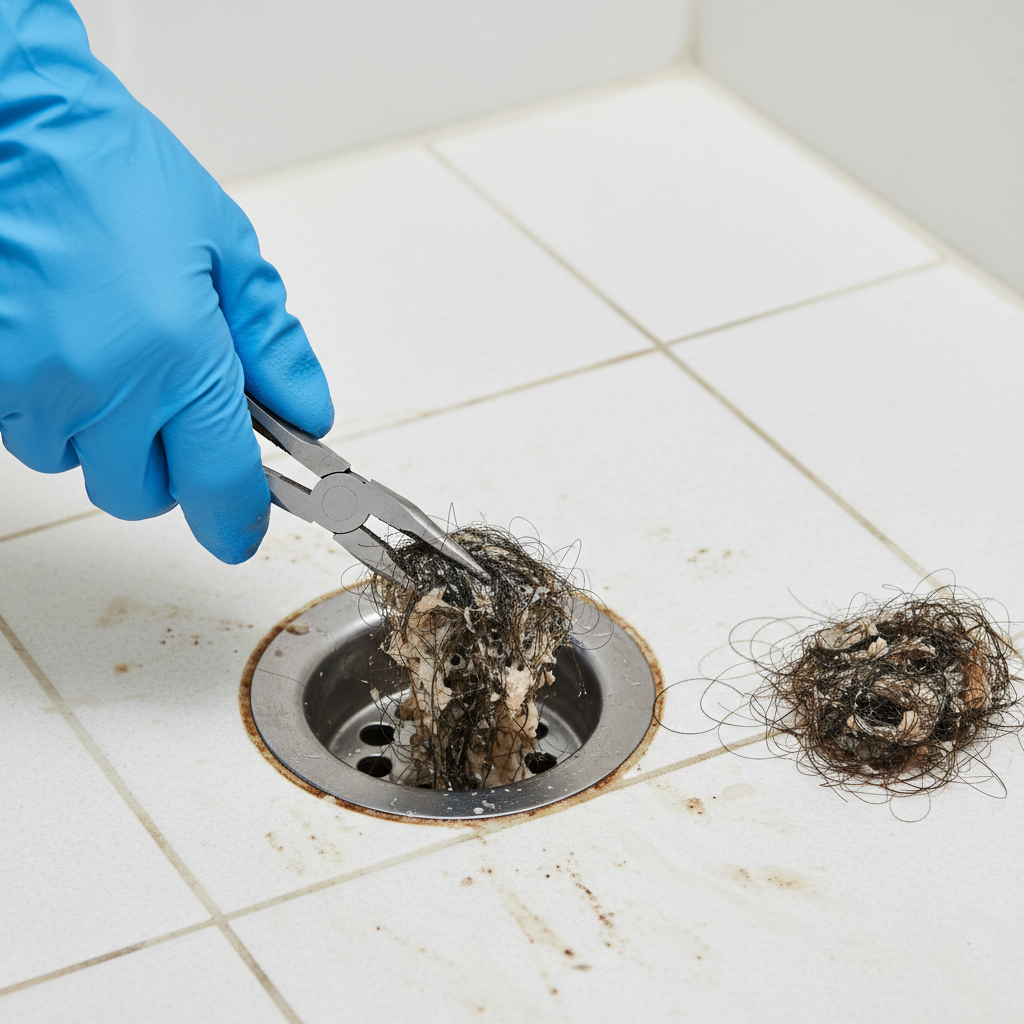
Once the drain cover is off, use needle-nose pliers or even gloved fingers to reach into the drain opening and pull out any hair, soap scum, or other debris that you can see or feel. Often, a significant portion of the clog is located right at the top. You might be surprised by how much material you can remove this way. Keep a small trash bag nearby for disposal.
- If this doesn't work: The clog is likely deeper, moving to the next step.
3. Use a Drain Snake or Zip-It Tool — Reach deeper into the pipe
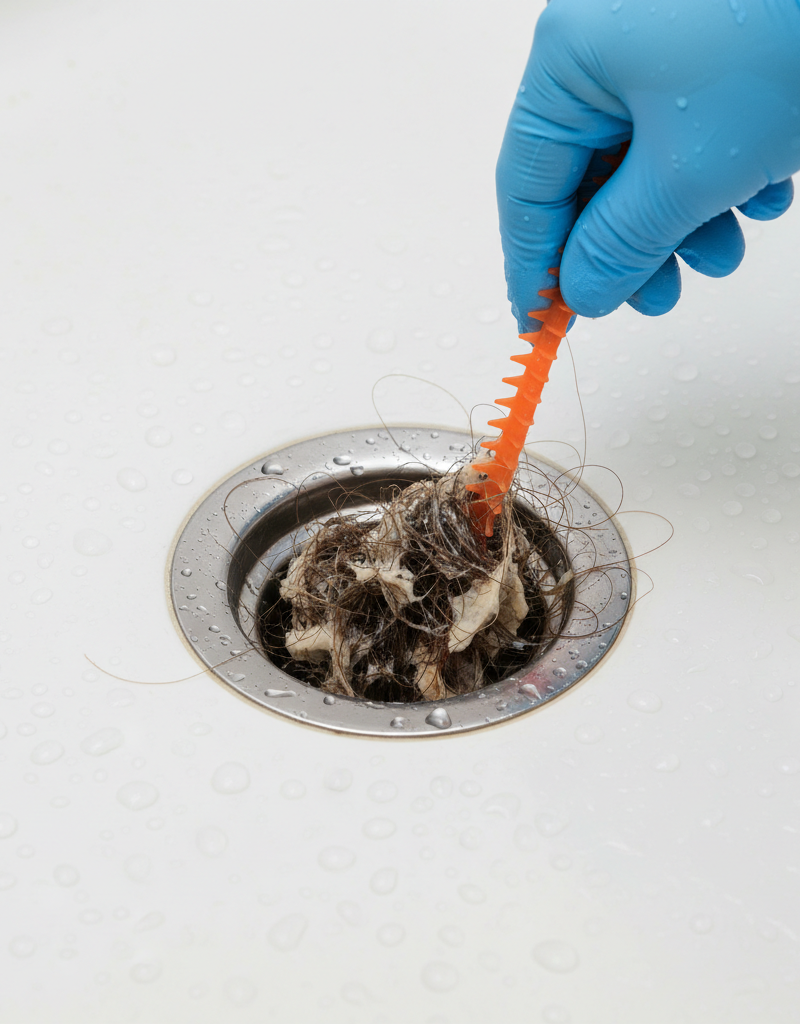
A drain snake (also called a auger or plumber's snake) is a flexible metal cable designed to navigate through pipes and retrieve clogs. A Zip-It tool is a plastic strip with barbs that snags hair. Insert the snake or Zip-It tool into the drain. For a snake, push it until you feel resistance, then twist the handle to hook the clog. Slowly pull it back out. For a Zip-It, push it in, rotate, and pull it out. Repeat several times until no more debris comes out.
- Tools: Drain snake (1/4-inch by 15-25 feet is common for showers) or Zip-It tool
- Technique Tip: Don't force the snake. If it gets stuck, gently pull it back a bit and try again, rotating as you push.
4. Plunge the Drain — Create hydraulic pressure to dislodge the clog
If snaking doesn't completely clear the drain, a plunger can often finish the job. Remove the drain cover again if you replaced it. Create a good seal with the plunger over the drain opening. Ensure there's enough water in the shower pan to cover the rubber cup of the plunger. Pump the plunger vigorously 10-15 times, then quickly pull it up. Repeat this process a few times. The suction and pressure can often break apart or dislodge remaining clog material.
- Tools: Cup-style plunger (not a toilet plunger)
- Important: If your shower shares a drain with a tub or sink, block off the overflow drain and any other openings to maximize plunging effectiveness.
5. Try a Baking Soda and Vinegar Solution — Natural degreaser for minor clogs
After manually removing as much as possible, or for very slow drains, try a natural alternative. Pour 1 cup of baking soda down the drain, followed by 1 cup of white vinegar. The two substances will react, creating a fizzing action that can help break down soap scum, grease, and other organic matter. Let it sit for 30 minutes to an hour (or even overnight for stubborn clogs). Afterward, flush the drain with a kettle of very hot (but not boiling) water.
- Materials: Baking soda, white vinegar, boiling water (careful with PVC pipes)
- Safety Note: Never mix baking soda and vinegar with commercial drain cleaners or bleach, as this can create dangerous gases.
6. Flush and Test — Confirm the clog is gone
Once you've tried one or more of the above methods, run the shower water at full pressure for several minutes. Observe if the water drains freely and quickly. Listen for gurgling sounds, which might indicate remaining partial blockages. If the drain is still slow, repeat steps 3-5.
- If this doesn't work: The clog may be deeper in your plumbing system or more severe. Consider calling a professional plumber.
Common Causes
- Hair Accumulation: By far the most common culprit. Hair washes down the drain and forms a tangled net, trapping soap scum and other debris.
- Soap Scum Buildup: Soaps, shampoos, and body washes contain fats and oils that can congeal and stick to pipe walls, especially when combined with minerals in hard water and hair.
- Hard Water Minerals: Limescale and other mineral deposits can build up inside pipes, narrowing the opening and providing a rough surface for clogs to adhere to.
- Small Objects: While less common in showers than sinks, sometimes small items like shampoo caps, small toy parts, or jewelry can accidentally fall down the drain and cause an obstruction.
Common Mistakes
- Using Chemical Drain Cleaners: As mentioned, these are corrosive, toxic, and often ineffective in the long run. They can damage pipes and pose a health risk.
- Not Removing the Drain Cover First: Many DIYers try to plunge or snake without removing the cover, limiting access and effectiveness. Always start by getting direct access.
- Forcing the Drain Snake: If the snake gets stuck, don't just push harder. You could damage the pipe or get the snake coiled up, making it impossible to retrieve. Gently manipulate it.
- Using the Wrong Plunger: A toilet plunger (flange plunger) isn't designed for flat shower drains. Use a cup-style plunger for the best seal and suction.
- Ignoring Slow Drains: A slow drain is a warning sign. Addressing it early, before it becomes a complete blockage, is much easier and often prevents more serious issues.
- Not Flushing Thoroughly: After attempting a fix, it's crucial to flush with plenty of water to ensure all loosened debris is truly cleared from the pipe. A quick rinse isn't enough.
Cost & Time Breakdown
| Task | DIY cost | Pro cost | Time |
|---|---|---|---|
| Remove surface clog & cover | $0 | N/A | 5-10 minutes |
| Snake drain (tool purchase) | $20–$40 | N/A | 15-30 minutes |
| Plunge drain | $10–$25 | N/A | 10-20 minutes |
| Baking soda & vinegar | $5–$10 | N/A | 1 hour |
| Pro drain clearing | N/A | $150–$350 | 1-2 hours |
Tips & Prevention
- Hair Catcher: Install a hair catcher or drain screen over your shower drain. These inexpensive devices are incredibly effective at preventing hair from entering the pipes in the first place. You'll need to clean it regularly, but it's much easier than unclogging a drain.
- Regular Flushing: Occasionally flush your drains with very hot water to help melt and dissolve minor soap scum and grease buildup before it becomes a problem.
- Baking Soda & Vinegar Maintenance: Every month or two, pour 1/2 cup of baking soda followed by 1/2 cup of white vinegar down the drain, let it sit for 30 minutes, then flush with hot water. This can help prevent buildup.
- Brush Your Hair Before Showering: Brushing your hair before washing can remove a significant amount of loose hair that would otherwise end up down the drain.
- Avoid Bar Soaps: Some bar soaps contain ingredients that contribute more to soap scum buildup than liquid body washes. Consider switching to a liquid alternative.
- Understand Your Pipes: If you have older pipes (especially cast iron), they can have rougher interior surfaces that are more prone to catching debris. Modern PVC is smoother but still susceptible to clogs.
When to Call a Professional
If you've attempted all the DIY methods outlined here and your shower drain remains stubbornly clogged, or if the problem recurs frequently, it's time to call a licensed professional plumber. A deeper, more complex obstruction may be present further down the main drain line, potentially affecting other fixtures in your home. Signs that warrant a professional call include water backing up in multiple fixtures (like a toilet overflowing when the shower is run), foul sewer odors coming from the drain, or if you suspect a broken or collapsed pipe. Plumbers have specialized equipment, such as powerful augers and video inspection cameras, to accurately diagnose and clear severe or deeply embedded clogs without damaging your plumbing system, ensuring the issue is resolved safely and effectively.
Related Articles
Keep troubleshooting with these hand-picked guides from FixlyGuide:
- The 5-Minute Trick to Clear Any Shower Drain Clog (Without Nasty Chemicals) — Learn how to quickly and safely clear a shower drain clog using simple tools and techniques, avoiding harsh chemical drain cleaners.
- The 90-Second Trick to Unclogging Any Shower Drain (No Chemicals Needed) — Learn how to quickly and safely clear a clogged shower drain using simple tools and household items, avoiding harsh chemicals.
- The #1 Mistake Homeowners Make Unclogging a Shower Drain (and the 5-Minute Fix) — Learn the surprising reason most DIY shower drain unclogging attempts fail and how to clear even the toughest clogs in minutes without hars…
- The Secret Culprit Behind Your Slow Sink Drain (It's Not Always Hair) — Uncover the surprising reasons your kitchen sink drains slowly and learn straightforward fixes to restore flow without calling a plumber.
- The #1 Mistake Homeowners Make When Their Kitchen Sink Drains Slowly — A slow draining kitchen sink is a common problem, often caused by grease and food buildup, but many homeowners make a crucial mistake attem…
- The Secret to Lush Raised Beds? It's Not Just About How You Water — Smart irrigation for raised garden beds isn't just about automation; it's about delivering the right amount of water precisely when your pl…
Frequently asked questions
How do you unclog a shower drain with standing water fast?+
The fastest way to address a shower drain with standing water is often to use a cup-style plunger. Ensure a good seal over the drain, fill the shower pan with enough water to cover the plunger cup, then pump vigorously. This can create enough pressure to dislodge the clog quickly. Follow up with manual hair removal using pliers or a drain snake.
What happens if a shower drain clog won't budge?+
If a shower drain clog won't budge after trying manual removal (snake, pliers) and plunging, it likely means the clog is either very dense, deeply lodged, or indicative of a larger issue in your main plumbing line. At this point, it's best to stop DIY attempts and contact a licensed plumber. They have professional-grade tools and expertise to identify and resolve complex clogs safely.
Can I use boiling water to unclog a shower drain?+
Boiling water can be effective for minor clogs involving grease or soap scum, as the heat helps to melt these substances. However, it's crucial to be cautious. If you have PVC pipes, very hot water can soften or warp them. Instead, use very hot tap water or water that's hot but not quite boiling, especially if you're unsure of your pipe material. Always pour slowly and carefully.
Discussion
Loading comments…