Tools & materials you'll need
Affiliate linksAs an Amazon Associate FixlyGuide earns from qualifying purchases — at no extra cost to you. Prices and availability are accurate as of publication and subject to change.
Quick Answer
A door lock that doesn't turn smoothly is a common household nuisance, but it rarely signals the need for a full replacement. In most cases, the culprit is dirt, dried-up grease, or a slight misalignment. You can often restore the lock to smooth operation in as little as five minutes with a can of graphite lubricant, a screwdriver, and a bit of patience. This article will guide you through diagnosing the cause and applying the right fix, saving you the cost and hassle of a locksmith or new hardware.
The Problem
Imagine fumbling with your keys, struggling to coax the deadbolt or knob lock into turning freely. Perhaps you feel excessive resistance, hear grinding noises, or the key simply won't rotate all the way. This isn't just an inconvenience; a sticky lock can be a safety hazard, preventing quick entry or exit in an emergency. Over time, door locks accumulate dust, pet hair, paint overspray, and even tiny metal shavings from the key itself. The factory lubricants dry out, becoming gummy or ineffective. Additionally, the doorframe or the lock's internal mechanisms can shift slightly, creating friction points that impede smooth operation. Addressing these issues early can prevent more significant damage or complete lock failure.
How It Works
Understanding a door lock's basic mechanics helps in troubleshooting. Most residential door locks – whether knob locks, lever locks, or deadbolts – operate on similar principles. A key is inserted into the keyway, which is part of the cylinder. Inside the cylinder are a series of pins (usually 5 or 6 sets) that are pushed into specific alignments by the bitting (cuts) on the key. When the correct key is inserted, these pins align perfectly, creating a shear line. This alignment allows the cylinder plug (the part your key turns) to rotate freely. This rotation, in turn, engages a tailpiece or cam, which retracts or extends the latch bolt or deadbolt.
For the lock to turn smoothly, several conditions must be met: the keyway must be clear of obstructions, the pins must move freely, the cylinder plug must rotate without excessive friction, and the latch/deadbolt mechanism must not bind against the strike plate or doorframe. When any of these components are obstructed, misaligned, or lack proper lubrication, the lock will feel stiff, grimy, or simply refuse to turn. Oil-based lubricants, while seemingly helpful initially, often attract and trap more dust and debris over time, leading to a gummier problem down the road. Graphite powder, however, acts as a dry lubricant, coating surfaces without becoming sticky.
Step-by-Step Fix
1. Safety First — Before you begin, ensure the door is open and secured so it doesn't accidentally lock you out or in. If working on an exterior door, have a backup plan for entry if the lock becomes fully disabled during troubleshooting.
2. Clean the Keyway — Use compressed air and a contact cleaner to blast out debris.
- Insert the small straw from the compressed air can directly into the bottom of the keyway. Give several short, powerful blasts to dislodge any loose dirt, dust, or metal shavings.
- Follow this with a quick spray of electrical contact cleaner (which evaporates cleanly) to help dissolve any sticky residues. Have a rag ready to catch drips.
- If this doesn't help: The obstruction may be deeper. Try using the tip of a sewing needle or a very thin paperclip to gently pick out any visible debris, but be careful not to damage the delicate pins inside.
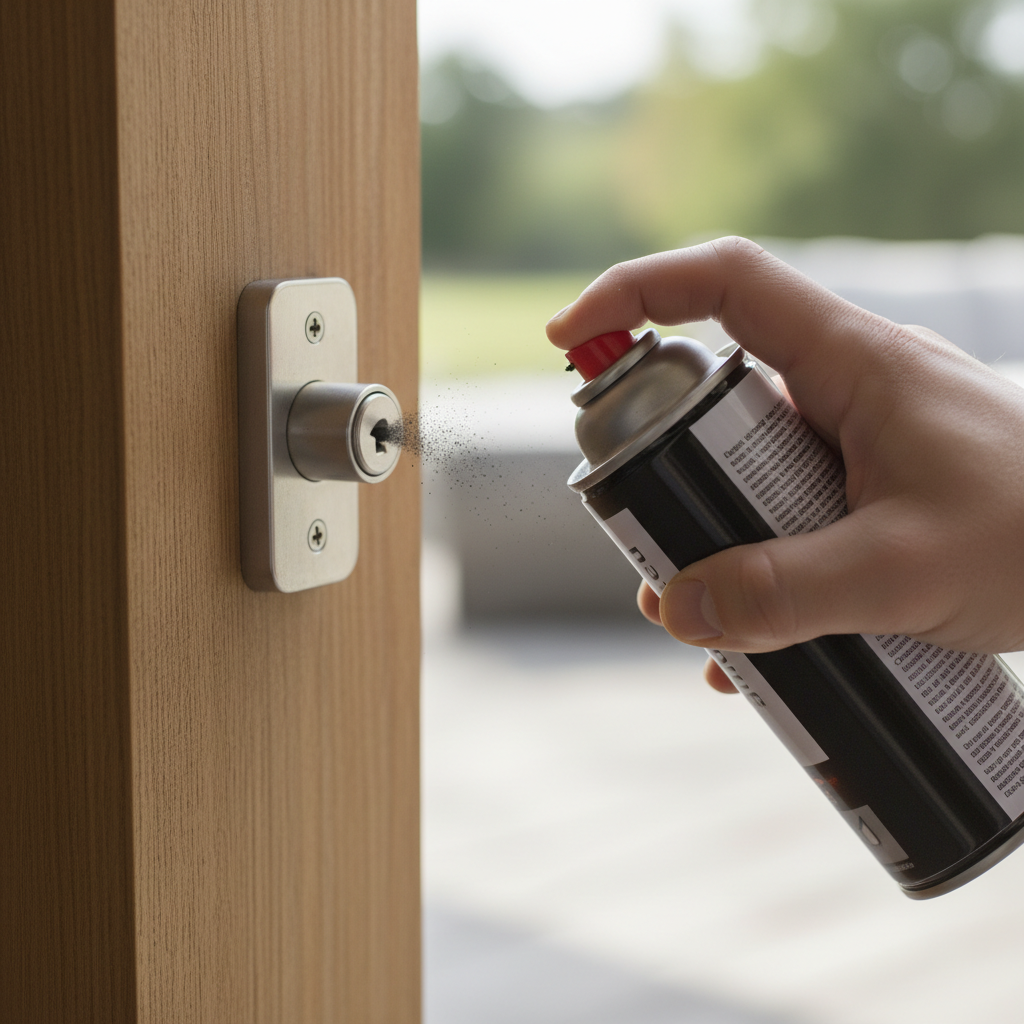
3. Lubricate the Keyway — Apply a graphite-based lubricant directly into the keyway.
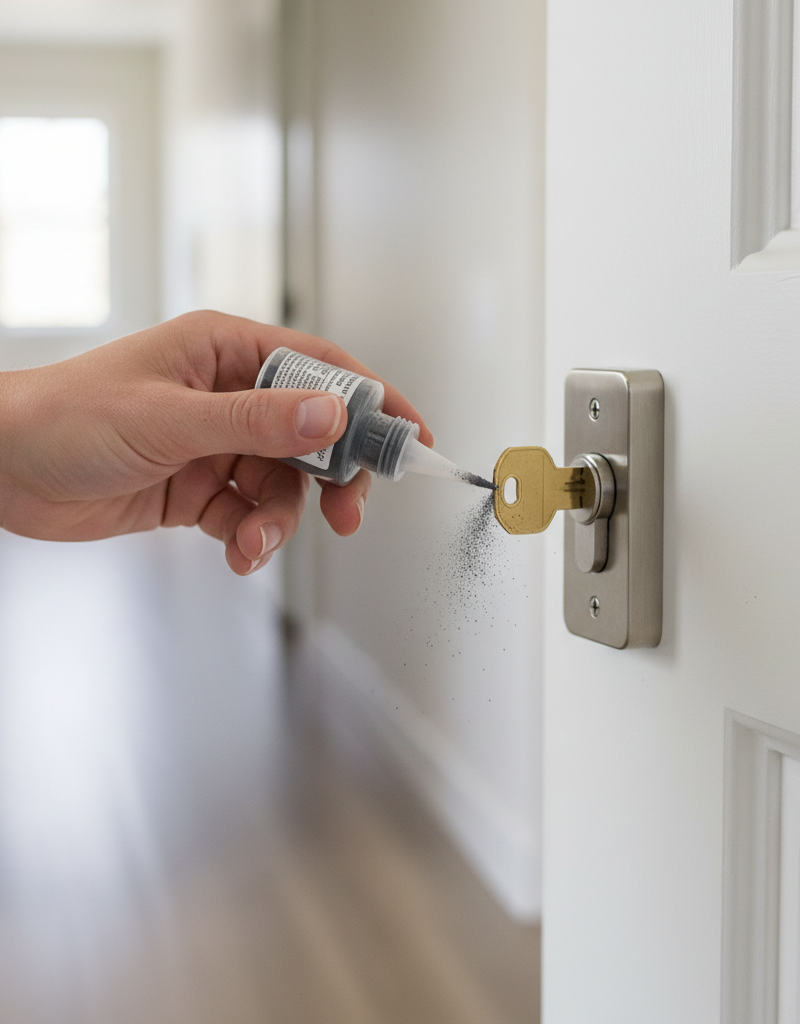
- Shake the can of graphite lubricant well. Aim the nozzle into the keyway and give a short, controlled puff. A little goes a long way.
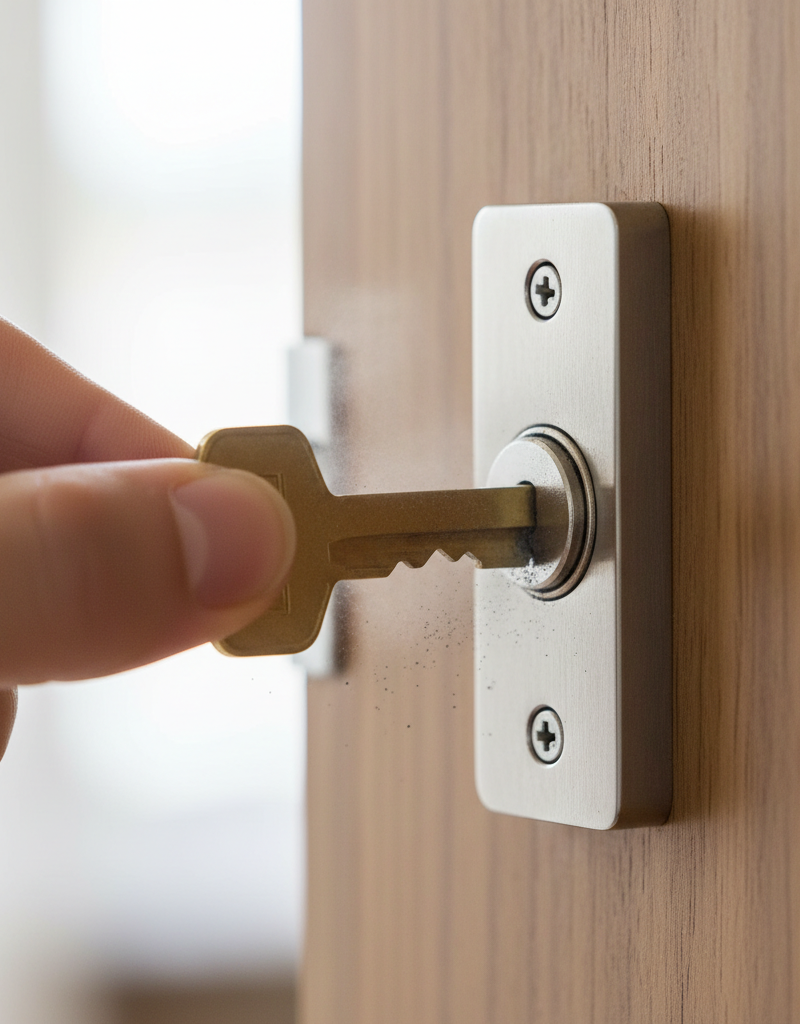
- Insert your key fully, turn it back and forth several times, and then remove it. You may see some black residue on the key; this is normal. Wipe the key clean. Repeat this process 2-3 times until the key turns more smoothly.
- Why graphite? Unlike oil, graphite is a dry lubricant that won't attract dust or gum up the mechanism over time. Avoid WD-40 or other oil-based sprays in the keyway, as they can worsen the problem long-term.
4. Lubricate the Latch/Deadbolt Mechanism — Target the moving parts of the bolt.
- With the door open, extend the latch bolt or deadbolt fully. Spray a small amount of graphite lubricant directly onto the bolt where it slides in and out of the door edge.
- Also, spray a small amount into the small gap around the bolt where it enters the lock assembly.
- Work the lock handle or turn the key repeatedly to extend and retract the bolt a dozen times, helping the lubricant penetrate.
5. Check and Tighten Mounting Screws — Loose screws can cause internal misalignment.
- Examine the screws on the lock assembly visible on the edge of the door (often two screws securing the latch plate) and any screws on the interior handle or deadbolt escutcheon plates.
- Using the appropriate screwdriver (Phillips or flathead), gently tighten these screws. Do not overtighten, as this can warp the mechanism or strip the screws. Just snug them up until they are firm.
- Tip: If you see any screws on the exterior side of the door, check those too, especially on deadbolts, as they often secure the entire cylinder assembly.
6. Inspect the Strike Plate Alignment — Misalignment here causes binding.
- Close the door slowly and observe where the latch bolt or deadbolt meets the strike plate (the metal plate on the doorframe). Is it hitting cleanly in the center of the opening, or is it rubbing against the top, bottom, or sides?
- If it's rubbing, you may need to adjust the strike plate. Many strike plates have slotted screw holes allowing for minor adjustments. Loosen the screws, slightly shift the plate in the required direction (up, down, left, or right), and then retighten.
- If major misalignment: The door or frame might have shifted. This is a more involved fix, potentially requiring chiseling out the strike plate mortise or adjusting door hinges. For minor issues, this step often resolves stiff turning.
7. Test the Lock Thoroughly — Ensure smooth operation with the door open and closed.
- With the door open, cycle the lock repeatedly using your key and the interior turn-knob/lever. Note any remaining stiffness or grinding.
- Now, close the door and test the lock again. Does it engage and disengage smoothly?
- If still stiff, try applying a tiny bit more graphite and working the mechanism. Sometimes it takes a few cycles for the lubricant to fully distribute.
Common Causes
- Dirt and Grime Accumulation: The most frequent culprit. Dust, lint, pet hair, and environmental debris get into the keyway and internal mechanisms, forming a sticky paste that impedes pin movement and cylinder rotation.
- Lack of Lubrication: Over time, the factory lubricants dry out or wear away, increasing friction between moving metal parts.
- Incorrect Lubricant Use: Using oil-based sprays like WD-40 inside the keyway. While they offer temporary relief, they quickly attract more dust and debris, exacerbating the problem into a gummy mess.
- Misaligned Components: The door itself, the doorframe, the lock's mounting screws, or the strike plate can shift slightly due to house settling, humidity changes, or loose screws. This causes the latch or deadbolt to bind or rub, making the lock difficult to turn.
- Worn or Damaged Key: A bent, twisted, or severely worn key can fail to properly align the pins, leading to stiffness. Try using a newer, less worn spare key if available.
- Internal Wear and Tear: Over many years, the metal pins, springs, or cylinder components can wear down, become corroded, or break, leading to internal friction or failure. This is less common but can happen with very old or heavily used locks.
Common Mistakes
- Using Oil-Based Lubricants (e.g., WD-40) in the Keyway: This is the most common and damaging mistake. While they seem to work initially, oil-based products attract and trap dust, creating a gummy sludge that makes the lock worse over time. Always use graphite powder or a silicone-based lock lubricant for the keyway and internal mechanisms.
- Ignoring Minor Stiffness: Allowing a lock to remain stiff can lead to more significant wear on the internal components, potentially requiring a full replacement down the line.
- Overtightening Screws: When attempting to tighten loose mounting screws, overtightening can warp the lock's internal housing, causing new binding points and potentially stripping the screws themselves.
- Forcing the Key: If the key doesn't turn, don't force it with excessive pressure. This can bend or break the key inside the lock, a much more complicated and costly problem to fix.
- Applying Lubricant to the Wrong Areas: Only lubricating the face of the lock or the exposed bolt can neglect the internal cylinder and keyway, which are often the primary source of stiffness.
- **Assuming the Lock is
Related Articles
Keep troubleshooting with these hand-picked guides from FixlyGuide:
- The 5-Minute Secret to a Smooth-Turning Door Lock (Stop Jiggling That Key!) — Restore your sticky door lock to butter-smooth operation with this simple, five-minute lubricant trick, saving you frustration and potentia…
- The 90-Second Trick to a Latching Door (and Why Yours Might Be Off) — Discover the surprisingly simple reasons most doors fail to latch and how a quick, often overlooked adjustment can solve your problem in un…
- The 5-Minute Trick to a Silky-Smooth Door Lock (and Why Yours Is Sticky) — A sticky door lock is annoying and can be a security risk. Learn how to quickly diagnose and fix the common causes of a door lock that won'…
- The 3 Hidden Reasons Your Door Won't Latch (And the Easy Fixes) — A door that won't latch properly is a common household nuisance, often caused by simple issues that are easy to diagnose and repair.
- The 3 Hidden Reasons Your Door Won't Latch (And the Easy DIY Fixes) — Don't live with a door that refuses to latch; discover simple, DIY solutions for common door latch problems and restore security and privac…
- The Hidden Reason Your Ceiling Fan Wobbles (And 3 Cheap Fixes) — A wobbling ceiling fan isn’t just annoying; it can be a sign of imbalance or loose connections that are simple to fix with the right approa…
Frequently asked questions
What's the best lubricant for a door lock?+
For the internal mechanism and keyway, a graphite-based dry lubricant is best. It won't attract dust and grime like oil-based lubricants. For external moving parts (like the latch bolt), a silicone spray can also work well.
Why shouldn't I use WD-40 in my door lock?+
WD-40 and similar oil-based sprays are not recommended for door lock keyways because they are 'wet' lubricants. While they might provide temporary relief, they quickly attract and trap dust, dirt, and debris, which will gum up the delicate internal pins and worsen the lock's performance over time.
Can a worn key cause a lock to stick?+
Yes, absolutely. A bent, twisted, or significantly worn key might not properly align the internal pins of the lock cylinder, causing it to feel stiff, grind, or even fail to turn at all. Try using a brand-new, unworn spare key to see if the issue resolves.
How do I know if my lock needs to be replaced?+
If, after cleaning, lubricating, and checking alignment, the lock still functions poorly, or if internal parts are visibly broken, jammed, or severely corroded, it's likely time for a replacement. Persistent grinding, inability to fully turn, or the key breaking inside are also signs that professional replacement may be needed.
How often should I lubricate my door locks?+
It's a good practice to lubricate your door locks (especially exterior ones) once a year, or whenever you notice the first signs of stiffness or resistance. Regular, preventative maintenance with graphite lubricant can significantly extend the life and smooth operation of your locks.
Discussion
Loading comments…