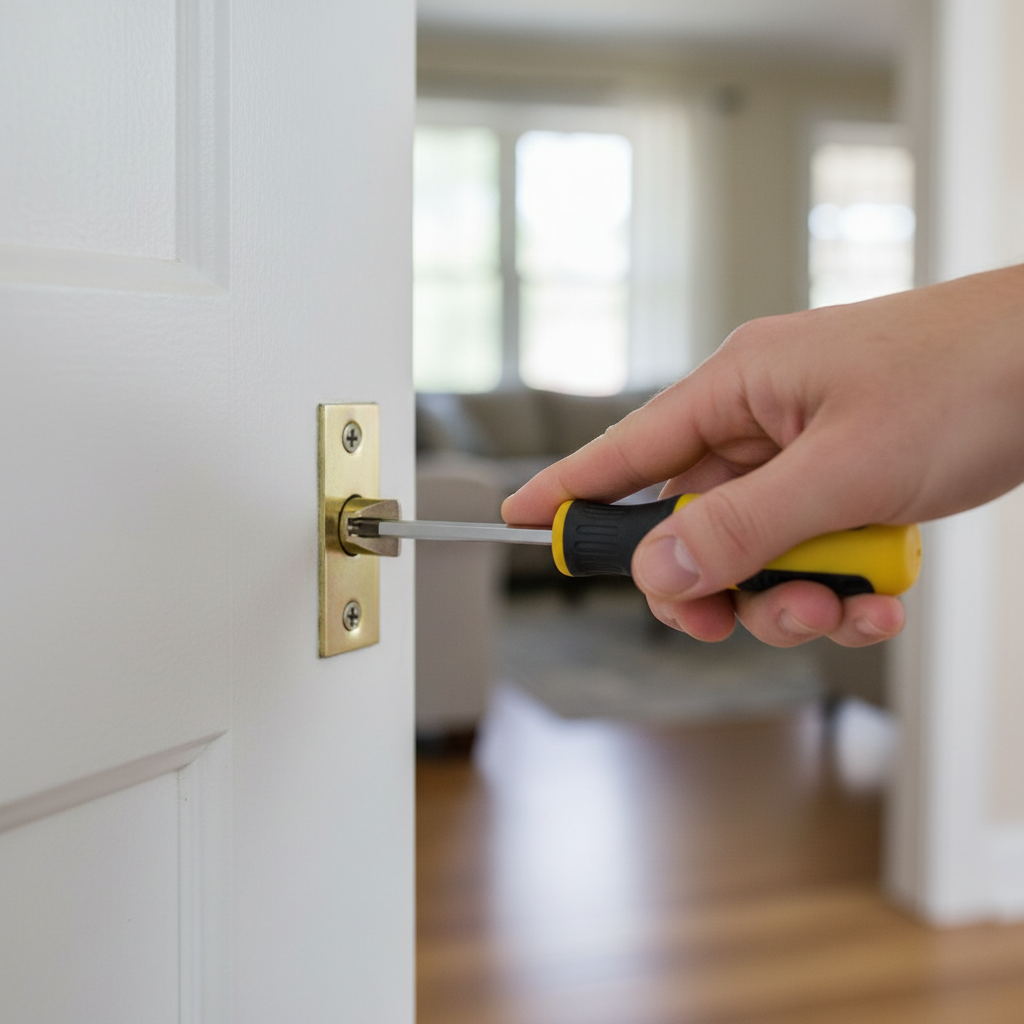
Tools & materials you'll need
Affiliate linksAs an Amazon Associate FixlyGuide earns from qualifying purchases — at no extra cost to you. Prices and availability are accurate as of publication and subject to change.
Quick Answer
A door that refuses to latch is usually a simple case of misalignment between the door's latch bolt and the strike plate on the door frame. Often, a few minor adjustments to the strike plate, tightening of loose hinge screws, or a quick lubrication of the latch mechanism can restore proper function. These fixes typically require only basic hand tools and can be completed in mere minutes, saving you the cost and hassle of a professional handyman.
The Problem
You push your door shut, but instead of a satisfying click and secure closure, it bounces open, leaving you with an annoying draft, a lack of privacy, or a security concern. This common household frustration usually manifests in several ways: the door closes but the latch bolt doesn't fully extend into the strike plate hole; the door closes, but the latch bolt strikes the frame above or below the strike plate; or the latch bolt itself seems stuck, moving sluggishly or not at all. While seemingly minor, a door that won't latch properly can be a significant nuisance, affecting temperature control, noise insulation, and the overall feel of your home. Before you panic and consider replacing the entire door or lockset, understand that the solution is almost always much simpler.
How It Works
To properly diagnose and fix a door that won't latch, it helps to understand the basic mechanics of how a door latches. Every standard hinged door has a latch mechanism integrated into the door handle or knob. When you turn the handle, a spring-loaded latch bolt retracts into the door. When you release the handle, the spring pushes the latch bolt back out. As the door closes, the angled face of the latch bolt slides against the lip of the strike plate, forcing the bolt to retract momentarily. Once the door is fully closed and the latch bolt aligns with the hole in the strike plate, the spring pushes the bolt fully into the hole, securing the door.
The strike plate is a metal plate mounted on the door frame that provides a finished opening and protection for the latch bolt's entry point. Its precise positioning is critical. The plate has a lip that guides the latch bolt and a hole for the bolt to enter.
Several factors can disrupt this seemingly simple dance: changes in humidity can cause the door or frame to swell or shrink, shifting the alignment. Loose hinge screws can allow the door to sag. Worn-out latch mechanisms can become stiff or sticky. Over time, even slight house settling can subtly shift the door frame. Understanding these components—the latch bolt, the strike plate, and the hinges—is key to effective troubleshooting and repair.
Step-by-Step Fix
Safety Note: Always work carefully when using hand tools. Wear safety glasses if there's any risk of flying debris. If dealing with an older door, be mindful of brittle wood or paint layers.
1. Inspect the Latch and Strike Plate — Pinpoint the misalignment
Begin by opening the door and examining the latch bolt on the edge of the door. Does it move in and out smoothly when you operate the handle? Next, close the door slowly until the latch bolt just touches the door frame. Look closely at where the latch bolt makes contact with the strike plate or door frame. Is it hitting above, below, or to the side of the strike plate hole? Is the latch bolt fully retracting and extending? This visual inspection is crucial for identifying the primary issue.
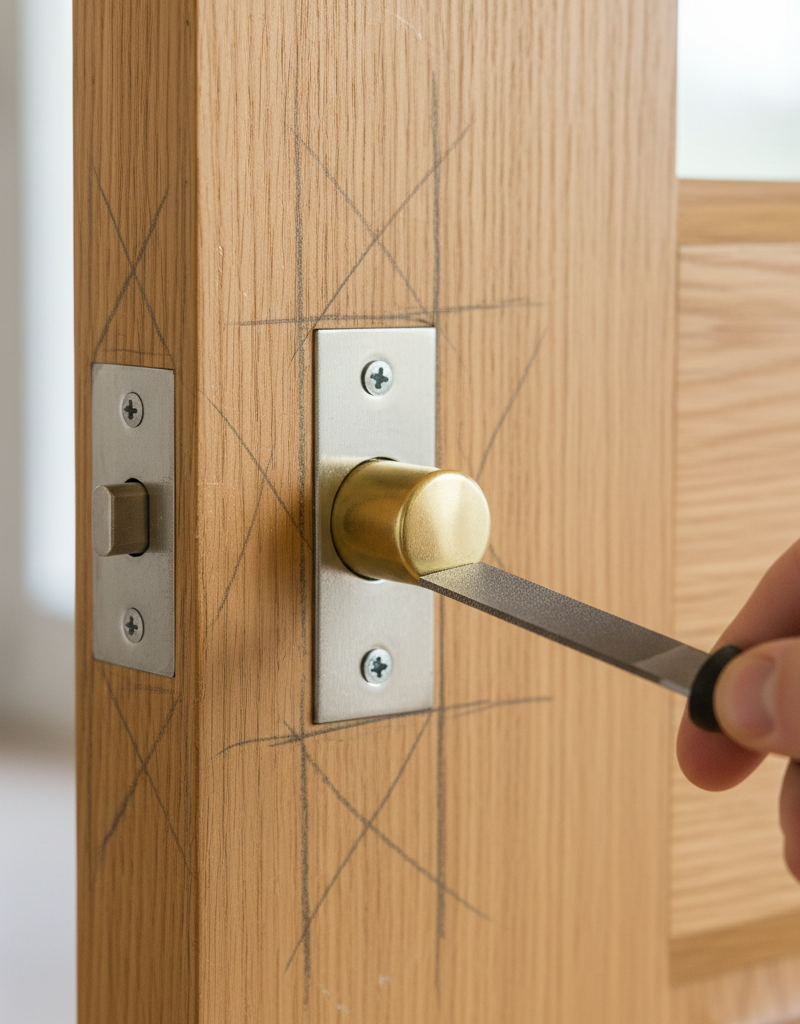
- If the latch bolt is hitting the frame: Use a pencil to mark exactly where the latch bolt is striking the frame, both horizontally and vertically. This mark will tell you precisely where the strike plate needs adjustment.
- If the latch bolt is stiff: Proceed to step 4 – Lubricate the Latch Mechanism.
2. Tighten Hinge Screws — Resolve door sag
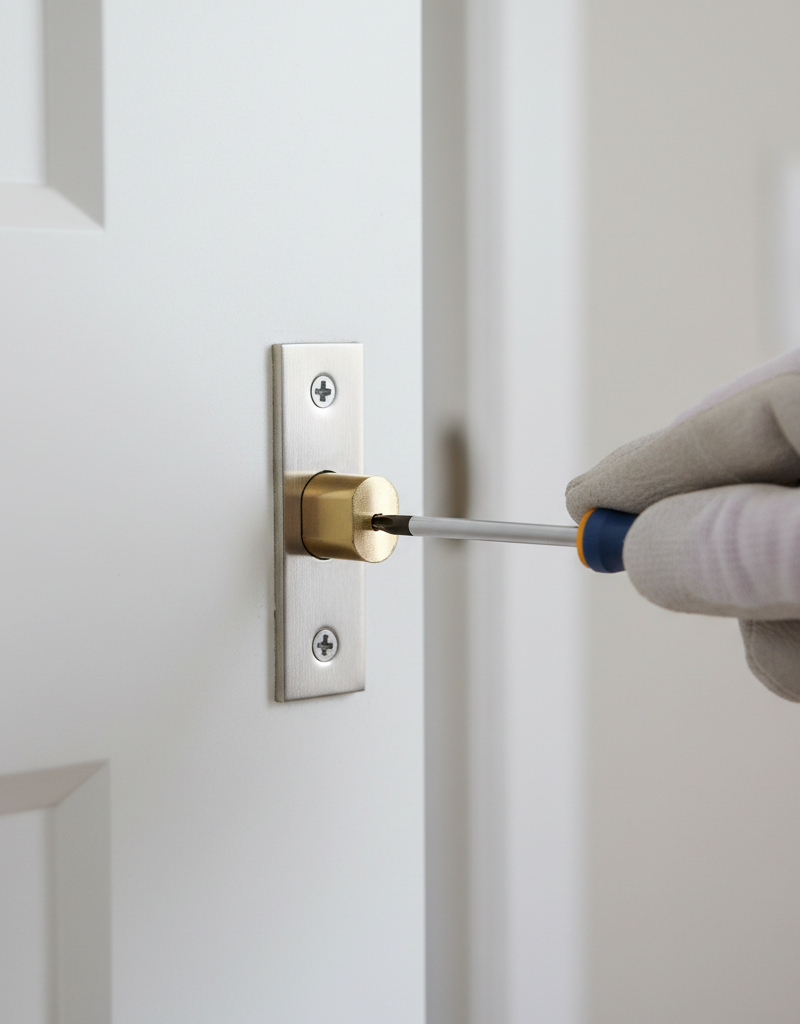
Loose hinges are a very common culprit for a misaligned door. Open the door wide and inspect all the screws on the door hinges and the frame hinges. Use a screwdriver to tighten any loose screws. Start with the top hinge, then the middle, and finally the bottom. Don't overtighten, but ensure they are snug. Pay particular attention to the screws on the top hinge, as these bear the most weight and often loosen first, causing the door to sag.
- If a screw spins freely: The screw hole is stripped. Remove the screw, insert a few wooden toothpicks (or a small wooden dowel) with wood glue into the hole, let it dry, then break off flush and reinsert the screw. This provides new material for the screw threads to bite into.
3. Adjust the Strike Plate Position — Correct horizontal or vertical misalignment
If tightening hinges didn't solve the problem, the strike plate is likely misaligned. If your initial inspection showed the latch bolt hitting above or below the hole, you’ll need to adjust the plate vertically. If it's hitting to the side, you'll need horizontal adjustment. In some cases, you may need both.
- For Vertical Adjustment: Unscrew the strike plate and remove it. Use a utility knife or chisel to carefully widen the top or bottom of the mortise (the recessed area where the strike plate sits) as needed. Work slowly, removing only small amounts of wood. Reattach the strike plate and test the door. You might also need to slightly file the top or bottom of the strike plate hole with a metal file.
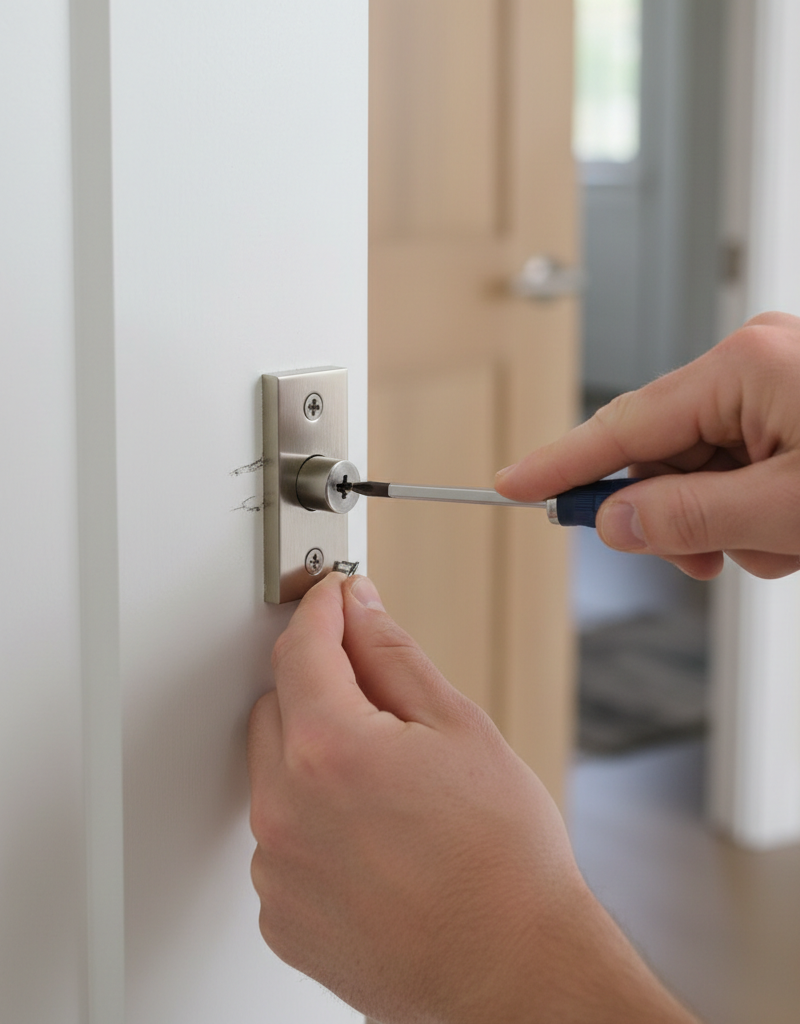
- For Horizontal Adjustment: Many standard strike plates have elongated screw holes that allow for minor sideways adjustment without removing wood. Loosen the strike plate screws, nudge the plate slightly in the desired direction, and retighten. If this isn't enough, you might need to remove the plate and carefully expand the side of the mortise with a utility knife or chisel. Alternatively, if the latch bolt is hitting the frame before the strike plate, you can use cardboard shims behind the strike plate before screwing it back in, effectively moving the plate out slightly.
- If the hole is too small: If the latch bolt hits the edge of the hole but won't go in, remove the strike plate and use a metal file to widen the interior of the hole itself. Test frequently.
4. Lubricate the Latch Mechanism — Free up a sticky bolt
Sometimes, the latch bolt itself is stiff or sticky, preventing it from fully extending or retracting smoothly. This can be due to accumulated dirt, corrosion, or old, gummy lubricant. Use a silicone-based lubricant or graphite powder (avoid oil-based lubricants like WD-40, which can attract more dust) and spray it directly into the latch mechanism where the bolt extends from the door and into the gap around the bolt itself. Operate the handle repeatedly to work the lubricant into the mechanism. Wipe away any excess.
5. Adjust the Door Stop (Optional) — Fine-tune closing pressure
If the door still doesn't latch easily after the previous steps, or if it has too much play when closed, you might need to adjust the door stop molding (the thin strip of wood on the door frame that the door closes against). If the door closes too tightly against the stop, the latch might not fully engage. If there's too much gap, the latch might not reach the strike plate.
- Carefully use a pry bar and shims (or a thin piece of wood) to gently pry the door stop molding away from the door frame. Reposition it slightly inward or outward as needed and re-fasten it with finishing nails. This is a more advanced adjustment, often only necessary for very stubborn cases or older, settling homes.
6. Replace the Strike Plate (Last Resort) — If the old one is too damaged
If the original strike plate is severely bent, worn, or its holes are simply too far off from where they need to be, replacing it might be the easiest solution. Measure the old strike plate's dimensions and screw hole spacing, then purchase a replacement online or at a hardware store. Many modern strike plates come with larger, more forgiving holes that allow for greater adjustment, which can be particularly helpful if your door and frame have shifted significantly over time.
Common Causes
- Loose Hinge Screws: The most frequent cause. As screws loosen, the door sags, misaligning the latch with the strike plate.
- House Settling: Over years, slight shifts in a home's foundation can cause door frames to rack or become out of square, altering strike plate alignment.
- Humidity & Temperature Changes: Wood doors and frames expand in high humidity and contract in dry conditions. This natural movement can temporarily or permanently shift alignment.
- Worn or Damaged Latch Mechanism: Internal components of the door handle's latch can wear out, become sticky with grime, or springs can lose tension, preventing the latch bolt from extending fully or smoothly.
- Improper Installation: A strike plate that was never perfectly aligned during original installation can become problematic as other factors (like settling) come into play.
- Damaged Strike Plate: The strike plate itself can become bent, warped, or have its opening enlarged excessively from repeated impact or attempts to force the latch.
Common Mistakes
- Ignoring Loose Hinges First: Many homeowners jump straight to adjusting the strike plate without checking for loose hinge screws. Always check hinges first, as tightening them often solves the problem immediately.
- Filing Too Much Wood: When adjusting the strike plate mortise, removing too much wood too quickly can weaken the door frame and create an oversized, unsightly gap. Work in small increments.
- Using the Wrong Lubricant: Oily lubricants like WD-40 can attract dust and grime, eventually making the latch stickier. Opt for silicone spray or graphite powder for door mechanisms.
- Overtightening Screws: Stripping screw holes by overtightening is a common mistake. Snug is enough; forceful tightening can damage wood or the screw head.
- Assuming the Latch is Broken: Don't immediately assume the entire latch mechanism needs replacement. Most issues are alignment-related or due to simple stiffness that lubrication can cure.
- Forgetting the Door Stop: If all other adjustments fail, the door stop molding might be the ultimate culprit, forcing the door to close either too far or not far enough for the latch to engage properly. Don't overlook it.
Cost & Time Breakdown
| Task | DIY cost | Pro cost | Time |
|---|---|---|---|
| Hinge Tightening | $0 (tools) | $50–$100 | 5–10 minutes |
| Strike Plate Adjustment | $0–$5 (file) | $50–$150 | 15–30 minutes |
| Latch Lubrication | $5–$10 | $50–$100 | 5 minutes |
| Replace Strike Plate | $5–$20 | $75–$175 | 10–20 minutes |
| Door Stop Adjustment | $0 (tools) | $75–$200 | 30–60 minutes |
Tips & Prevention
- Periodic Hinge Checks: Every 6-12 months, quickly check all door hinge screws for tightness. This simple preventative measure can prevent many latch-related issues.
- Humidity Control: In homes with extreme seasonal humidity swings, using a dehumidifier in summer and a humidifier in winter can help stabilize wood doors and frames, reducing swelling and shrinking.
- Clean and Lubricate Annually: A quick spray of silicone lubricant or puff of graphite powder into latch mechanisms on all doors once a year can keep them operating smoothly.
- Don't Force It: If a door isn't latching easily, don't repeatedly slam it shut. This can bend the strike plate, damage the latch, or loosen hinges further. Diagnose and fix the issue promptly.
- Check for Warping: Periodically inspect your door itself for signs of warping, especially around the edges. A severely warped door may never latch correctly and might require professional intervention or replacement.
- Proper Hinge Pin Installation: Ensure all hinge pins are fully seated. Sometimes a slightly elevated hinge pin can cause subtle binding or misalignment.
When to Call a Professional
While many door latch issues are DIY-friendly, there are times when calling a professional is the smarter choice. If, after attempting the steps above, your door still refuses to latch, or if you encounter structural damage to the door frame, cracked wood around hinges or the strike plate, or if the door itself is severely warped, it's time to bring in a licensed carpenter or handyman. Issues involving significant frame repair beyond simple wood chiseling, or if multiple doors in your home are experiencing similar, unexplained problems (which could indicate foundation issues), warrant professional assessment. Additionally, if you're uncomfortable with making adjustments to the door stop or feel you might damage the door or frame further, a pro can handle the task efficiently and correctly, ensuring your door functions perfectly and securely.
Related Articles
Keep troubleshooting with these hand-picked guides from FixlyGuide:
- The 5-Minute Fix for a Door That Won't Latch (And the Hidden Cause) — Discover the surprisingly simple reasons your door isn't latching and how to fix it in minutes with common household tools.
- The 3 Hidden Reasons Your Door Won't Latch (And the Easy Fixes) — A door that won't latch properly is a common household nuisance, often caused by simple issues that are easy to diagnose and repair.
- The 3 Hidden Reasons Your Door Won't Latch (And the Easy DIY Fixes) — Frustrated by a door that refuses to latch? Discover the common culprits behind this annoying problem and learn simple, effective DIY fixes…
- The 3 Hidden Reasons Your Door Won't Latch (And the Easy Fixes) — Discover the surprising reasons your interior door isn't latching and how to quickly diagnose and fix the issue with simple tools.
- The 3 Hidden Reasons Your Door Won't Latch (And the Easy DIY Fixes) — Don't live with a door that refuses to latch; discover simple, DIY solutions for common door latch problems and restore security and privac…
- The 3 Hidden Reasons Your Sprinkler Head Won't Pop Up (And How to Fix Them) — Frustrated by a sprinkler head that won't rise? Discover the top three culprits behind this common irrigation issue and how to resolve them…
Frequently asked questions
Why won't my door latch catch?+
The most common reasons a door latch won't catch are misaligned strike plates, loose door hinges causing the door to sag, or a sticky/worn-out latch mechanism within the door handle itself.
Can I adjust a door latch without removing the door?+
Yes, absolutely! Most door latch issues can be resolved with minor adjustments to the strike plate on the door frame or by tightening hinge screws, all of which can be done with the door in place.
What's the best lubricant for a door latch?+
For door latches, silicone-based spray lubricants or graphite powder are recommended. Avoid oil-based lubricants like WD-40, as they can attract dust and grime over time, leading to more stickiness.
Discussion
Loading comments…