Tools & materials you'll need
Affiliate linksAs an Amazon Associate FixlyGuide earns from qualifying purchases — at no extra cost to you. Prices and availability are accurate as of publication and subject to change.
Quick Answer
The most common drywall patching mistake homeowners make is underestimating the need for proper backing and multiple, thin layers of joint compound. For holes larger than a nail pop, simply spackling over them isn't enough; the patch will likely fail over time, cracking or bulging. A lasting repair involves creating a solid foundation for the new drywall material and meticulously feathering out thin coats of joint compound, ensuring a smooth, invisible finish.
The Problem
Accidental holes in drywall are an inevitable part of homeownership, whether from moving furniture, hanging pictures incorrectly, or even enthusiastic children. While small punctures may seem minor, a poorly executed patch can be more noticeable than the original damage. Many homeowners rush the repair, globbing on spackle or joint compound, only to find the patch shrinks, cracks, or creates an unsightly hump on the wall. The true problem isn't just the hole itself, but the lack of understanding regarding the underlying structure and proper material application needed for a truly invisible repair that integrates seamlessly with the existing wall.
How It Works
Drywall, also known as plasterboard or gypsum board, consists of a gypsum plaster core pressed between two sheets of heavy paper. It's a relatively soft material, making it easy to cut and install, but also susceptible to damage. When a hole occurs, the paper facing and gypsum core are compromised. The goal of patching is to restore the structural integrity and create a smooth surface ready for paint.
For very small holes (like nail or screw holes), spackle or lightweight joint compound can directly fill the void because the surrounding drywall provides enough support. The compound adheres to the gypsum and paper, drying to a solid mass. However, for holes larger than about 1/4 inch, the unsupported compound will shrink significantly, crack, or even fall out. This is where backing or a dedicated patch comes in. A patch provides a new, solid surface for the joint compound to bond to, effectively replacing the missing drywall. The compound then fills the edges and feathers out, creating a gradient that blends the patch into the existing wall. The key to an invisible repair lies in the feathering – extending the joint compound several inches beyond the patch edges, gradually decreasing its thickness to eliminate any perceptible ridge. Multiple thin coats are crucial because joint compound shrinks as it dries. Applying one thick coat will lead to excessive shrinkage, cracking, and a noticeable dip in the patched area.
Step-by-Step Fix
1. Assess the Damage — Determine the right patching method for the hole size.
- Pinprick/Nail Holes (small-dime size): Use spackle or lightweight joint compound directly.
- Small Holes (dime-quarter size): Use a mesh patch or small self-adhesive patch.
- Medium Holes (quarter-golf ball size): Use a California patch (cut a new piece of drywall to fit, with paper flanges) or a metal-backed patch.
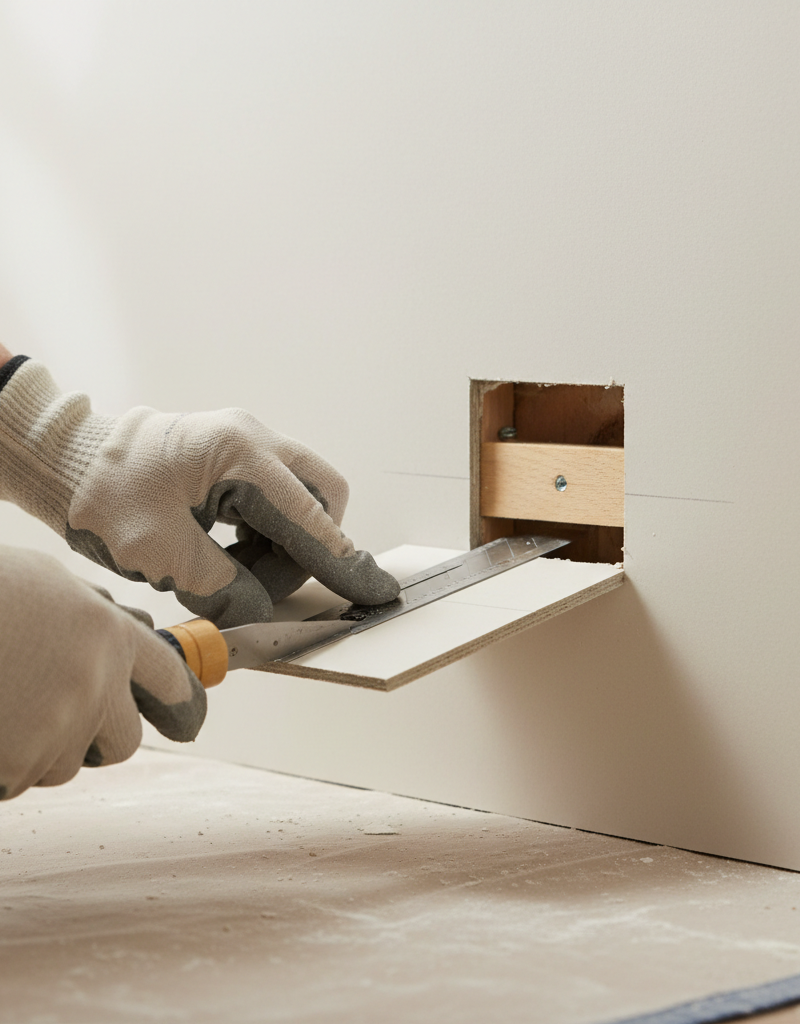
- Larger Holes (golf ball+): Requires cutting out a square, adding wood backing, and screwing in a new piece of drywall. This article focuses on small to medium holes. For larger holes, professional help or a more advanced guide is recommended.
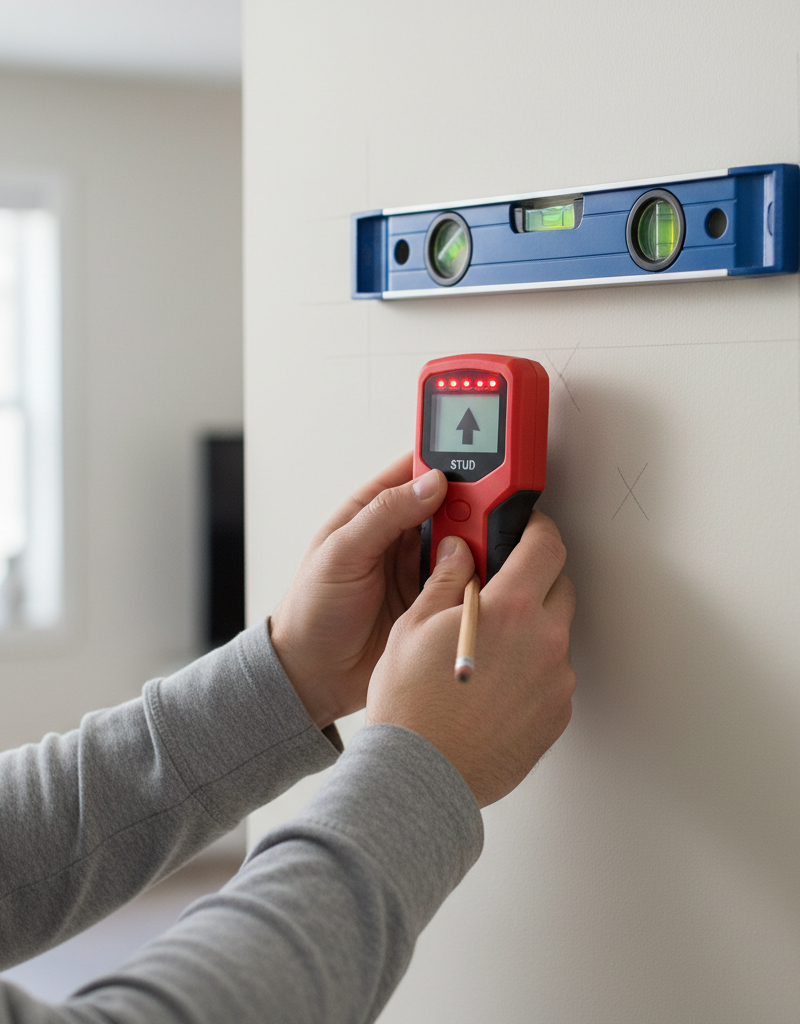
Safety Note: Always ensure the area around the hole is free of electrical wires or plumbing pipes before cutting or drilling. If in doubt, use a stud finder with electrical detection.
2. Prepare the Hole — Clean and trim the damaged edges.
- Remove Loose Debris: Carefully pick or cut away any loose paper or jagged gypsum around the hole using a utility knife. The goal is a clean, relatively smooth edge for the patch to adhere to.
- Push in Jagged Edges: For smaller holes, gently push any inward-pointing paper or gypsum so it’s flush or slightly recessed, creating a cleaner surface for compound adhesion.
3. Apply the Patch — Choose and apply the appropriate patch material.
- For Nail Holes: Skip this step. Dab a small amount of spackle directly into the hole with a putty knife.
- For Small Holes (dime-quarter):
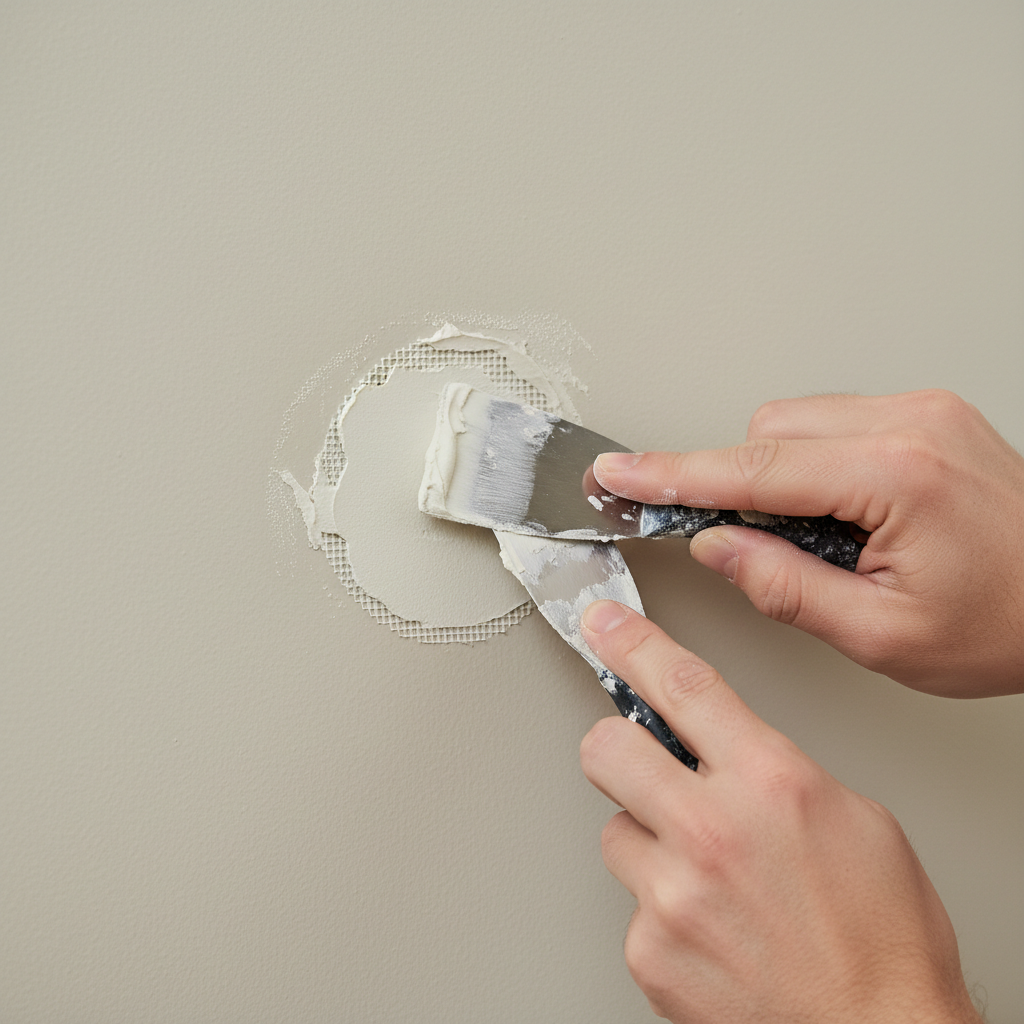
- Self-Adhesive Mesh Patch: Peel off the backing and center the patch over the hole, pressing firmly to ensure good adhesion. The mesh provides reinforcement for the joint compound.
- For Medium Holes (quarter-golf ball):
- Metal-Backed Patch: These patches have a metal screen or plate with adhesive edges. Center it over the hole, adhesive side down, and press firmly. The metal provides rigid backing.
- California Patch (DIY Drywall Plug):
- Cut a square around the hole with a utility knife. Make sure the edges are straight for easier matching.
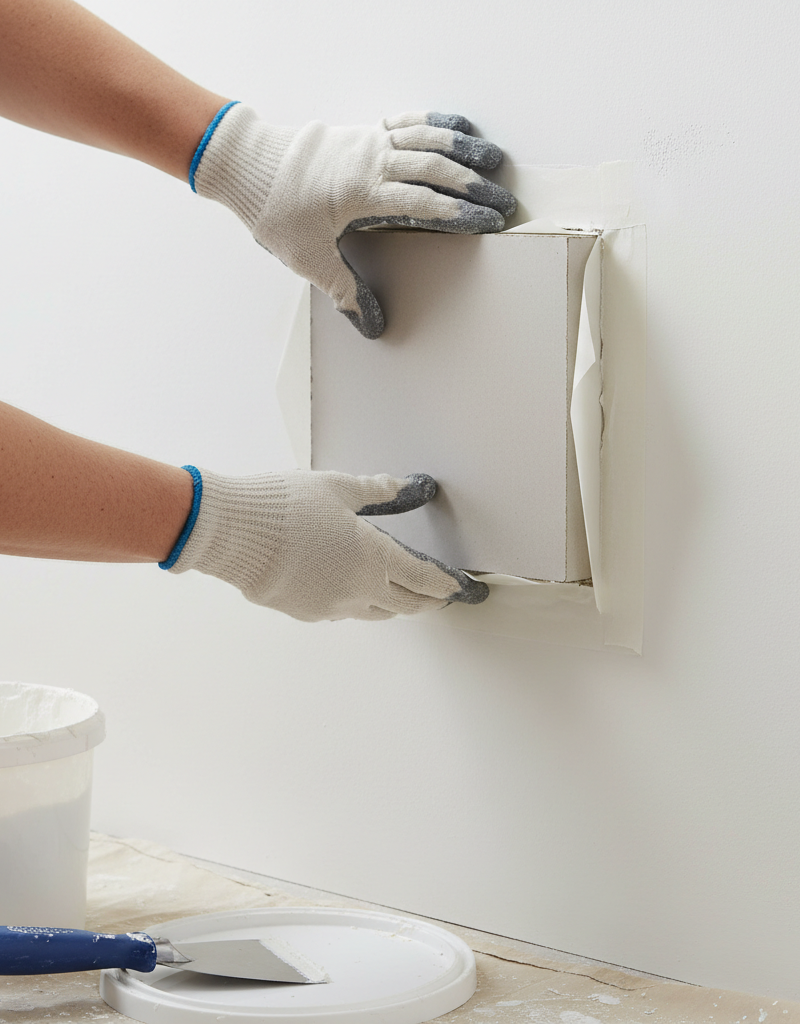
- Cut a new piece of drywall slightly larger than the hole. Score the back paper and gypsum, then snap it. Peel back the front paper from all four edges by about 1 inch, creating paper flanges.
- Apply joint compound to the back of these flanges. Insert the patch into the hole, pressing the flanges firmly against the existing drywall. The flanges should be behind the existing wall, creating a flush surface.
4. Apply First Coat of Joint Compound — Cover the patch and feather out.
- Use a 4- or 6-inch putty knife. Scoop a small amount of all-purpose joint compound onto the knife. Don't overload it.
- Apply a thin, even layer over the patch, pushing the compound into the mesh or around the edges of the metal patch. For California patches, apply it over the edges of the new drywall piece.
- Feather the Edges: Crucially, extend the compound several inches beyond the patch on all sides, gradually tapering the thickness to create a smooth transition. This is where a wider knife (like a 10-inch) can be helpful for the feathered edges, even if you start with a smaller one over the patch itself. The goal is no noticeable ridge or hump.
- Remove Excess: Scrape off any excess compound, leaving just enough to cover the patch and create a smooth blend.
5. Let it Dry Completely — Patience is key.
- Waiting Time: Allow the first coat to dry completely. This usually takes 3-5 hours, but can be longer in humid conditions. Check the compound – it should be uniformly light in color, with no dark or damp spots. Rushing this step is a common mistake.
- Why it Matters: Joint compound shrinks as it dries. If you apply a second coat while the first is still wet, you'll trap moisture, leading to poor adhesion, cracking, and excessive shrinkage that ruins your smooth finish.
6. Sand Lightly — Smooth out imperfections.
- Use 150-grit or 220-grit sandpaper. Gently sand the dried first coat to remove any ridges, bumps, or knife marks. Avoid over-sanding the drywall paper itself.
- Purpose: The goal is to create a perfectly flat and smooth surface for the next coat. Do not press too hard; light pressure is sufficient.
- Clean Dust: Wipe away sanding dust with a damp cloth or sponge. Dust left on the surface can prevent the next coat from adhering properly.
7. Apply Second Coat of Joint Compound — Refine the feathered edge.
- Use a wider putty knife (e.g., 8-inch or 10-inch). Apply another thin layer of joint compound, extending it slightly wider than the first coat.
- Focus on Feathering: Continue to feather the edges out smoothly, making them as thin as possible. The wider knife helps achieve a flatter, more seamless blend.
- Fill Depressions: If you notice any slight depressions from the first coat's shrinkage, fill them now, but still maintain thin layers.
8. Let it Dry Completely Again — More patience.
- Repeat Drying: Allow the second coat to dry fully (another 3-5 hours or more). Again, ensure there are no dark, damp spots. The compound should be uniformly light and dry to the touch.
9. Final Sanding — Achieve a perfect finish.
- Use fine-grit sandpaper (220-grit or 300-grit). Sand the entire patched area very lightly until it's perfectly smooth and blends seamlessly with the surrounding wall.
- Check with Light: For best results, use a work light held at an angle across the wall. This will highlight any imperfections, humps, or dips that you might miss otherwise. Sand until these disappear.
- Clean Thoroughly: Wipe away all sanding dust. This is critical before priming and painting.
10. Prime and Paint — Complete the repair.
- Prime: Apply a quality drywall primer to the entire patched area. This seals the joint compound, ensures uniform paint absorption, and helps prevent
Related Articles
Keep troubleshooting with these hand-picked guides from FixlyGuide:
- The 7 Critical Mistakes Almost Everyone Makes When Painting a Room — Unlock the secrets to a flawless, professional-looking paint job by avoiding common pitfalls and mastering essential techniques for perfect…
- The 7 Mistakes That Ruin a Perfect Paint Job (and How to Fix Them) — Painting a room like a pro isn't just about technique—it's about avoiding common pitfalls that lead to streaks, drips, and uneven finishes.…
- The #1 Mistake Homeowners Make Installing Floating Shelves (and How to Fix It) — Discover the most common error DIYers make when mounting floating shelves into drywall and how to ensure your shelves are sturdy and secure.
- The 3 Drywall Anchors That Will NEVER Fail Your Heavy Mirror (And 2 to Avoid) — Safely hanging a heavy mirror on drywall requires choosing the right anchors and proper installation to prevent frustrating falls and damag…
- The 4-Inch Drywall Hole Fix: Why Most DIY Patches Fail (And How to Do It Right) — Don't let a small drywall hole become a recurring nightmare – discover the secret to a seamless, lasting repair that disappears into your w…
- The #1 Mistake Homeowners Make When Sealing a Deck (and How to Fix It) — Many homeowners make a critical error that prevents their deck sealer from lasting, leading to premature rot and mildew. Learn the right wa…
Frequently asked questions
How do you hide a hole in drywall?+
To truly hide a hole in drywall, you need to use the right patch material for the size of the hole, apply multiple thin coats of joint compound, feather the compound several inches beyond the patch edges, and sand meticulously until the patched area is perfectly flush and smooth with the existing wall. Priming before painting is also crucial for an invisible finish.
Discussion
Loading comments…