Tools & materials you'll need
Affiliate links- AmazonSmall shovel or trowelFor inspecting and digging turf sections.
- AmazonWork gloves1 pair · For protection during inspection and treatment.
- AmazonBroadcast or drop spreaderFor even application of granular products.
- AmazonGarden sprayer or watering canFor applying liquid treatments or nematodes.
- AmazonGarden hose with sprayer nozzleFor watering in treatments.
- AmazonMeasuring cupFor accurate mixing of liquid concentrates.
As an Amazon Associate FixlyGuide earns from qualifying purchases — at no extra cost to you. Prices and availability are accurate as of publication and subject to change.
Quick Answer
Grubs, the larvae of beetles like Japanese beetles or masked chafer beetles, are a common and destructive lawn pest. They feed voraciously on the roots of your grass, severing the plant's connection to water and nutrients. This results in irregular brown patches that peel back easily, revealing the C-shaped white grubs underneath. The most effective approach for homeowners often involves a two-pronged strategy: cultural practices to deter adult beetles and biological or chemical treatments timed to target young, actively feeding grubs in late summer or early fall. Early detection and timely intervention are crucial for minimizing damage and preventing recurring infestations.
The Problem
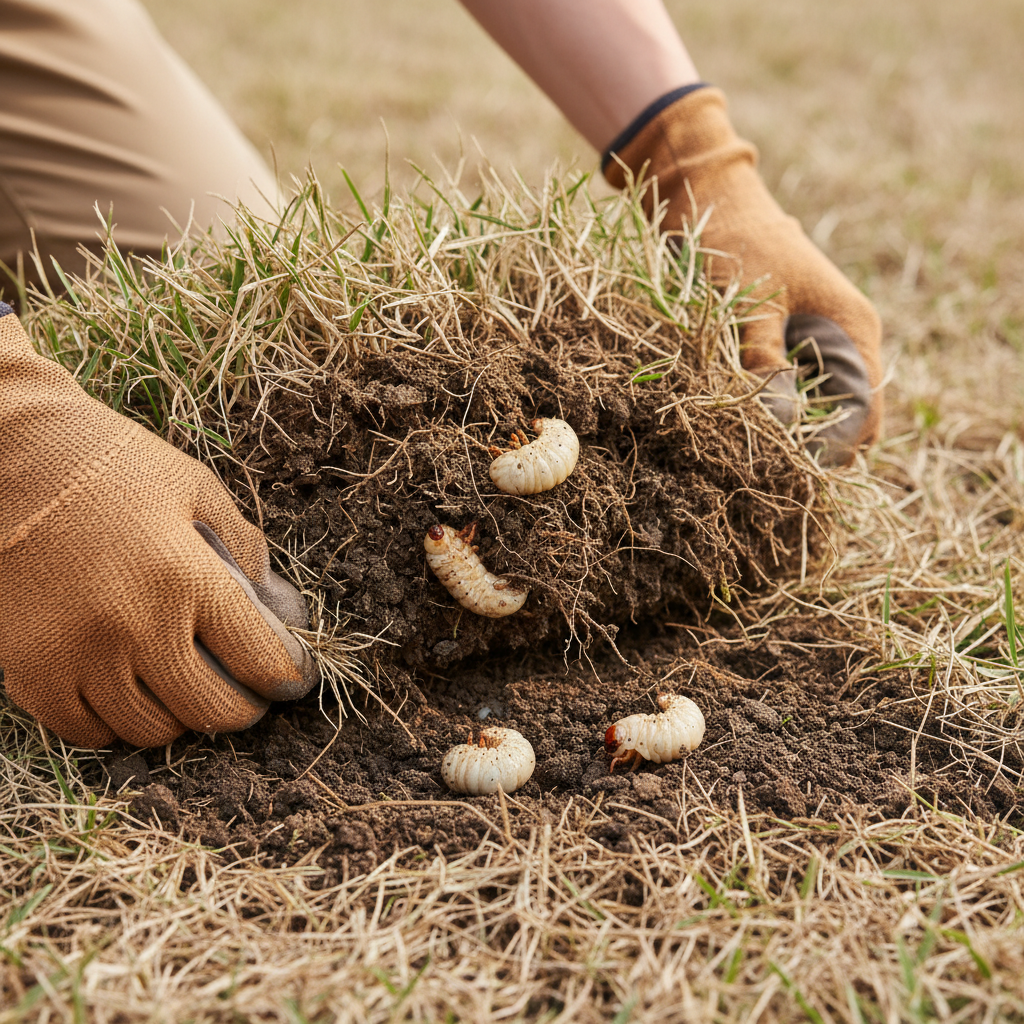
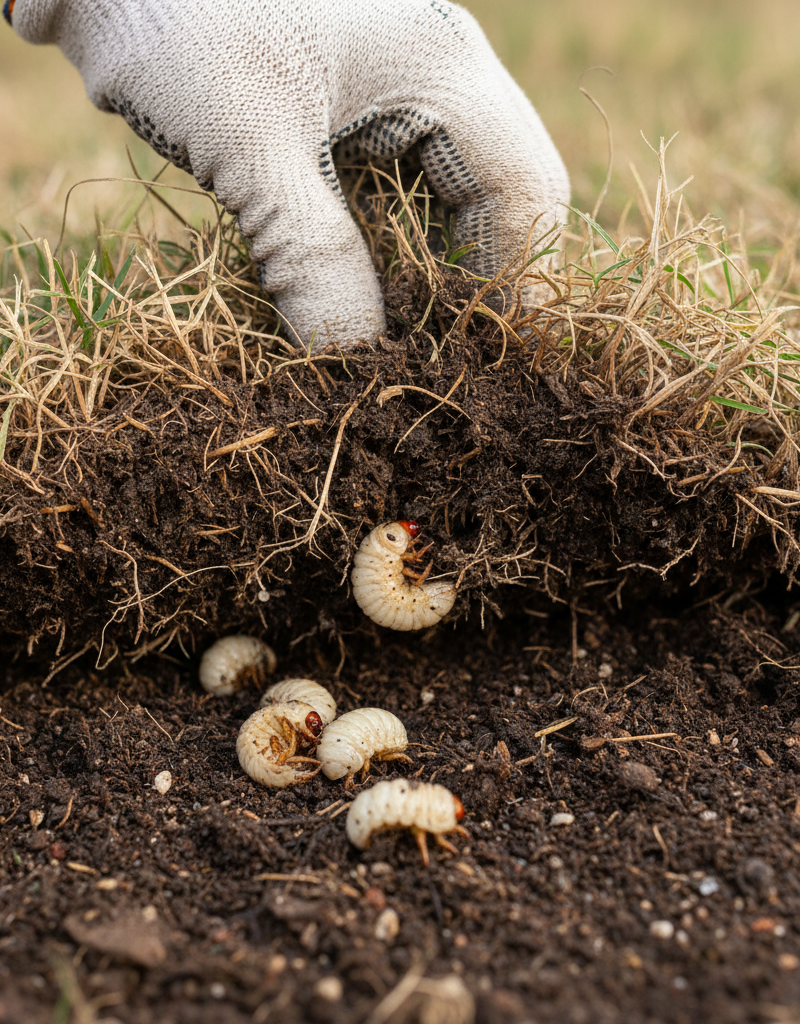
You've lovingly nurtured your lawn, only to discover unsightly, irregular brown patches that don't respond to watering. When you investigate further, perhaps you notice areas of sod that feel spongy underfoot, or even worse, can be rolled back like a rug, exposing a network of missing roots and plump, C-shaped white larvae. This is the tell-tale sign of a grub infestation. These hungry pests are more than just an aesthetic nuisance; they actively destroy the very foundation of your lawn, its root system. Left unchecked, a severe grub infestation can decimate an entire lawn, turning a vibrant green carpet into a barren wasteland, and inviting secondary predators like raccoons and birds to dig up your yard in search of a meal.
How It Works
Understanding the grub lifecycle is paramount to effective control. Most destructive grubs in lawns are the larvae of scarab beetles, such as the Japanese beetle, masked chafer, or June bug. These beetles typically emerge in early summer, around June or July, to mate and lay their eggs in the turf. The adult beetles themselves often feed on ornamental plants but don't cause significant lawn damage. The real problem begins about two weeks after egg-laying, when the eggs hatch into tiny, first-instar grubs. These young grubs immediately begin feeding on grassroots just below the soil surface. As they grow, molting into second and then third instars, their appetite increases dramatically. This intense feeding period, usually from late summer through early fall (August to October), is when the most significant lawn damage occurs. As temperatures drop in late fall, the mature grubs burrow deeper into the soil, sometimes as much as 6-12 inches, to overwinter. In spring, as the soil warms, they migrate back up to feed for a short period before pupating into adult beetles, restarting the cycle. Because grubs are most vulnerable and accessible when they are young and feeding near the surface, timing your treatment to coincide with late summer or early fall is critical for success. Applying treatments too early in spring or too late in fall won't be effective as the grubs are either too small, too deep, or already pupating.
Step-by-Step Fix
Step 1: Confirm the Infestation – Don't treat blindly; verify the problem first.
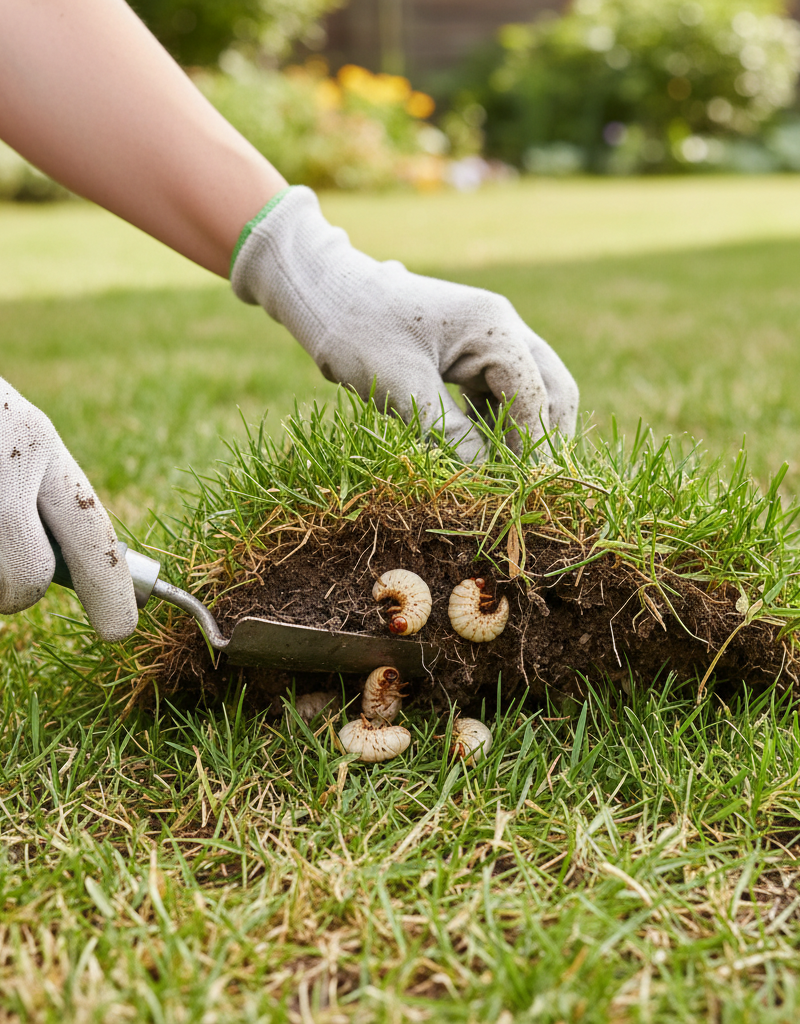
- Examine suspicious brown patches. Grab a corner of the brown turf and try to pull it back. If it rolls up easily like a carpet, or you see obvious root damage, it's a strong indicator of grubs. Alternatively, use a shovel to cut a 1-foot square section of turf about 2-4 inches deep, prying it back to expose the soil and roots. Look for C-shaped, creamy white grubs with six legs near their head and a darker head capsule. Count the grubs: more than 6-10 grubs per square foot indicates a damaging infestation that requires treatment. Fewer than this often means your lawn can tolerate the population without significant damage.
- Tools: Small shovel or trowel, work gloves.
- If this doesn't work: If you don't find grubs but still have brown patches, the issue might be drought stress, fungal disease, or other pests like chinch bugs. Consider a soil test or professional diagnosis.
Step 2: Choose Your Treatment Method – Decide between chemical and biological options based on preference and timing.
- Chemical Insecticides (Preventative): Products containing chlorantraniliprole are often applied in spring (April-May) to prevent grub damage by targeting newly hatched grubs later in the season. These have a longer residual effect. Products with imidacloprid or trichlorfon are curative and should be applied in late summer or early fall (August-September) when grubs are actively feeding. Always read product labels carefully for specific application instructions, safety precautions, and timing.
- Safety: Always wear gloves, long sleeves, and eye protection when handling chemical insecticides. Keep children and pets off treated areas until dry. Avoid application near water sources.
- Biological Control (Curative/Preventative): Beneficial nematodes (Heterorhabditis bacteriophora or Steinernema carpocapsae) are microscopic worms that parasitize grubs. They are most effective when applied to moist soil in the late summer or early fall (August-September) when soil temperatures are between 60-90°F (15-32°C) and grubs are active. Milky Spore is another biological option for Japanese beetle grubs, but it takes years to establish and is less effective for other grub species.
- Storage: Nematodes are living organisms. Purchase from a reputable supplier and keep refrigerated until use. Apply at dusk or on a cloudy day to protect them from UV light.
Step 3: Prepare Your Lawn – Proper preparation ensures better treatment penetration.
- Mow your lawn to its regular height. This helps ensure better contact for granular treatments and allows nematodes to reach the soil more effectively. Lightly water your lawn the day before applying any treatment, especially for nematodes or granular products, to help with absorption. Ensure the soil is moist, but not waterlogged, for optimal product efficacy.
Step 4: Apply the Treatment Systematically – Even coverage is crucial for success.
- For Granular Products: Use a broadcast or drop spreader to apply granular grub killer evenly across the affected areas and surrounding healthy lawn. Walk at a consistent pace to avoid over or under-application. Overlap slightly on each pass to ensure complete coverage. Immediately after application, water the lawn thoroughly (about 1/2 to 1 inch of water) to move the active ingredient into the soil where the grubs are feeding. Follow the product label for watering instructions precisely.
- For Liquid Products (Hose-end or Sprayer): Attach the ready-to-spray bottle to your garden hose or mix the concentrate according to package directions in a pump sprayer. Apply evenly over the affected areas, ensuring full coverage. Again, water thoroughly after application if the label recommends it. For nematodes, mix them with water in a sprayer (remove fine mesh filters that can clog or harm nematodes) or a watering can. Apply to dampened soil, then lightly water again to wash them into the root zone.
Step 5: Follow-Up and Monitor – Persistence is key for lasting control.
- Continue to monitor your lawn for new grub activity or signs of recovery. It may take several weeks for grub populations to decline after treatment. In some cases, a second application may be necessary based on product instructions or severe persistent infestations. Maintain good lawn care practices, including proper mowing, watering, and fertilization, to help your lawn recover and build resistance against future infestations.
- Recovery: Severely damaged areas may require overseeding or patching once grubs are under control.
Common Causes
- Adult Beetle Activity: High numbers of adult beetles (Japanese beetles, June bugs, masked chafers) in your area during early summer indicate a strong likelihood of egg laying and subsequent grub infestations.
- Attractive Conditions: Female beetles prefer to lay eggs in healthy, well-irrigated lawns. Paradoxically, a well-maintained lawn can be more susceptible if adult beetles are present.
- Lack of Preventative Measures: Not applying preventative grub control products in spring can leave your lawn vulnerable to the summer hatch.
- Previous Infestations: If your lawn has had grubs before, it's likely to experience them again in subsequent years, as adult beetles will often return to the same areas to lay eggs.
- Timing of Application: Applying grub control at the wrong time (e.g., in late spring when grubs are too small to cause damage, or in late fall when they are too deep) leads to ineffective control.
Common Mistakes
- Treating Without Confirmation: Many homeowners apply grub control at the first sign of brown patches without confirming grubs are the actual cause. This wastes money and can introduce unnecessary chemicals. Always dig and check first.
- Incorrect Timing of Application: Applying curative grub control in early spring (April-May) is often too early. Grubs are larger and deeper then, making treatments less effective. The ideal time is late summer to early fall when they are young and actively feeding near the surface.
- Not Watering After Granular Application: Granular grub killers need to be watered into the soil to activate and reach the grubs. Skipping this step renders the product largely ineffective.
- Mowing Too Short: Mowing your lawn too short (below 2-3 inches) stresses the grass, making it more susceptible to grub damage and other issues. Longer grass blades encourage deeper root growth, which can tolerate some grub feeding better.
- Not Addressing Underlying Lawn Health: A weak, unhealthy lawn is more vulnerable to grub damage. Neglecting proper fertilization, aeration, and watering schedules can exacerbate grub problems even after treatment.
- Over-reliance on a Single Method: Solely using chemical grub killers without considering cultural practices (like proper watering and mowing) or biological controls (like nematodes) can lead to recurring problems. A holistic approach is best.
Cost & Time Breakdown
| Task | DIY Cost | Pro Cost | Time |
|---|---|---|---|
| Grub Killer Product | $25–$80 | Included in svc | 15–30 minutes |
| Beneficial Nematodes | $20–$50 | Included in svc | 20–40 minutes |
| Shovel (if needed) | $15–$30 | Included in svc | 5–10 minutes |
| Water (for application) | negligible | negligible | 15–30 minutes |
| Lawn Recovery (seed/sod) | $30–$100+ | $100–$500+ | Varies |
| Professional Service | N/A | $150–$400+ | 30–60 minutes |
Tips & Prevention
- Mow High: Keep your grass at least 2.5-3 inches tall. Taller grass promotes deeper root growth, making the lawn more resilient to grub damage. It also shades the soil, making it less attractive for adult beetles to lay eggs.
- Water Wisely: Deep and infrequent watering encourages strong, deep root systems. Avoiding constant light watering can make your lawn less appealing to adult beetles looking for a moist place to lay eggs.
- Introduce Beneficial Nematodes: Incorporate beneficial nematodes (like Heterorhabditis bacteriophora) into your regular lawn care routine as a preventative measure. Apply them in late summer or early fall when soil temperatures are appropriate.
- Monitor for Adult Beetles: Pay attention to peak adult beetle activity in early summer. If you see many Japanese beetles or June bugs, anticipate a potential grub problem later in the season and consider preventative treatments.
- Aerate Annually: Aeration improves soil drainage and air circulation, promoting healthier root growth and reducing compaction, which can make your lawn more robust against pests.
- Fertilize Appropriately: A healthy, well-nourished lawn can recover from minor grub damage more effectively. Follow a balanced fertilization schedule tailored to your grass type and soil needs.
When to Call a Professional
While many grub problems can be effectively tackled by a diligent homeowner, there are specific situations where calling a licensed lawn care professional is the wisest course of action. If you have a severe, widespread infestation covering more than 25% of your lawn, or if previous DIY attempts have failed to control the grubs, a professional can offer more potent, often restricted, chemical treatments and expert diagnostics. Additionally, if you are unsure about identifying the specific type of grub, the extent of the damage, or the proper timing and application of treatments, a professional can provide an accurate assessment and a tailored management plan. They can also address other underlying lawn issues that might be contributing to the grub problem, ensuring a healthier and more resilient lawn in the long term, preventing continuous expensive grub control and reseeding efforts.
Related Articles
Keep troubleshooting with these hand-picked guides from FixlyGuide:
- The #1 Lawn Aeration Mistake Most Homeowners Make (And When to REALLY Do It) — Learn the surprising truth about when to aerate your lawn for maximum health and how a simple timing mistake can sabotage your efforts.
- The #1 Mistake Homeowners Make When Fighting Lawn Grubs (And How to Fix It) — Discover the crucial mistake homeowners often make when treating lawn grubs and learn the most effective, timing-sensitive strategies to el…
- The #1 Mistake Homeowners Make When Fighting Dandelions (And The Weeds Still Win) — Learn the surprising reason dandelions continue to plague your lawn and the effective, long-term strategies to reclaim your turf without en…
- The #1 Mistake Killing Your Lawn's Thickness (and How to Fix It for $50) — Overseeding can transform a thin, patchy lawn into a lush, vibrant carpet, but many homeowners miss a critical step, hindering success.
- The #1 Mowing Mistake That Leaves Your Lawn Brown and Patchy — Discover the most common mowing mistake homeowners make that leads to unhealthy, patchy grass and how to fix it for a vibrant lawn.
- The 3 Hidden Mistakes That Make Your Deck Sealer Fail (And How to Fix Them) — Resealing your wood deck protects it from weather and extends its life. Learn how to avoid common mistakes for a long-lasting finish and vi…
Frequently asked questions
How do I know if I have grubs?+
The most common signs are irregular brown patches of grass that peel back easily like a carpet, or spongy turf. Dig up a 1-foot square section of turf about 2-4 inches deep and look for C-shaped white grubs. More than 6-10 grubs per square foot indicates a damaging infestation.
When is the best time to treat for grubs?+
The best time for curative treatment is late summer to early fall (August to September) when grubs are small, actively feeding near the surface, and most vulnerable. Preventative treatments can be applied in spring (April-May).
Can grubs kill my lawn?+
Yes, a severe grub infestation can completely destroy your lawn. Grubs feed on the roots, severing the grass's ability to absorb water and nutrients, leading to widespread death of the turf.
Are beneficial nematodes effective against grubs?+
Yes, beneficial nematodes (specifically Heterorhabditis bacteriophora and Steinernema carpocapsae) are effective biological controls for grubs. They should be applied to moist soil in late summer or early fall when grubs are active, and soil temperatures are between 60-90°F.
Discussion
Loading comments…