Tools & materials you'll need
Affiliate linksAs an Amazon Associate FixlyGuide earns from qualifying purchases — at no extra cost to you. Prices and availability are accurate as of publication and subject to change.
Quick Answer
Many homeowners struggle to achieve a thick, lush lawn after overseeding because they skip essential soil preparation steps. The key to successful overseeding isn't just spreading seed; it's creating an optimal environment for those seeds to thrive. This means properly dethatching and aerating your lawn before you sow, ensuring excellent seed-to-soil contact, which is vital for germination and healthy establishment. Skipping these steps often leads to poor germination rates, wasted seed, and a continued struggle with a thin lawn.
The Problem
You're looking out at a lawn that's just not cutting it – patchy, thin, and perhaps more dirt than grass in some spots. You’ve tried fertilizing, maybe even spread some seed before, but nothing seems to make it truly thick and vibrant. This common frustration often stems from inadequate preparation for overseeding. Simply throwing new grass seed onto existing, compacted soil or a thick layer of thatch is like trying to plant a garden on a concrete slab; the seeds won't be able to penetrate to the soil, access nutrients, or get the moisture they need to germinate. This results in wasted effort, wasted money on seed and time, and a continued battle with a sparse, unhealthy lawn that's prone to weeds and disease.
How It Works
Overseeding is the process of planting new grass seed directly into existing turf to improve its density. For grass seeds to germinate and establish, they require three fundamental things: seed-to-soil contact, consistent moisture, and adequate sunlight. When you simply scatter seeds on top of a lawn, much of it gets caught in the existing grass blades or a layer of thatch (dead grass, stems, and roots between the green grass and the soil surface). This thatch acts as a barrier, preventing seeds from reaching the soil. Even if some seeds make it through, if the soil is compacted, their tiny roots will struggle to penetrate, limiting access to water and nutrients.
Think of it this way: a grass seed needs to be nestled in the soil, not just on it. Once in contact with moist soil, the seed absorbs water, triggering germination. A small root (radicle) emerges, anchoring the seedling, followed by a shoot that reaches for sunlight. If the seed can't make good contact with the soil, it dries out, washes away, or gets eaten by birds. Dethatching removes the physical barrier, while aeration opens up compacted soil, creating direct pockets for seeds to fall into and allowing air, water, and nutrients to penetrate deeper. This improved environment drastically increases the success rate of your overseeding efforts, leading to a denser, more resilient lawn.
Step-by-Step Fix
1. Test Your Soil — Get a baseline before you begin
Start by taking soil samples from several areas of your lawn and sending them to a local extension office for analysis. This crucial step will tell you your soil's pH and nutrient levels, guiding your fertilization strategy. Aim for a pH between 6.0 and 7.0 for most grass types. If your soil report indicates low nutrient levels, plan to apply a starter fertilizer after seeding, but before watering.
2. Mow Short — Prepare the canvas for new growth
Set your mower to its lowest setting – typically 1.5 to 2 inches – and give your lawn a close shave. This exposes the soil surface, allows more light to reach new seedlings, and makes dethatching and aeration more effective. Collect all clippings to prevent them from becoming thatch themselves.
3. Dethatch Your Lawn — Remove the suffocating layer
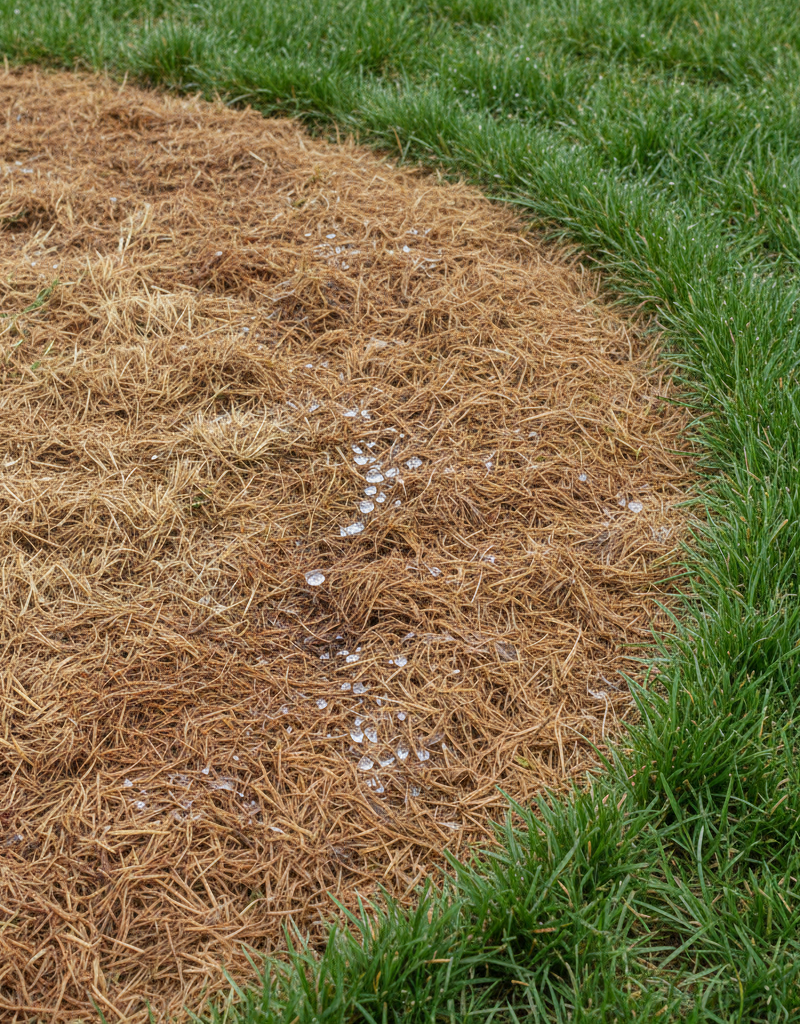
Use a dethatcher (power rake) or a manual dethatching rake to remove the layer of dead grass, leaves, and other organic matter that has accumulated above the soil. This layer, known as thatch, blocks water, air, and nutrients from reaching the soil and prevents new seeds from making good contact. Rake up and bag all the removed thatch. You'll be surprised how much comes off!
- Safety Note: Always wear eye protection and sturdy shoes when operating power equipment. Be mindful of rocks or debris that could be flung by the dethatcher.
4. Core Aerate Your Lawn — Open up the soil for oxygen and roots
Rent a core aerator from a local hardware store or garden center. This machine pulls small plugs of soil from your lawn, relieving compaction and creating pockets for seeds, water, and nutrients to penetrate. Make multiple passes over thin or compacted areas. Leave the soil plugs on the lawn; they will break down and return nutrients to the soil. Aeration is especially critical for heavy clay soils.
- Tool Tip: Familiarize yourself with the aerator's operation before starting. Some models are self-propelled, others require more effort.
5. Repair Bare Spots (Optional) — Give extra attention where needed
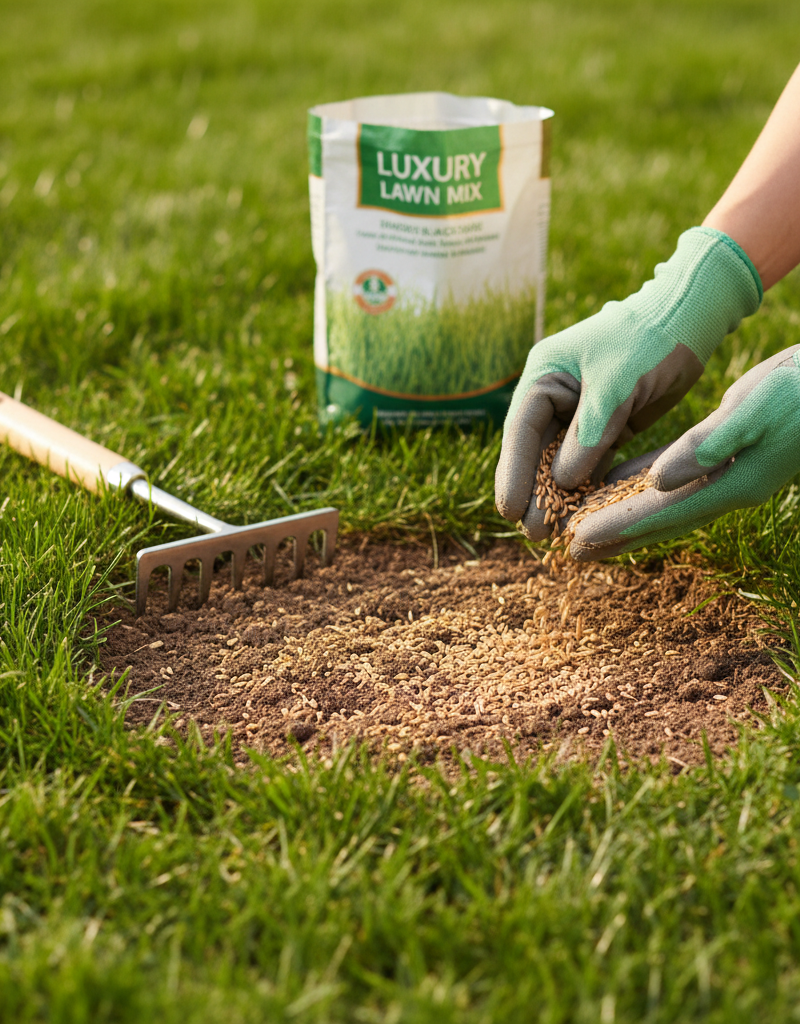
For particularly bare patches, lightly rough up the soil with a hand rake before seeding. This provides a better bed for new seeds. You might consider mixing a small amount of compost into these areas to enrich the soil further.
6. Select the Right Seed — Choose a type that thrives in your climate
Research grass varieties that are suitable for your specific climate zone and sun exposure. Cool-season grasses like fescue, rye, and bluegrass are best overseeded in early fall or early spring, while warm-season grasses like Bermuda or zoysia are best in late spring or early summer. Choose a seed mix that matches your existing lawn or improves its characteristics (e.g., drought resistance).
- If this doesn't work: Ensure you're not using old, expired seed. Always check the packaging for germination rates and expiration dates.
7. Spread the Seed — Apply evenly for uniform coverage
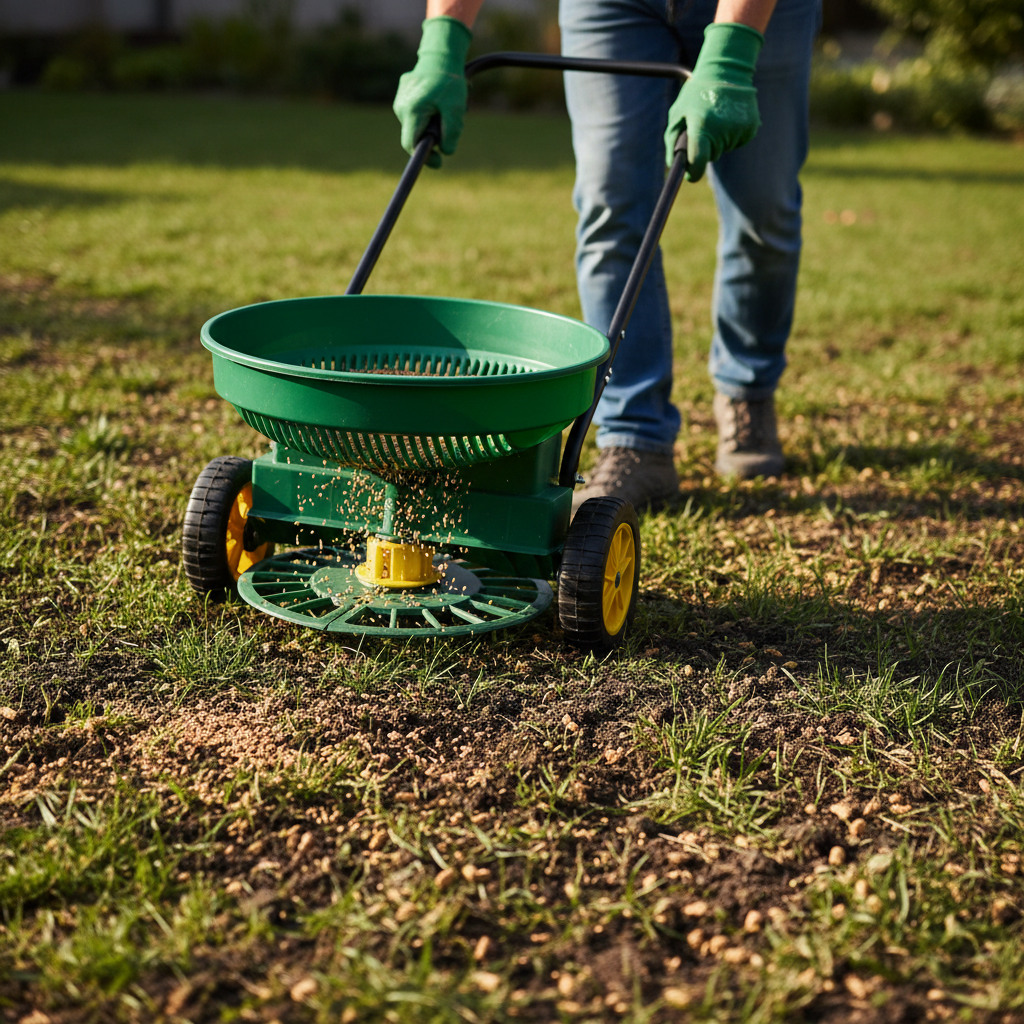
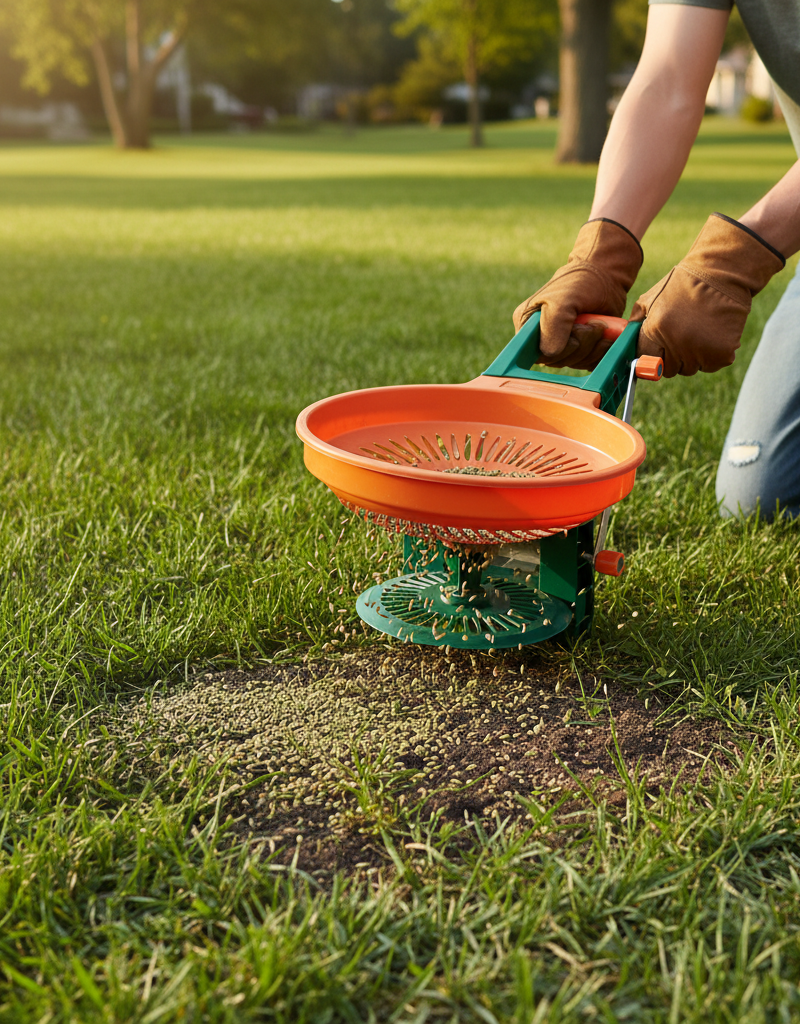
Use a broadcast spreader for larger areas or a drop spreader for more precise application around beds and walkways. Follow the overseeding rate recommended on your seed packaging, which is typically half the rate for establishing a new lawn. Make two passes in perpendicular directions to ensure even coverage. For very small areas, you can hand-broadcast.
8. Apply Starter Fertilizer & Top Dressing (Optional but recommended) — Boost growth and retain moisture
After spreading the seed, apply a phosphorus-rich starter fertilizer. This provides essential nutrients for new seedlings. If desired, you can then apply a thin layer (about 1/4 inch) of weed-free compost or peat moss as a top dressing. This helps with seed-to-soil contact and moisture retention. Avoid using weed killers for several weeks after seeding.
9. Water Frequently and Lightly — Keep seeds moist, not saturated
This is perhaps the most critical step for germination. New grass seeds need constant moisture to germinate. Water lightly but frequently (2-3 times a day) for 10-15 minutes, or enough to keep the top inch of soil consistently moist, for the first 2-3 weeks. Avoid heavy watering that can wash away seeds. Once seeds germinate, you can gradually reduce watering frequency but increase duration to encourage deeper root growth. Continue this routine until new grass is established (about 4-6 weeks).
- Warning: Do NOT let the seed dry out once you start watering. Even a few hours of dryness can kill germinating seeds.
10. Wait to Mow — Let new seedlings establish strength
Resist the urge to mow until your new seedlings have reached at least 3 inches tall. When you do mow, set your blade to a higher setting (e.g., 2.5-3 inches) and ensure the blades are sharp to prevent tearing the tender new grass. Avoid heavy foot traffic on the newly seeded areas for at least 4-6 weeks.
Common Causes
- Compacted Soil: Over time, foot traffic, heavy equipment, and even rain can compact soil, reducing pore space and making it difficult for grass roots to grow and for water/nutrients to penetrate.
- Thatch Buildup: A thick layer of thatch acts as a physical barrier, preventing new grass seeds from reaching the soil and blocking air/water from existing roots.
- Nutrient Deficiency/Imbalance: Without proper soil nutrition (determined by a soil test), grass can become weak, thin, and unable to thrive.
- Improper Watering: Either too little water, leading to dehydration, or too much, causing rot and disease, can stress grass and lead to thinning.
- Shade Issues: While some grass types tolerate shade, most prefer significant sunlight. Areas consistently in heavy shade will struggle to maintain density.
- Disease or Pests: Fungal diseases, grubs, or other pests can severely damage grass roots and blades, leading to thin or bare patches.
- Wrong Grass Type: Using a grass variety not suited for your climate, sun exposure, or soil conditions will result in a perpetually thin lawn.
Common Mistakes
- Skipping Soil Prep: The biggest mistake is just spreading seed without dethatching or aerating. Seeds can't root without good soil contact.
- Not Testing Soil: Guessing about pH and nutrient needs can lead to continued problems, even with new seed.
- Improper Watering: Either letting seeds dry out completely or drenching them and washing them away. Consistent, light moisture is key.
- Using Old or Wrong Seed: Expired seed has poor germination rates, and the wrong grass type won't thrive in your specific conditions.
- Applying Weed Killer Too Soon: Most pre-emergent herbicides will prevent grass seed from germinating. Read labels carefully.
- Mowing Too Early or Too Short: Cutting new seedlings too soon or too aggressively can kill them before they establish.
- Ignoring Thatch and Compaction: These hidden issues constantly undermine efforts to achieve a thick lawn, no matter how much seed is applied.
Cost & Time Breakdown
| Task | DIY cost | Pro cost | Time |
|---|---|---|---|
| Soil Test | $15–$30 | Included in service | 5–10 min (send) |
| Dethatching (rental) | $50–$100 | Included in service | 1–3 hours |
| Core Aeration (rental) | $70–$120 | Included in service | 1–3 hours |
| Grass Seed | $30–$100 | Included in service | 15–30 min |
| Starter Fertilizer | $20–$40 | Included in service | 10–20 min |
| Top Dressing (optional) | $30–$70 | Included in service | 30–60 min |
| Total DIY Estimate | $215–$360 | $300–$600+ | 4–8 hours |
Tips & Prevention
- Regular Soil Tests: Conduct a soil test every 2-3 years to monitor pH and nutrient levels, adjusting your fertilization plan as needed.
- Proper Mowing Height: Always mow at the highest recommended height for your grass type (usually 2.5-3.5 inches). Taller grass shades the soil, reducing weed germination and promoting deeper root growth.
- Water Deeply and Infrequently: Once established, water deeply (6-8 inches of penetration) but less frequently (2-3 times per week, depending on weather) to encourage strong, deep roots.
- Annual Aeration/Dethatching for Problem Lawns: If your lawn is prone to thatch or compaction, consider annual dethatching and aeration in the fall.
- Fall Overseeding is Best: For cool-season grasses, early fall (6-8 weeks before the first hard frost) is the ideal time to overseed. Soil is still warm, competition from weeds is low, and there's plenty of moisture.
- Use a Mulching Mower: Leave finely cut grass clippings on the lawn (unless dethatching) to return nutrients to the soil.
When to Call a Professional
While overseeding is a manageable DIY project, there are times when calling a professional lawn care service is the wiser choice. If your lawn's issues extend beyond simple thinning – for example, if you suspect a widespread disease, a severe pest infestation (like grubs that multiple treatments haven't resolved), or drainage problems causing constant waterlogging – a professional can accurately diagnose the underlying cause. Similarly, if your lawn is exceptionally large, heavily compacted, or you don't have access to the necessary power equipment (dethatcher, core aerator), a professional service can complete the job efficiently and effectively, often with commercial-grade equipment and expertise in soil amendments specific to your region. They can also provide comprehensive long-term lawn care plans tailored to your specific needs, ensuring your lawn stays thick and healthy year-round.
Related Articles
Keep troubleshooting with these hand-picked guides from FixlyGuide:
- The #1 Mistake Killing Your Thin Lawn (And How to Fix It in a Weekend) — Overseeding your lawn can transform it from thin and patchy to lush, but many homeowners make a crucial mistake that hinders success. Learn…
- The #1 Mistake Killing Your Lawn's Thickness (and How to Fix It for $50) — Overseeding can transform a thin, patchy lawn into a lush, vibrant carpet, but many homeowners miss a critical step, hindering success.
- The #1 Mistake Killing Your Thin Lawn (and How to Fix It in a Weekend) — Overseeding a thin lawn is crucial for a lush yard, but a common mistake can ruin your efforts before they even begin. Learn how to diagnos…
- The #1 Mistake Killing Your Lawn's Grass (and How to Fix Patchy Spots) — Discover the most common reason for patchy grass and learn how to revive your lawn with targeted, easy-to-follow steps.
- The #1 Lawn Aeration Mistake Most Homeowners Make (And When to REALLY Do It) — Discover the crucial mistake many homeowners make with lawn aeration and learn the optimal timing for a thriving, healthy lawn.
- The #1 Mistake Homeowners Make When Sealing a Deck (and How to Fix It) — Prevent costly damage and extend your deck's life by avoiding common sealing errors and following a simple, effective resealing process.
Frequently asked questions
When is the best time to overseed a lawn?+
For cool-season grasses (fescue, rye, bluegrass), the best time is early fall (6-8 weeks before the first hard frost). Spring is a secondary option. For warm-season grasses (Bermuda, zoysia), late spring or early summer is ideal.
Can I just spread grass seed without aerating?+
While you *can* spread seed without aerating, it's generally not recommended for thin or compacted lawns. Aeration significantly improves seed-to-soil contact and allows roots to penetrate deeper, leading to much better germination and establishment rates.
How soon can I mow after overseeding?+
Wait until your new grass seedlings have grown to at least 3 inches tall, which typically takes 3-4 weeks. When you do mow, set your deck to a higher setting and ensure your mower blades are sharp to avoid tearing the tender new grass.
How often should I water new grass seed?+
New grass seed needs consistent moisture. Water lightly but frequently (2-3 times a day for 10-15 minutes, or enough to keep the top inch of soil moist) for the first 2-3 weeks. Do not let the seeds dry out during this critical period.
What kind of grass seed should I use?+
Choose a grass seed variety that is suitable for your local climate, sun exposure, and matches your existing turf if possible. Consult your local extension office or garden center for recommendations specific to your region.
Discussion
Loading comments…