Tools & materials you'll need
Affiliate links- AmazonScrewdriver or Soil ProbeFor checking soil moisture and compaction
- AmazonBroadcast SpreaderFor even application of fertilizers/supplements
- AmazonMagnifying GlassOptional, for inspecting small pests
- AmazonGarden Trowel or SpadeFor digging small soil samples
- AmazonCore Aerator (rental)If soil compaction is severe
As an Amazon Associate FixlyGuide earns from qualifying purchases — at no extra cost to you. Prices and availability are accurate as of publication and subject to change.
Quick Answer
AWhen your once-vibrant summer lawn starts to yellow, it's natural to assume it's thirsty. While drought and inadequate watering are indeed common culprits, a surprising number of other factors can leave your grass looking sickly and faded. These often overlooked reasons include specific nutrient deficiencies (like nitrogen or iron), overwatering that chokes roots, compacted soil preventing nutrient absorption, and even the subtle signs of lawn diseases or pest infestations. Accurately diagnosing the root cause—by observing the specific yellowing pattern and understanding your soil and watering habits—is the first crucial step to bringing your lawn back to life.
The Problem
There's nothing quite as disheartening for a homeowner as seeing a beautiful, emerald-green lawn transform into a patchy, straw-like landscape, especially in the middle of summer. This isn't just an aesthetic issue; a yellowing lawn is a cry for help. It indicates that your grass isn't receiving what it needs to thrive, or it's under attack from environmental stressors, pests, or diseases. Simply adding more water without understanding the root cause can often exacerbate the problem, leading to root rot or fungal issues. The challenge lies in distinguishing between the various causes, many of which present similar symptoms but require vastly different solutions. Is it starving for nutrients? Drowning from too much water? Or battling an unseen enemy beneath the surface? Getting the diagnosis wrong can waste time, money, and further damage your lawn's health.
How It Works
To understand why a lawn turns yellow, it helps to grasp the basic physiology of grass. Grass, like all plants, performs photosynthesis, converting sunlight into energy. Chlorophyll, the green pigment in grass blades, is essential for this process. When chlorophyll production drops, the green color fades, revealing the underlying yellow pigments. This reduction in chlorophyll can be triggered by a variety of factors impacting the grass's ability to absorb water, nutrients, or even oxygen.
Water and Nutrient Uptake: Healthy grass roots are crucial for absorbing water and essential nutrients from the soil. Water carries dissolved nutrients up to the blades. If roots are damaged (by disease, pests, or overwatering suffocation) or if the soil is compacted, preventing root growth and water/nutrient movement, the grass can't get what it needs. Drought, obviously, prevents water uptake, but too much water can also be detrimental by depriving roots of oxygen and creating an anaerobic environment conducive to root rot. Essential nutrients include nitrogen (critical for lush green growth), iron (key for chlorophyll production), potassium, and phosphorus. A deficiency in any of these can manifest as yellowing.
Soil Health: The soil isn't just a anchor for grass; it's a living ecosystem. Healthy soil contains beneficial microorganisms, allows for good drainage, and has the right pH balance for nutrient availability. Compacted soil reduces pore space for air and water, stressing roots. High or low pH can lock up nutrients, making them unavailable to the grass, even if they are present in the soil. Understanding these underlying mechanisms helps in correctly identifying and addressing the cause of a yellow lawn.
Step-by-Step Fix
1. Observe the Yellowing Pattern — Identify the spread and location
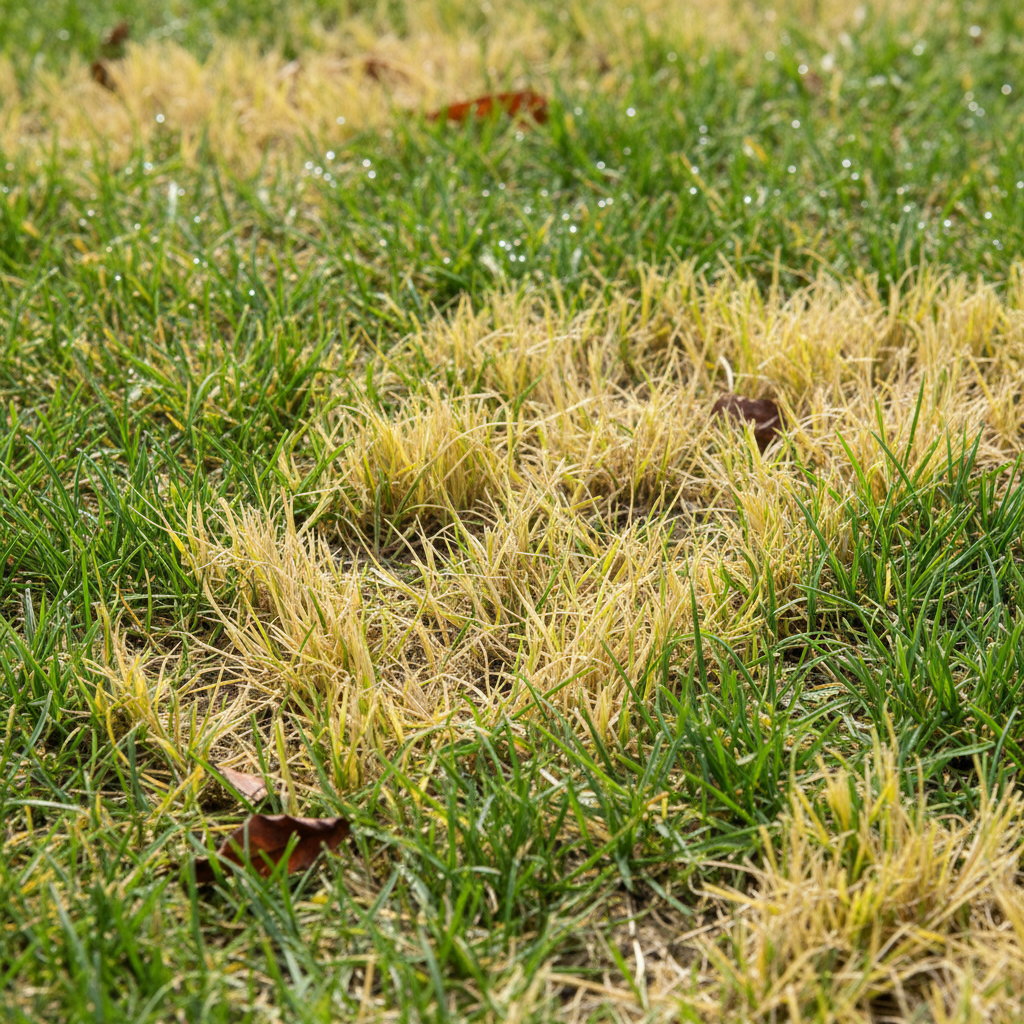
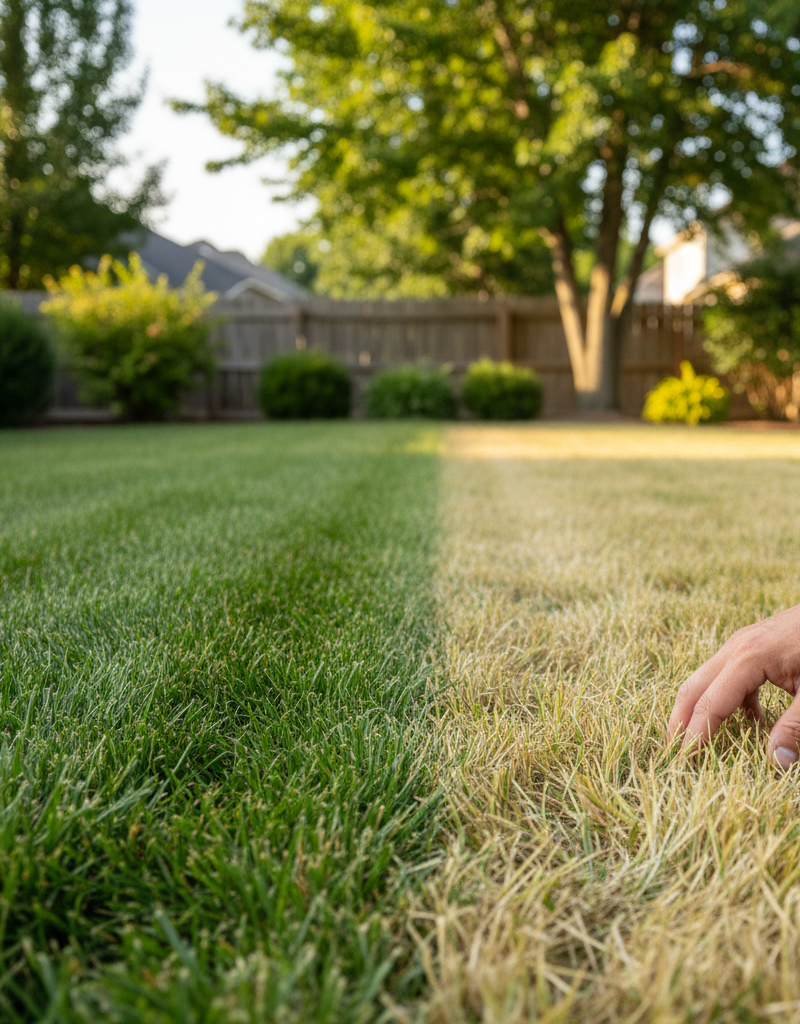
Walk your lawn and note exactly where and how the yellowing appears. Is it uniform across the entire lawn? Are there distinct patches or streaks? Does it affect individual blades, or entire clumps of grass? Is it concentrated near sprinkler heads, shady areas, or high-traffic zones? This initial observation is critical for narrowing down potential causes. For instance, irregular patches might suggest disease or pests, while uniform yellowing might indicate a widespread nutrient deficiency or watering issue. Yellowing near sprinkler heads could point to over or underwatering in that specific zone.
- If uniform yellowing: Consider nutrient deficiencies (nitrogen, iron), widespread drought stress, or a general watering problem.
- If patchy/streaky yellowing: Investigate localized disease, pests, herbicide overspray, or dog urine spots.
- If yellowing near sprinkler heads: Check for overwatering (darker yellow, possibly soggy soil) or underwatering (drier soil, lighter yellow).
2. Check Soil Moisture Levels — Determine if over or underwatering is the issue
Push a screwdriver or spade into the yellowed area of the lawn. If it goes in easily and the soil feels moist 4-6 inches deep, it's likely not underwatering. If it's hard to penetrate and the soil is dry, your lawn needs more water. Conversely, if the soil is consistently soggy and smells musty, you might be overwatering, leading to root rot.
- Tools: Screwdriver, small trowel or spade.
- If dry soil: Increase watering frequency or duration. Aim for deep, infrequent watering (1 inch per week, applied in one or two sessions) rather than shallow, frequent watering.
- If soggy soil: Reduce watering. Check for drainage issues; aerating might be necessary.
3. Perform a Soil Test — Uncover nutrient deficiencies and pH imbalances
This is arguably the most important diagnostic step. A professional soil test (available through your local extension office or garden centers) will provide detailed insights into your soil's pH, nutrient levels (nitrogen, phosphorus, potassium, micronutrients), and organic matter content. This will directly tell you if your lawn is suffering from a lack of key nutrients or if the pH is hindering nutrient uptake.
- Tools: Soil test kit or soil sample bags.
- Cost: $15–$50 for a professional lab test.
- If nitrogen deficient: Apply a slow-release nitrogen fertilizer. Follow product instructions carefully to avoid burning the lawn.
- If iron deficient: Apply a chelated iron supplement. Often, iron deficiency causes a distinct yellowing between the veins of the grass blades, while the veins remain green (interveinal chlorosis).
- If pH is off: Amend the soil according to soil test recommendations. Lime can raise pH, while sulfur can lower it. Adjusting pH helps make existing nutrients available to the grass.
4. Inspect for Pests and Diseases — Look for visible signs of damage or organisms
Get down on your hands and knees and closely examine the grass blades, crowns (where the blade meets the root), and the top inch of soil. Look for common lawn pests like grubs (c-shaped larvae under the soil, often causing brown patches that can be easily pulled up like a carpet), chinch bugs (small, reddish-black insects in hot, sunny areas), or sod webworms (moths flying over the lawn at dusk, larvae chew on blades). For diseases, look for specific patterns like rust-colored spots, powdery mildew, dollar spot (small, straw-colored spots), or brown patch (circular areas of shriveled grass).
- Tools: Magnifying glass (optional).
- If grubs: Apply a grub killer product if infestation is severe, or consider milky spore for a natural, long-term solution. Affected areas can often be peeled back like carpet.
- If disease: Identify the specific disease (often aided by your local extension office) and apply appropriate fungicide if needed. Good cultural practices (proper watering, aeration, correct mowing height) are often the best defense.
- If chinch bugs: Apply an insecticide labeled for chinch bugs.
5. Check for Soil Compaction — Assess the density of your soil
Hard, dense soil prevents water, air, and nutrients from reaching grass roots. To check for compaction, try pushing that screwdriver into an unaffected area and then into a yellowed area. If it's significantly harder to penetrate the yellowed area, compaction is likely contributing to the problem. Heavily trafficked areas are particularly prone to compaction.
- Tools: Screwdriver or soil probe.
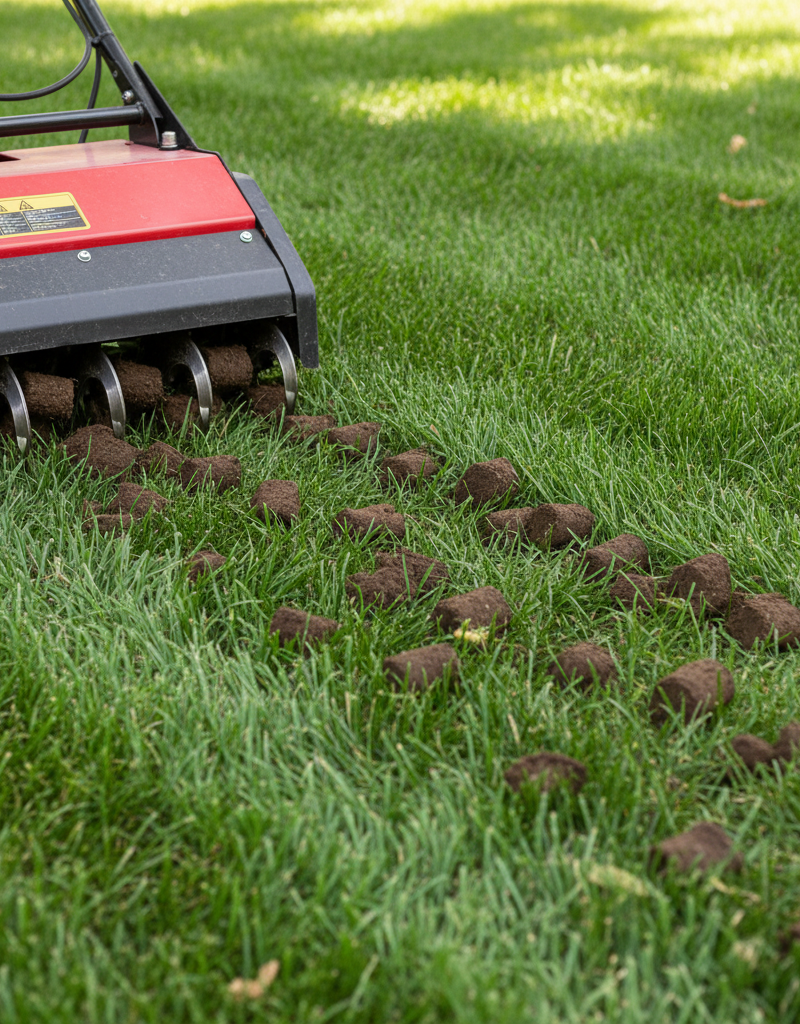
- If compacted: Aerate your lawn. Core aeration pulls small plugs of soil, creating channels for air, water, and nutrients to penetrate. This is best done in late spring or early fall.
6. Review Mowing and Watering Habits — Are you unknowingly stressing your lawn?
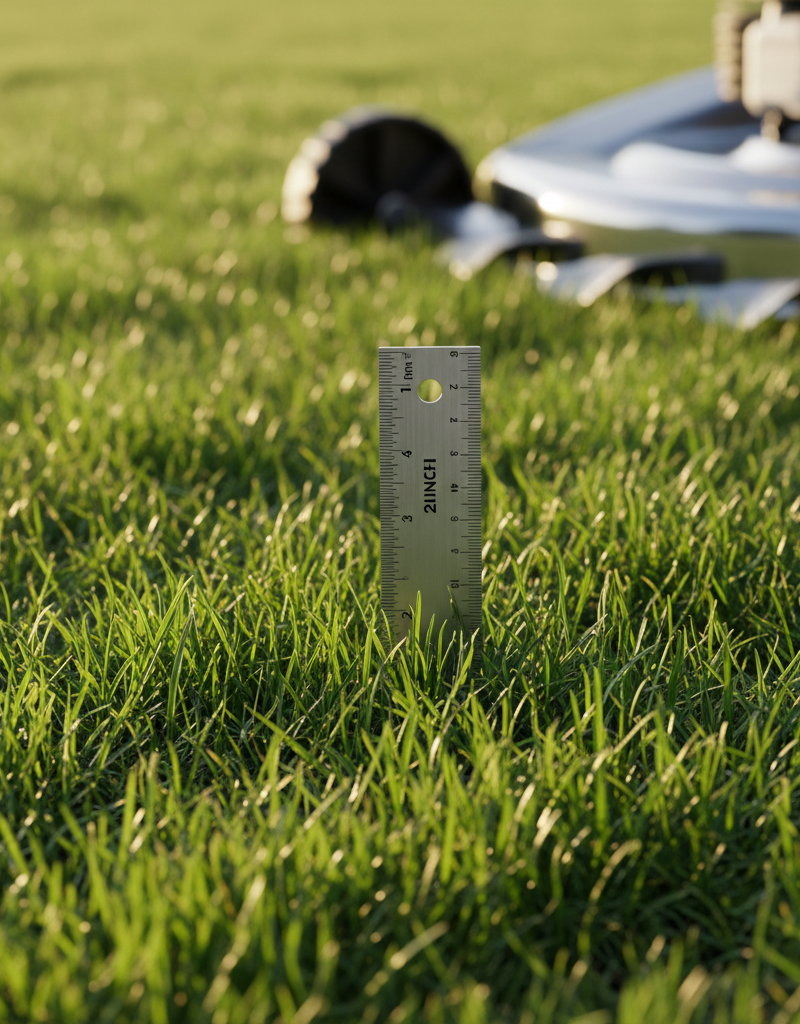
Are you mowing too short? Scalping the lawn (removing more than one-third of the blade at a time) stresses the grass and can lead to yellowing. Are you watering frequently and shallowly? This encourages shallow root growth, making the grass more susceptible to drought. Are your sprinklers hitting uniformly, or are some areas getting soaked while others stay dry?
- If mowing too short: Raise your mower blade. Most cool-season grasses prefer 2.5-3.5 inches; warm-season grasses slightly less, around 2-3 inches.
- If shallow watering: Adjust your watering schedule to be deeper and less frequent, encouraging roots to grow deeper.
Common Causes
- Nutrient Deficiencies: Most commonly nitrogen (for overall green growth) and iron (for chlorophyll production). Soil pH problems can also make these nutrients unavailable.
- Improper Watering: Both underwatering (drought stress) and overwatering (root suffocation, leading to root rot) are significant causes. Shallow, frequent watering is particularly damaging.
- Soil Compaction: Reduces air and water penetration, hindering root development and nutrient uptake, often in high-traffic areas.
- Lawn Diseases: Fungal infections like dollar spot, brown patch, or rust can cause distinct yellow patterns or overall thinning.
- Insect Pests: Grubs, chinch bugs, sod webworms, or armyworms feed on grass roots or blades, leading to yellowing and eventual death.
- Herbicide/Fungicide Misapplication: Incorrect dilution, improper application, or even drift from nearby treatments can cause chemical burn and yellowing.
- Dog Urine: High nitrogen content in dog urine can burn grass, leaving small, distinct yellow or brown spots with a dark green ring around the edge.
- Excessive Heat Stress: While related to watering, extreme heat waves can simply overwhelm even well-watered lawns, especially if combined with other stressors.
Common Mistakes
- Assuming it's always drought: This is the biggest mistake. Many homeowners see yellow and immediately water more, often leading to overwatering and exacerbating the problem, especially if the issue is a disease or compaction.
- Fertilizing without a soil test: Blindly applying fertilizer can lead to nutrient imbalances, harming the lawn rather than helping it. An incorrect NPK ratio or micronutrient deficiency might worsen with the wrong fertilizer.
- Mowing too short:
Related Articles
Keep troubleshooting with these hand-picked guides from FixlyGuide:
- The #1 Mistake Killing Your Summer Lawn (And How to Fix It in a Weekend) — Overwatering is the silent killer behind many yellow summer lawns, often mistaken for drought. Learn how to diagnose and correct drainage i…
- The #1 Summer Lawn Mistake Turning Your Grass Yellow (and How to Fix It) — Discover the most common summer lawn mistake that causes yellowing grass and learn the simple steps to revive your lawn.
- The 48-Hour Lawn Killer: One Fertilizer Mistake That Turns Grass Yellow — Discover the surprising reason your lawn turned yellow seemingly overnight after fertilizing, and how to fix it before permanent damage occ…
- The 7 Surprising Reasons Your Tree Leaves Turn Brown (It's Not Always Drought!) — Discover the hidden culprits behind browning tree leaves, from common stressors to unexpected issues, and learn actionable steps to revive…
- The #1 Mistake Killing Your Summer Lawn (It's Not What You Think) — Uncover the surprising truth behind your yellow summer lawn and learn how to fix the most common, yet overlooked, culprit: overwatering.
- The 3 Hidden Reasons Your Circuit Breaker Keeps Tripping (And How to Stop It) — Uncover the surprising culprits behind repeatedly tripping circuit breakers and learn practical, actionable steps to diagnose and resolve t…
Frequently asked questions
How can I tell if my lawn is under or overwatered?+
To check, push a screwdriver into the soil. If it's hard to push and dry, you're underwatering. If soil is soggy 4-6 inches deep and difficult to penetrate, it's likely overwatered. Aim for moist, easily penetrable soil.
What nutrient deficiency makes grass yellow?+
Nitrogen is the most common nutrient deficiency causing overall yellowing of grass. Iron deficiency also causes yellowing, often showing up as yellowing between the veins of the grass blades (interveinal chlorosis).
Can compacted soil make my lawn yellow?+
Yes, severely compacted soil can restrict grass roots from accessing water, air, and essential nutrients, leading to stress and yellowing. Core aeration can help alleviate this.
When should I call a professional for a yellow lawn?+
If you've tried basic troubleshooting steps like adjusting watering, performing a soil test, and checking for common pests, and your lawn continues to yellow or worsen, it's time to call a professional. Persistent disease or pest issues, severe compaction, or drainage problems often require expert intervention.
How often should I test my soil?+
It's recommended to perform a comprehensive soil test every 2-3 years to monitor nutrient levels and pH. If you're experiencing persistent lawn problems, a test may be beneficial sooner.
Discussion
Loading comments…