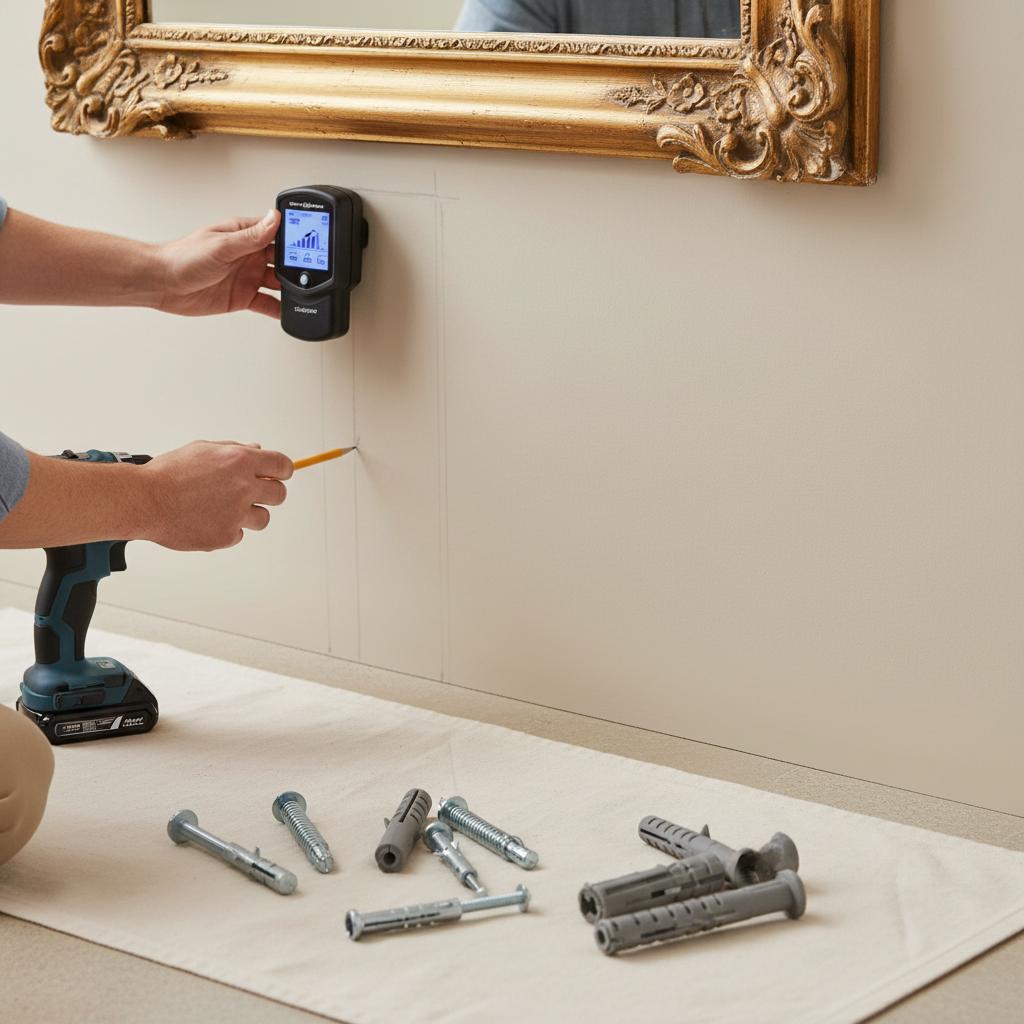
Tools & materials you'll need
Affiliate linksAs an Amazon Associate FixlyGuide earns from qualifying purchases — at no extra cost to you. Prices and availability are accurate as of publication and subject to change.
Quick Answer
Many homeowners, eager to display a beautiful new mirror, make the critical mistake of hanging heavy items directly into drywall using only standard anchors or — worse — an unreinforced screw. This often leads to anchors pulling out, damaging the wall, and the mirror crashing to the floor. The safe solution involves a three-pronged approach: prioritizing attachment to a wall stud whenever possible, selecting the correct heavy-duty drywall anchors (like toggle bolts or self-drilling anchors rated for significant weight) when studs aren't accessible, and distributing the mirror's weight across multiple attachment points. Failing to choose the right anchoring system for your mirror's specific weight can lead to frustrating damage and potentially dangerous outcomes.
The Problem
You’ve found the perfect heavy mirror – perhaps a full-length piece for your bedroom, an oversized decorative mirror for the living room, or a substantial vanity mirror for the bathroom. The excitement of hanging it quickly turns to anxiety when you realize the sheer weight of the object. Standard picture hangers feel inadequate, and a simple tap on the wall reveals nothing but hollow drywall behind the paint. The temptation is strong to use the seemingly convenient plastic anchors that came with a basic picture hanging kit or to simply screw into the drywall and hope for the best. This is where disaster often strikes. Drywall, by itself, is essentially compressed gypsum paper; it has very little inherent strength to hold significant weight. Without proper reinforcement or correctly installed heavy-duty anchors, a heavy mirror will inevitably pull away, leaving a gaping hole in your wall, a shattered mirror, and potentially injuries. The problem isn’t just hanging a mirror; it’s hanging a heavy mirror on drywall without understanding the structural limitations and the specific solutions required for safe, lasting installation.
How It Works
Understanding how various anchoring systems work within drywall is crucial for safe installation. At its core, drywall consists of gypsum plaster pressed between two sheets of paper. It's sturdy enough for vertical surfaces but lacks the internal density to hold much weight on its own. When you screw into drywall without hitting a stud, the screw only engages with the thin gypsum, which can easily crumble under tension or shear force. This is why specialized anchors are necessary.
Wall Studs: The ideal scenario is to attach directly to a wooden wall stud. Studs are the vertical framing lumber (typically 2x4s or 2x6s) that form the skeletal structure of your walls, usually spaced 16 or 24 inches on center. A screw driven into a stud bites into solid wood, providing a robust, weight-bearing connection that can hold hundreds of pounds. This is the gold standard for heavy items.
Drywall Anchors: When a stud isn't precisely where you need it, drywall anchors come into play. There are several types, each designed to create a more secure purchase in the drywall than a bare screw:
- Expansion Anchors (Plastic or Metal): These anchors, when a screw is driven into them, expand or flare out within the hollow space behind the drywall, or compress against the back of the drywall sheet. They create a larger surface area to distribute the load, preventing the screw from simply pulling through. Common examples include ribbed plastic anchors or conical self-drilling anchors.
- Toggle Bolts: These are among the strongest drywall anchors. A toggle bolt consists of a machine screw and a spring-loaded wing or a solid bar. You drill a hole, insert the collapsed toggle, and as you tighten the screw, the wings spring open or the bar rotates behind the drywall, clamping firmly against the back surface. They distribute weight over a relatively large area and are excellent for very heavy items.
- Molly Bolts (Sleeve Anchors): Similar to toggle bolts, Molly bolts are metal anchors with a pointed tip for self-drilling or requiring a pre-drilled hole. As you turn the screw, the sleeve behind the drywall expands and collapses, forming a rigid collar against the interior surface. They offer good strength but typically less than toggle bolts for extreme weights.
The key principle with all drywall anchors is to distribute the weight of the mirror over a larger surface area of the drywall, or to create a mechanical lock behind the drywall sheet itself. For truly heavy mirrors, the goal is often a combination: finding at least one stud for maximum security and supplementing with the highest-rated anchors in the drywall where studs are unavailable.
Step-by-Step Fix
Safety First: Before you begin, always wear safety glasses to protect against dust and debris, especially when drilling. If your mirror is very large or unwieldy, have a helper assist you to prevent drops and injury. Carefully unpack the mirror on a soft surface like a rug or blanket.
1. Assess Mirror Weight & Type of Hanging Hardware — Understand what you’re working with
- Examine the back of your mirror. Is it equipped with D-rings, a wire, or a French cleat system? The hanging hardware dictates which type of anchors or screws you can use.
- Read the mirror’s packaging or manufacturer's instructions for its exact weight. This is crucial for selecting appropriate anchors. If unknown, gently lift it to estimate. Anything over 20-30 lbs is considered heavy for drywall.
- If your mirror is over 50 lbs: Strongly prioritize hitting at least one, if not both, wall studs. If studs aren't perfectly aligned with your hardware, you might need to use a French cleat system that spans multiple studs, or attach a wood ledger board to studs first, then mount the mirror to the ledger board.
2. Mark Mirror Position & Level — Plan your placement carefully
- With a helper, hold the mirror against the wall at your desired height. Use a pencil to lightly mark the top center of the mirror.
- Measure the distance from the top edge of the mirror to its hanging points (D-rings, wire, or cleat holes). Transfer these measurements down from your top-center mark onto the wall.
- Use a level to ensure your marks are perfectly horizontal. For D-rings, ensure the marks are spaced correctly. For a wire, lightly pull the wire taut in the center and measure down from the top edge to that highest point of the wire when pulled, not to the individual attachment points.
3. Locate Wall Studs — The strongest support you can get
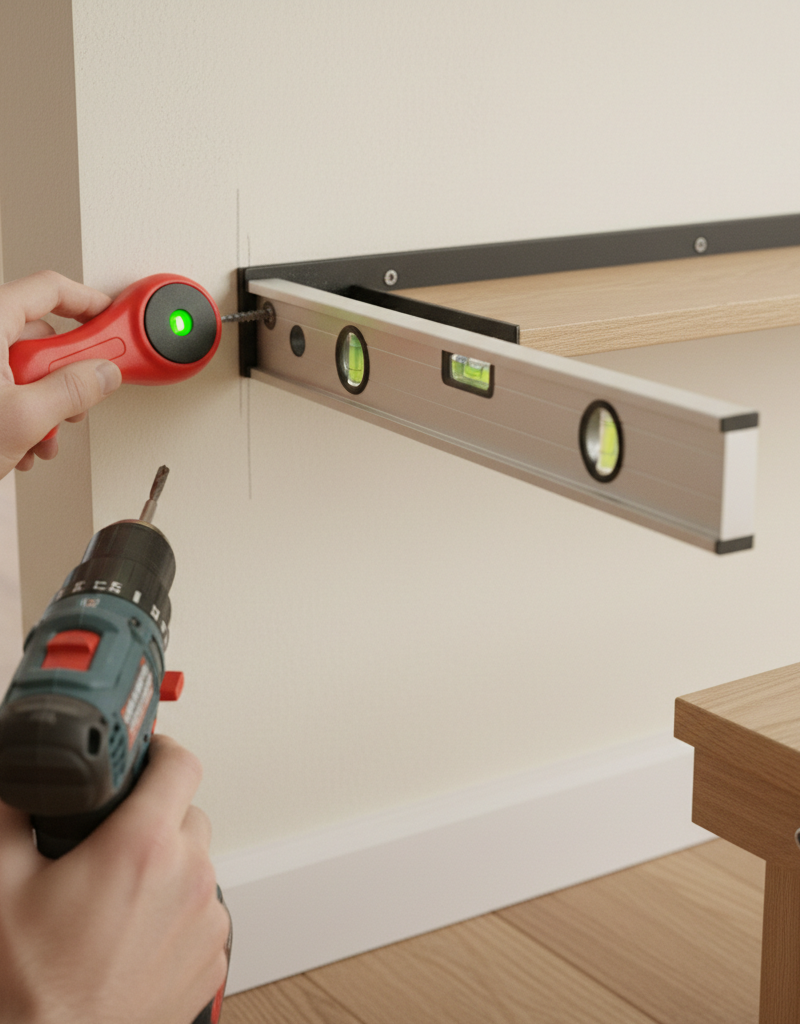
- Use a stud finder to scan the area where your hanging points will be. Mark the edges of any detected studs with your pencil. Standard stud spacing is 16 inches or 24 inches on center.
- If you find a stud: Aim to drive a heavy-duty screw (e.g., a 2.5-inch to 3-inch #10 or #12 construction screw) directly into the center of the stud through your mirror hardware. Pre-drill a pilot hole slightly smaller than your screw's diameter to prevent splitting.
- If you don't find a stud: Proceed to the next step for selecting the right drywall anchors.
4. Select & Install Drywall Anchors (If No Stud) — Choose wisely based on weight
- For mirrors 20-50 lbs: Use heavy-duty self-drilling anchors (metal, not plastic) or robust conical anchors. Choose anchors rated for at least double the mirror's weight to provide a safety margin, especially if using only one or two hanging points. Follow the manufacturer's instructions for installation.
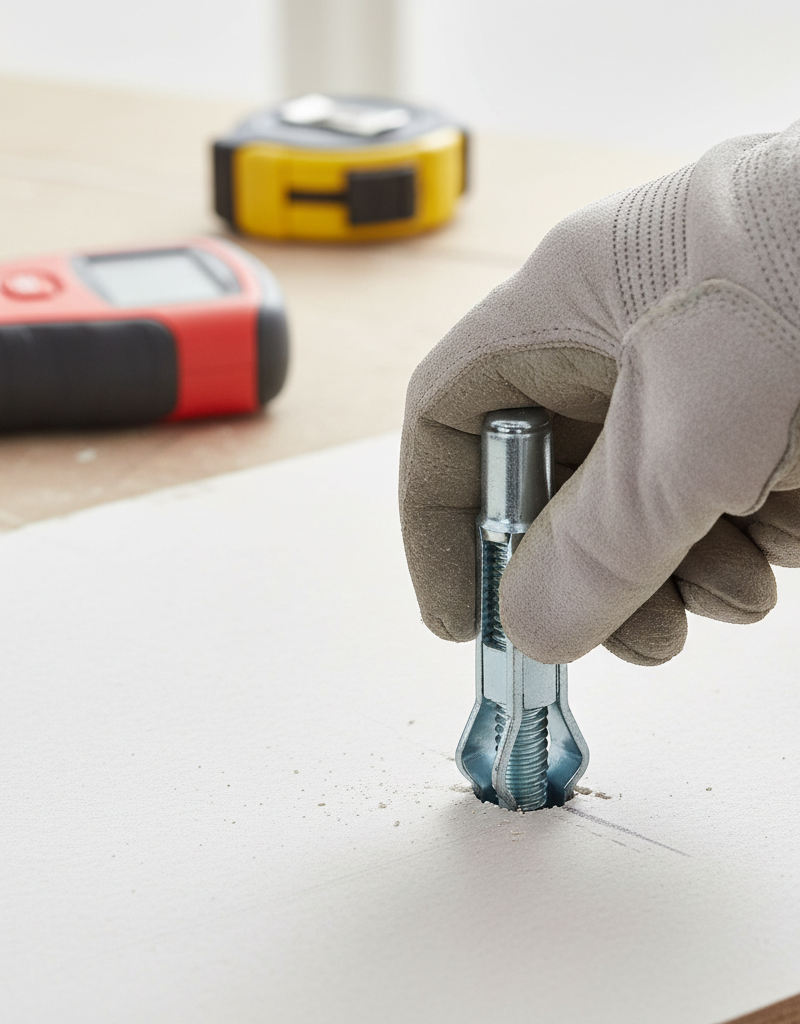
- For mirrors 50-100 lbs: Toggle bolts (e.g., brand names like Snaptoggle, Toggler) are your best bet. These offer exceptional strength. Drill the recommended size hole, insert the toggle wings, and tighten the screw until flush. Ensure the wings fully open behind the drywall.
- Pro Tip: Always buy anchors rated for more than the mirror
Related Articles
Keep troubleshooting with these hand-picked guides from FixlyGuide:
- The 3 Drywall Anchors That Will NEVER Fail Your Heavy Mirror (And 2 to Avoid) — Safely hanging a heavy mirror on drywall requires choosing the right anchors and proper installation to prevent frustrating falls and damag…
- The 3 Hidden Reasons Your Floating Shelf Sags (and the Easy Fix) — Discover the real reasons your floating shelves sag and learn the simple, effective fixes to ensure they stay level and secure in drywall.
- The #1 Mistake Homeowners Make Installing Floating Shelves (and How to Fix It) — Discover the crucial error many DIYers make when mounting floating shelves into drywall and learn the simple steps to ensure a secure, sag-…
- The 3 Common Floating Shelf Mistakes That Lead to Wall Damage — Learn the critical mistakes homeowners make when installing floating shelves into drywall and how to avoid them for a secure, lasting mount.
- The #1 Mistake Homeowners Make Installing Floating Shelves (and How to Fix It) — Discover the crucial mistake homeowners make installing floating shelves into drywall and learn the correct, secure method to prevent saggi…
- The #1 Mistake When Fixing Baseboards That Pull Away From Walls — Discover the crucial mistake homeowners make when reattaching baseboards and how to properly secure them for a lasting fix.
Frequently asked questions
How much weight can drywall hold without a stud?+
Standard 1/2-inch drywall can hold about 5-10 pounds per fastener without a stud if using basic picture hangers. With specialized heavy-duty drywall anchors like toggle bolts, a single anchor can support 50-100 pounds or more, depending on its specific rating and proper installation. It's crucial to always check the anchor's weight rating and distribute the load across multiple anchors for heavy items.
Can I hang a 100lb mirror on drywall?+
Yes, you can hang a 100lb mirror on drywall, but it absolutely requires proper planning and the correct hardware. You should aim to attach the mirror's hanging hardware into at least one, and preferably two, wall studs using robust wood screws. Where studs are not available, use heavy-duty toggle bolts specifically rated for the mirror's weight (e.g., 75-100 lbs *per anchor*), ensuring you use multiple anchors to distribute the load.
What is the best way to hang a very heavy mirror?+
The best way to hang a very heavy mirror (over 50 lbs) is by securing it directly into wall studs using long, strong wood screws. If studs aren't aligned with your mirror's hanging points, consider installing a French cleat system, which is a two-part interocking bracket designed to distribute weight across multiple studs. Alternatively, attach a sturdy wooden ledger board horizontally across multiple studs, then secure the mirror to this ledger board. Only use heavy-duty toggle bolts as a secondary option when studs are unavailable, and always use multiple anchors.
How do I know if my drywall anchors are strong enough?+
To know if your drywall anchors are strong enough, you must check their manufacturer's stated weight rating. Always choose anchors with a rating that is significantly *higher* than the actual weight of your mirror (e.g., an anchor rated for 75 lbs if your mirror is 50 lbs, or use multiple anchors whose combined rating exceeds the mirror's weight). Ensure the anchors are installed precisely according to the manufacturer's instructions, as improper installation drastically reduces their load-bearing capacity. If in doubt, choose a stronger anchor or consult a professional.
Should I use a French cleat for a heavy mirror?+
A French cleat is an excellent choice for a heavy mirror, especially if the mirror is wide and you can secure the cleat into two or more wall studs. This system consists of two interlocking pieces; one attaches to the wall (and ideally to studs), and the other to the back of the mirror. It provides strong, continuous support, distributes weight effectively, and makes hanging and leveling relatively easy. French cleats are particularly recommended for mirrors over 50 pounds or those that need to sit very flush against the wall.

Discussion
Loading comments…