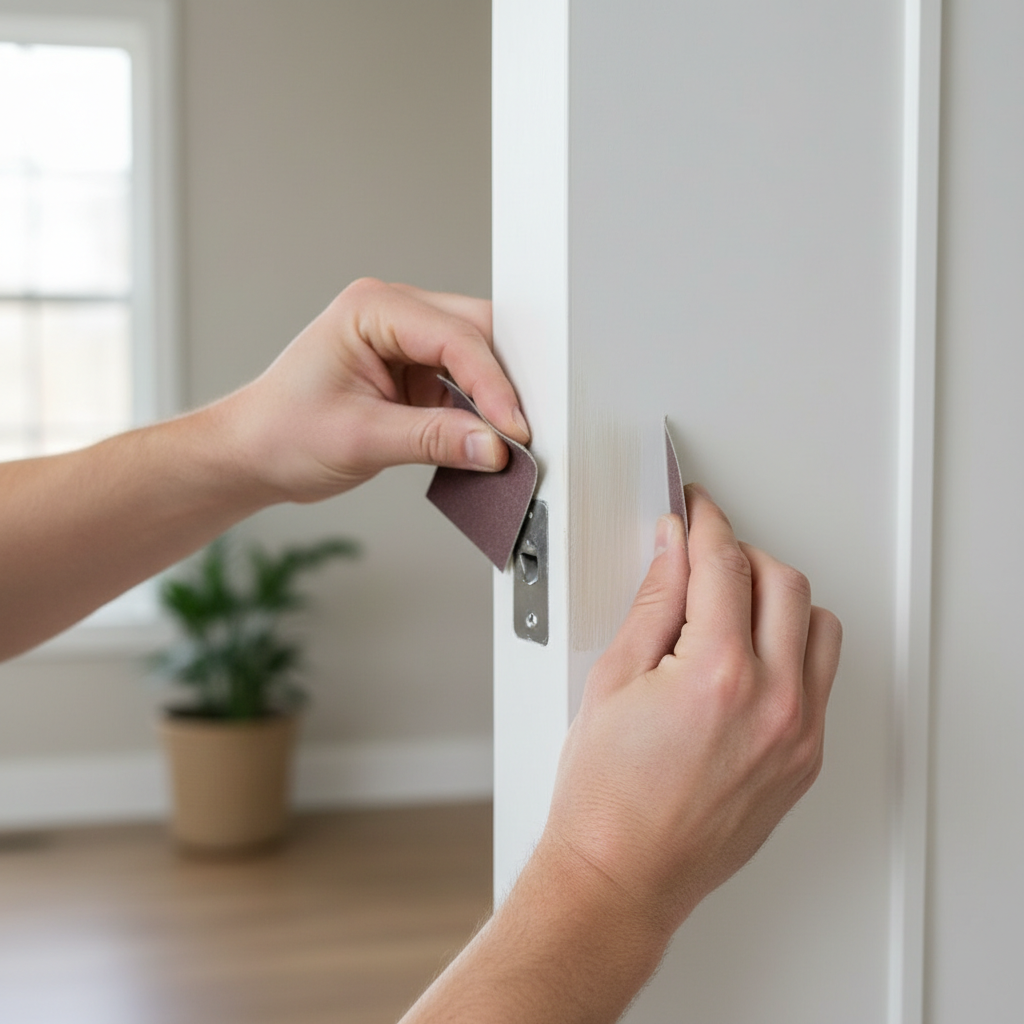
Tools & materials you'll need
Affiliate linksAs an Amazon Associate FixlyGuide earns from qualifying purchases — at no extra cost to you. Prices and availability are accurate as of publication and subject to change.
Quick Answer
An interior door that sticks, scrapes, or rubs against the frame is a common homeowner annoyance, usually rooted in moisture-induced wood expansion, loose hinge screws, or excessive paint buildup. Most sticking door issues can be resolved in under an hour using basic tools like a screwdriver, sandpaper, or shims. The key is to accurately diagnose where the door is binding so you can apply the correct, targeted adjustment.
The Problem
Imagine trying to close a door, and it snags, groans, or refuses to shut without a forceful shove. You might see a visible rub mark on the door frame or the door's edge, or perhaps feel resistance as you open or close it. This isn't just an aesthetic issue; a sticking door can damage the door slab or frame, wear down paint, and become a daily frustration, especially in periods of high humidity. While seemingly minor, a perpetually sticky door is a sign that something is slightly misaligned or has changed dimensionally, and it will only worsen over time if left unaddressed. It often indicates a shift in the door frame itself, a subtle sag in the door slab, or issues relating to the hinges.
How It Works
An interior door operates as a simple, hinged mechanism designed to swing freely within a precisely sized rectangular opening – the door frame. The frame consists of a head jamb (top), two side jambs, and a threshold (though interior doors often lack a true threshold, sitting just above the finished floor). Hinges, typically three per door, connect the door slab to one of the side jambs, acting as pivot points. The hinges are composed of two leaves, knuckles, and a pin. When installed correctly, the door hangs plumb (vertically straight) and square within the frame, with an even gap, or "reveal," of about 1/8 inch on the top and sides, and usually 1/2 to 3/4 inch at the bottom for carpet clearance. This consistent reveal is crucial; it allows the door to swing without friction. The entire system relies on stable, dimensionally sound wood and securely fastened hardware.
However, wood is a hygroscopic material, meaning it absorbs and releases moisture from the air. When humidity is high, the wood in your door and frame can swell, increasing its dimensions. Even a slight increase of 1/16th of an inch can cause a door to bind. Conversely, in dry conditions, wood can shrink, creating new gaps or even causing the door to rattle. Foundation settling can also subtly shift door frames out of square, altering the reveals. Loose hinge screws are another major culprit; they allow the door to sag, throwing off its alignment within the frame. Over time, multiple layers of paint can also build up on the edges of the door or the inner edges of the frame, gradually reducing the critical clearance. Understanding these subtle interactions between wood, moisture, and hardware is key to diagnosing and fixing a sticky door.
Step-by-Step Fix
Always start with the least invasive fixes and work your way up. You'll need to identify where the door is sticking first. Close the door slowly and observe exactly where it makes contact with the frame. Use a pencil to mark the specific areas.
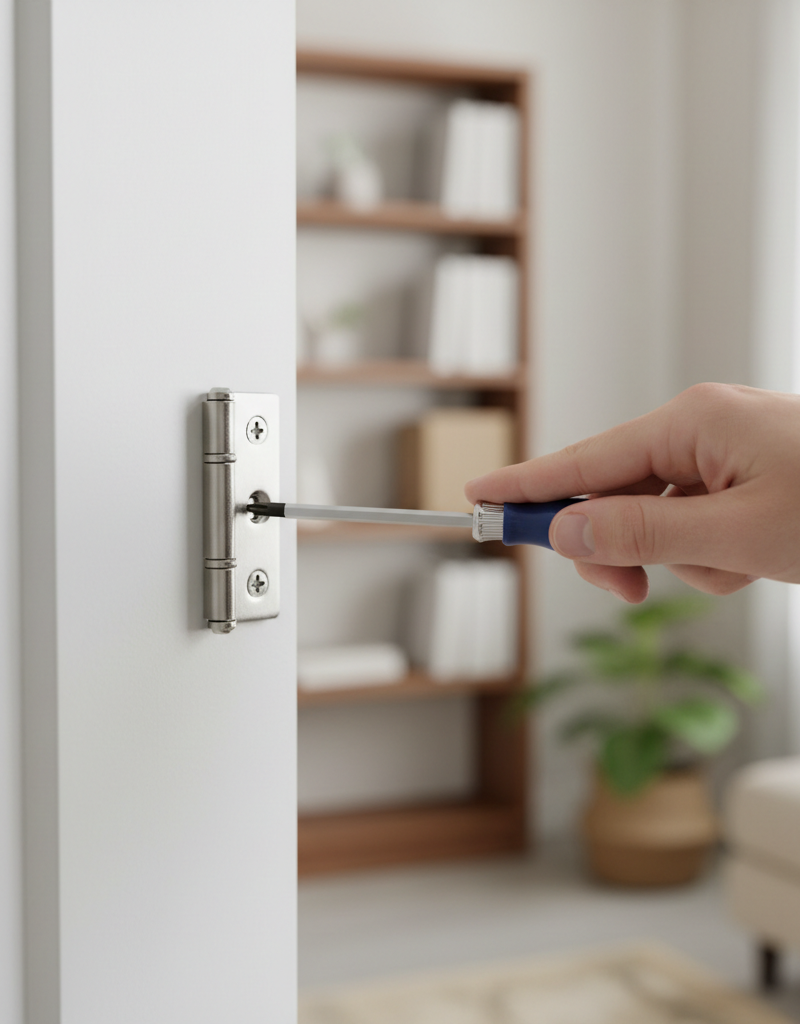
1. Inspect and Tighten Hinges — The first and often easiest fix.
*   **Action:** Open the door and check all hinge screws. Are any loose? Use a screwdriver to tighten every screw on both the door and the frame side of each hinge. Don't overtighten, but make them secure. If a screw spins freely, it might be stripped. Remove it, insert a wooden golf tee or a wood sliver with some wood glue into the hole, let it dry, then re-drill a pilot hole and reinstall the screw. This provides new "meat" for the screw to bite into.
*   **Tools:** Phillips head screwdriver, standard screwdriver, wooden golf tees (optional), wood glue (optional).
2. Check for Hinge Pin Issues — Ensure smooth pivot.
*   **Action:** Open the door wide and lift it slightly to check if the hinge pins are fully seated. Sometimes they work their way up, causing friction. Lightly tap any protruding pins back down with a hammer. If a pin is bent, remove it and replace it with a new one of the same size.
*   **Tools:** Hammer, needle-nose pliers (if removing a bent pin).
3. Shim the Hinges (If Door is Sagging) — Adjusting door position within the frame.
*   **Action:** If the door is sticking at the top near the latch side, or dragging on the floor at the latch side, the top hinge might need shimming. Remove the top hinge from the door frame side. Cut a thin cardboard shim (from a cereal box or a business card) slightly smaller than the hinge leaf. Place the shim behind the hinge leaf and re-fasten the hinge. This pushes the door slightly away from the hinge-side jamb at the top, effectively lifting the latch side. If the bottom of the door is sticking on the hinge side, shim the *bottom* hinge.
*   **Safety:** Have someone help you hold the door while removing hinge screws, or prop the door securely with wedges under the bottom edge.
*   **Tools:** Standard screwdriver, utility knife, thin cardboard or wood shims.
4. Address Paint Buildup — Scraping away excess material.
*   **Action:** If the door is sticking due to accumulated layers of paint on the door edges or the door frame rabbet (the recessed area where the door sits), use a paint scraper or a putty knife to carefully scrape away the excess paint. Focus on the areas where you identified friction marks. Be gentle to avoid damaging the underlying wood. Once the excess is removed, you may need to lightly sand the area and repaint.
*   **Tools:** Paint scraper, putty knife, fine-grit sandpaper (220-grit).
5. Sand the Sticking Edge (for Wood Expansion) — Removing minimal material.
*   **Action:** This is for when the door itself has swollen and is rubbing. Identify the exact spot on the door's edge or the frame where it's sticking. With the door open, use a pencil to mark the contact points. Then, remove the door from its hinges (easier to work on). Lay the door flat on sawhorses. Use 80- or 100-grit sandpaper wrapped around a sanding block to sand *only* the marked areas on the door edge. Sand a little, then check the fit. Err on the side of caution; you can always sand more, but you can't add wood back. Finish with a smoother grit (120-150) for a better surface. Repaint or seal the sanded edge to prevent moisture re-absorption.
*   **Safety:** Always wear a dust mask and eye protection when sanding. Be careful when lifting and maneuvering the door, as it can be heavy.
*   **Tools:** Screwdriver (to remove hinges), sawhorses, sanding block, 80-grit sandpaper, 120-150 grit sandpaper, dust mask, eye protection.
*   **If this doesn't work:** If significant material needs to be removed, or the entire edge needs adjustment, consider using a hand plane or calling a professional carpenter.
6. Plane the Door Edge (for Significant Swelling) — More aggressive material removal.
*   **Action:** If sanding isn't enough, or a larger section of the door edge needs reduction (e.g., more than 1/8 inch), a hand plane is the next step. Remove the door from its hinges and place it on sawhorses. Identify the sticking edge and the amount of material to remove. Set the plane to take off very thin shavings. Work slowly and evenly along the edge, checking your progress frequently. Plane with the grain of the wood to prevent tear-out. Re-hang the door and test. Once satisfactory, seal/paint the planed edge.
*   **Safety:** Exercise extreme caution when using a hand plane; keep fingers clear of the blade. Wear work gloves.
*   **Tools:** Hand plane, sawhorses, measuring tape, level (optional, for checking straightness).
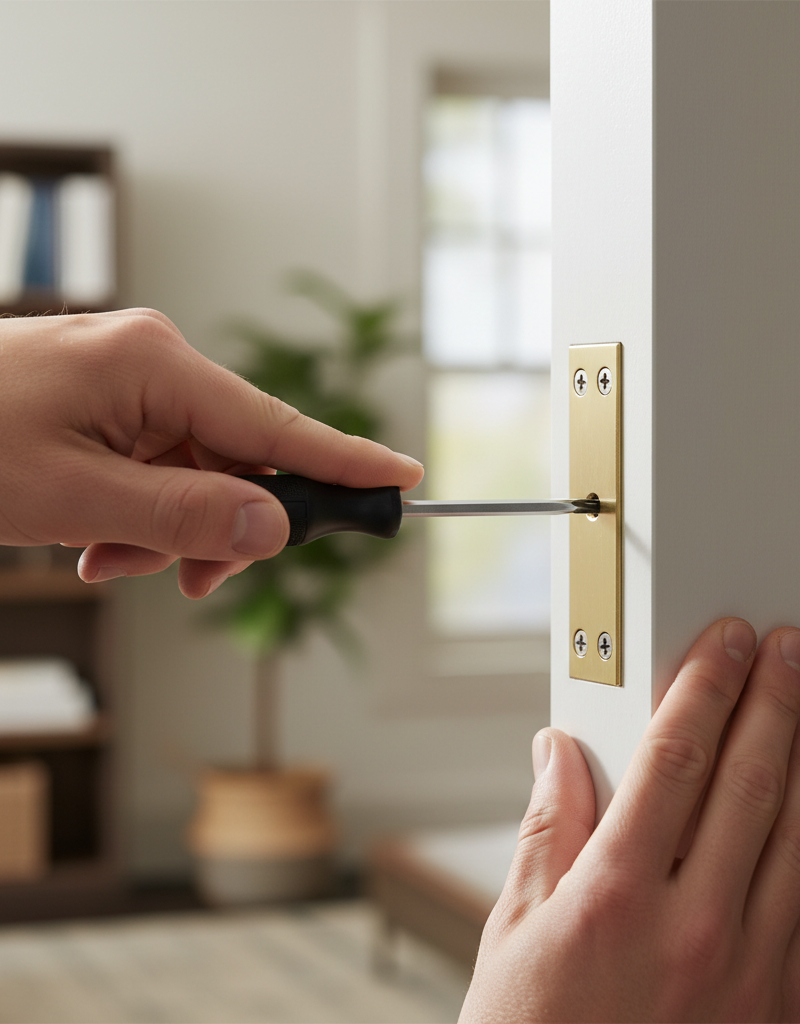
7. Adjust Strike Plate — When the latch isn't catching or binds.
*   **Action:** If the door closes but the latch doesn't engage smoothly or the door feels tight against the strike plate, the strike plate itself might be misaligned. Loosen the screws holding the strike plate. If there's enough play, slightly shift the plate up, down, or towards/away from the door frame opening until the latch operates smoothly. If more adjustment is needed, you might need to chisel out a small amount of wood from the mortise (recessed area) where the strike plate sits, or use a metal file to enlarge the hole in the strike plate for the latch bolt.
*   **Tools:** Screwdriver, small chisel (if needed), metal file (if needed).
Common Causes
- Humidity Fluctuations: This is by far the most common cause. Wood absorbs moisture in high humidity, swells, and expands, causing the door or frame to bind. In dry conditions, it shrinks, sometimes leading to rattling or new gaps. This is why doors often stick worse in summer or rainy seasons.
- Loose Hinge Screws: Over time, hinge screws can loosen due to repeated use or house vibrations, allowing the door to sag out of alignment. This often manifests as the top corner of the latch side dragging on the frame.
- Excessive Paint Buildup: Successive layers of paint on the door edges or inside the door frame rabbet can gradually reduce the critical clearance, leading to friction.
- House Settling: Older homes or homes on unstable foundations can experience slight settling, which can cause door frames to go out of square, leading to binding.
- Bent Hinge Pins or Damaged Hinges: A bent hinge pin can prevent the door from swinging freely and cause friction. Damaged or worn hinges can also contribute to misalignment.
- Improper Installation: If a door or frame was not installed plumb and square initially, it may have always had a tendency to stick, or issues might arise as the house settles.
Common Mistakes
- Sanding indiscriminately: Don't sand the entire edge of the door if only a small section is sticking. You'll remove too much material and create new gaps. Target your sanding precisely.
- Over-planing: A hand plane can remove wood very quickly. Taking off too much material is irreversible without significant repair. Always take thin passes and check frequently.
- Ignoring the Hinges: Many homeowners jump straight to sanding when the problem is simply loose hinges. Always check and tighten all hinge screws first.
- Not Sealing Bare Wood: If you sand or plane bare wood, you must seal it (prime and paint/varnish). Leaving it exposed will allow it to re-absorb moisture and swell again, negating your fix.
- Using the Wrong Tools: Trying to force a fix with inadequate tools can lead to damage. A proper screwdriver for hinge screws, a sanding block for sanding, and a sharp hand plane are key.
- Attempting without Help: Doors are heavy and awkward. Trying to remove or re-hang a door by yourself can lead to injury or damage to the door/frame. Enlist a helper.
Cost & Time Breakdown
| Task | DIY Cost | Pro Cost | Time |
|---|---|---|---|
| Tighten Hinge Screws | $0–$5 | N/A | 5–10 minutes |
| Shim Hinges | $0–$10 | $50–$100 | 10–20 minutes |
| Remove Paint Buildup | $0–$15 | $75–$150 | 20–45 minutes |
| Sand Door Edge | $5–$20 | $100–$200 | 30–60 minutes |
| Plane Door Edge | $5–$30 (if you need a plane) | $150–$300+ | 1–2 hours |
| Adjust Strike Plate | $0–$10 | $50–$100 | 15–30 minutes |
Tips & Prevention
- Monitor Humidity: If you live in a climate with significant humidity swings, consider using a dehumidifier in summer months or in damp areas of your home to help stabilize wood moisture content. Consistent indoor humidity (35-50% RH) helps prevent wood from swelling or shrinking excessively.
- Regular Hinge Checks: Make it a habit to check hinge screws annually. A quick tighten can prevent a sag before it becomes a major problem.
- Proper Painting Technique: When painting doors, always remove them from their hinges if possible. Paint edges thinly and evenly, allowing sufficient drying time between coats. Avoid painting hinges or the inside of the strike plate recess.
- Seal All Sides: When painting or varnishing a door, ensure all six sides (front, back, four edges) are properly sealed. This provides an important barrier against moisture absorption.
- Address Water Leaks Promptly: Any leaks near door frames (e.g., from bathrooms, roofs) can saturate wood, causing severe swelling and potential rot. Fix these immediately.
- Consider Door Type: Solid wood doors are more prone to dimension changes with humidity than hollow core or engineered wood doors. If replacing a door in a highly humid area, consider materials less susceptible to moisture.
When to Call a Professional
While many sticking door issues are DIY-friendly, there are situations where calling a licensed professional is the smarter, safer, and ultimately more cost-effective choice. If the door sticking is accompanied by visible cracks in the door frame or surrounding drywall, it could indicate significant house settling or structural issues, which a carpenter or general contractor should investigate. If you've tried the common fixes like tightening hinges, shimming, and light sanding, but the door still binds severely or you need to remove a substantial amount of material (e.g., more than 1/4 inch across the entire door edge), a professional carpenter has the specialized tools and expertise to plane and re-fit the door precisely without damaging it. Similarly, if the issue recurs frequently despite your best efforts, or if multiple doors in your home are sticking, it might point to a larger environmental issue (like excessive humidity) or structural concerns that warrant expert assessment. Don't hesitate to call if you feel uncomfortable removing the door, using power tools, or if you're unsure about the root cause of the problem. A professional can quickly diagnose complex issues and provide a lasting solution.
Related Articles
Keep troubleshooting with these hand-picked guides from FixlyGuide:
- The Secret Reason Your Interior Door Sticks (It's Not Always Humidity) — Before you blame humidity, learn the less obvious culprits behind a sticking interior door and how to fix it with simple steps.
- The 3 Hidden Reasons Your Door Won't Latch (And the Easy DIY Fixes) — Frustrated by a door that refuses to latch? Discover the common culprits behind this annoying problem and learn simple, effective DIY fixes…
- The 3 Hidden Reasons Your Door Won't Latch (And the 10-Minute Fix) — Discover the common culprits behind a door that won't latch properly and learn how to fix it in just 10 minutes, restoring security and pea…
- The 3 Hidden Reasons Your Door Won't Latch (And the Easy Fixes) — Discover the surprising reasons your interior door isn't latching and how to quickly diagnose and fix the issue with simple tools.
- The 5-Minute Fix for a Door That Won't Latch (And the Hidden Cause) — Discover the surprisingly simple reasons your door isn't latching and how to fix it in minutes with common household tools.
- The 3 Hidden Reasons Your Sprinkler Head Won't Pop Up (And How to Fix It FAST) — Discover the most common reasons your sprinkler head isn't popping up and follow our step-by-step guide to quickly diagnose and fix the iss…
Frequently asked questions
Why does my interior door stick?+
Interior doors commonly stick due to wood swelling from humidity, loose hinge screws causing the door to sag, or excess paint built up on the door edges or frame.
How do I stop my door from sticking when it's humid?+
To stop a door from sticking in humid conditions, identify the sticking points, and carefully sand down the affected edges. Ensure the sanded areas are repainted or sealed to prevent further moisture absorption. Using a dehumidifier can also help stabilize humidity levels.
Can I fix a sticking door without removing it?+
Yes, many sticking door issues can be fixed without removing the door. You can tighten hinge screws, shim hinges, scrape away excess paint, or lightly sand small, accessible sticking points while the door is still hung.
When should I call a professional for a sticking door?+
Call a professional if the door sticking is severe, accompanied by structural cracks, requires significant material removal you're uncomfortable doing, or if the problem persists after trying common DIY fixes. Multiple sticking doors might also indicate a larger house issue needing expert assessment.
What tools do I need to fix a sticking door?+
Basic tools typically include a Phillips and standard screwdriver, sandpaper (80- to 220-grit), a sanding block, a utility knife or paint scraper, thin cardboard or wood shims, and a hammer. For more advanced fixes, a hand plane might be needed.

Discussion
Loading comments…