Tools & materials you'll need
Affiliate linksAs an Amazon Associate FixlyGuide earns from qualifying purchases — at no extra cost to you. Prices and availability are accurate as of publication and subject to change.
Quick Answer
Repairing a large drywall hole, typically larger than 6 inches in diameter, requires a more robust solution than simple spackle. The most effective method involves cutting out a clean, square section around the damage, adding wood backing for structural support, and then installing a new piece of drywall. This ensures a strong, long-lasting patch that won't crack or sag, providing a smooth surface ready for paint.
The Problem
That gaping hole in your drywall isn't just an eyesore; it's a structural vulnerability and a testament to an unfortunate mishap, whether it was a door handle through the wall, an overzealous furniture move, or a child's impromptu wrestling match. Unlike small nail holes or minor dings, a large hole (anything bigger than 6 inches in diameter) can't simply be filled with spackle or joint compound. Trying to do so will result in a weak patch that will likely crack, sag, or even fall out over time. The material needs structural support, and without it, the patch will fail. A proper repair involves integrating a new piece of drywall into the existing wall, secured by an underlying framework, to create a solid, durable surface that blends seamlessly with the surrounding area.
How It Works
Think of your drywall as a rigid skin over a skeletal frame of studs. When a large section of this skin is damaged, you can't just slap a bandage on it. You need to replace the damaged skin and ensure the new piece is properly attached to the underlying structure. For a large hole, this means creating a new, smaller skeletal frame (backing boards) behind the existing drywall to provide attachment points for the patch.
First, the damaged area is carefully cut out into a clean, geometric shape, usually a square or rectangle, to make it easy to cut a matching patch. This precision is important because an irregular shape makes it difficult to achieve tight seams. Once the hole is cleanly defined, pieces of wood (typically 1x3 or 1x4 furring strips) are inserted into the wall cavity, extending beyond the edges of the newly cut hole. These backing boards are then screwed into the existing drywall from the front, creating a secure foundation behind the wall surface. This provides a solid surface for attaching the new drywall patch. The patch itself is cut to precisely match the opening. Once installed, the seams between the new patch and the old wall are covered with drywall joint tape and then multiple thin coats of joint compound, feathered out to create a smooth, invisible transition. Sanding between coats ensures a flat surface, making the repair virtually undetectable once painted. This method essentially reconstructs a small portion of the wall, ensuring the repair is as strong and stable as the original drywall.
Step-by-Step Fix
-
Prepare the Area and Gather Tools — Before you begin, clear any furniture or obstacles from the area and lay down a drop cloth to catch dust and debris. This will make cleanup much easier. Ensure you have all your tools and materials ready to go.
-
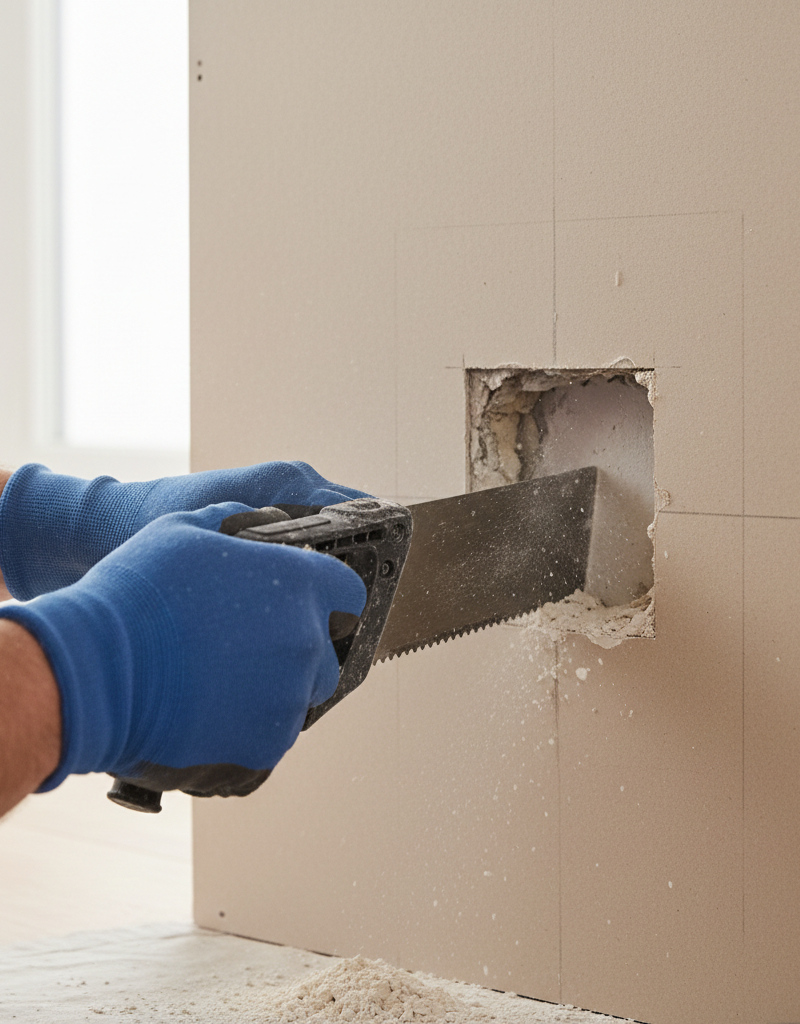
Square Up the Hole — Using a utility knife or drywall saw, cut out the damaged section into a clean square or rectangle. Extend your cut slightly beyond the visible damage to ensure you're working with solid drywall. Use a straightedge or T-square to make perfectly straight lines. This precision is crucial for a snug-fitting patch. Aim for the smallest square possible that encompasses all the damage. For unusually large holes (e.g.,
over 18 inches), you might need to locate existing wall studs and cut your square to butt against them for additional support, eliminating the need for some backing boards on those sides.- Safety Note: Always cut away from your body. Wear gloves to protect your hands from sharp edges of the drywall and the utility knife.
-
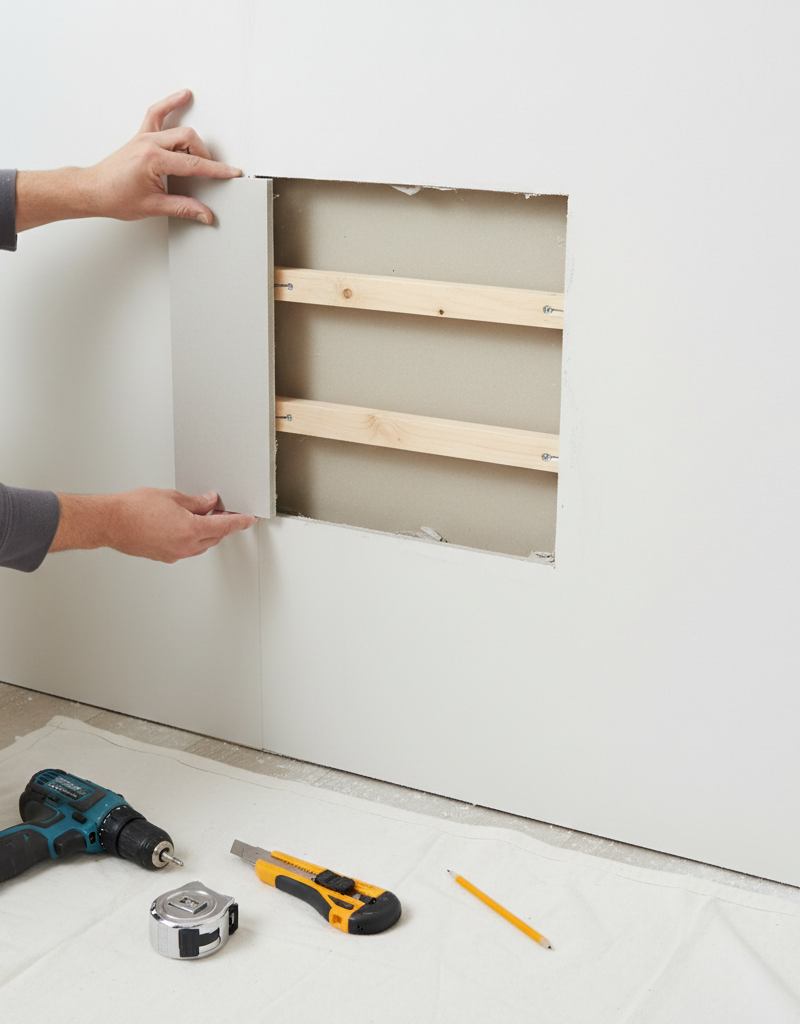
Cut and Install Backing Boards — Cut two pieces of
1x3or1x4wood backing that are8-10 inches longerthan the width of your hole. Slide one piece into the wall cavity behind the top edge of your hole. Center it, and use1 1/4-inch drywall screwsto secure it to the existing drywall above the hole, driving the screwsevery 6-8 inches. Repeat this process for the bottom edge. If your hole spansmore than 16 inches vertically, you may also need to add vertical backing on the sides, securing them in the same way. The goal is to create a secure frame around the entire perimeter of your opening.- Pro Tip: If possible, locate existing studs near the hole. If your cut-out extends to a stud, you only need backing on the other sides, saving time and materials.
- Material Choice: Pine or fir furring strips (
1x3or1x4) work well. Avoid warped wood.
-
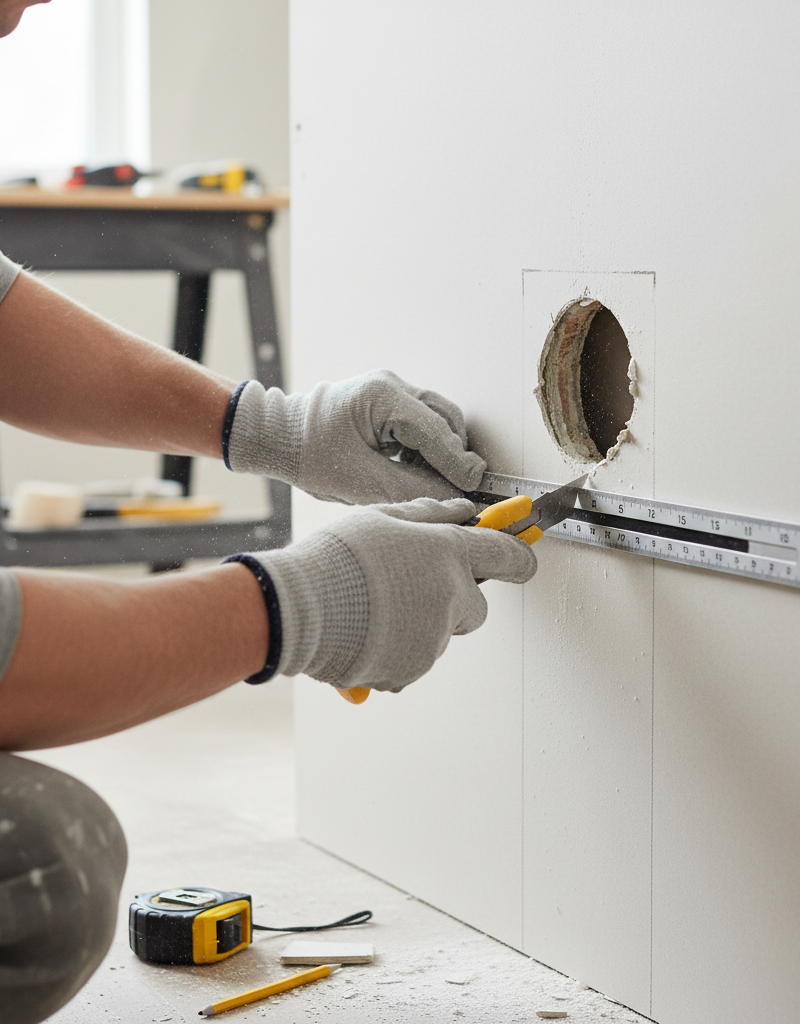
Measure and Cut the Patch — Carefully measure the exact dimensions of your newly squared-off hole. Transfer these measurements to a new piece of drywall. Use a utility knife and a straightedge to score and snap the new drywall patch to size. Ensure the patch fits snugly into the opening without forcing it. It should sit flush with the existing wall.
- Fit Test: Dry-fit the patch before permanent installation. If it's too tight, shave a tiny amount off the edges with your utility knife or a drywall rasp. If it's too loose, you may need a slightly larger patch or to re-cut the hole. A
1/16-inchgap is acceptable; anything larger will require more joint compound.
- Fit Test: Dry-fit the patch before permanent installation. If it's too tight, shave a tiny amount off the edges with your utility knife or a drywall rasp. If it's too loose, you may need a slightly larger patch or to re-cut the hole. A
-
Install the Drywall Patch — Place the new drywall patch into the opening, ensuring it's flush with the surrounding wall. Using
1 1/4-inch drywall screws, secure the patch to the backing boards you installed in Step 3. Drive screwsevery 6-8 inchesalong all four edges of the patch, making sure the screw heads are slightly recessed below the paper surface but do not break through the paper.- Screw Depth: Use a drywall screw gun or a drill with a depth-setting bit to prevent over-driving screws. Over-driven screws compromise the holding power and can tear the paper, requiring additional patching.
-
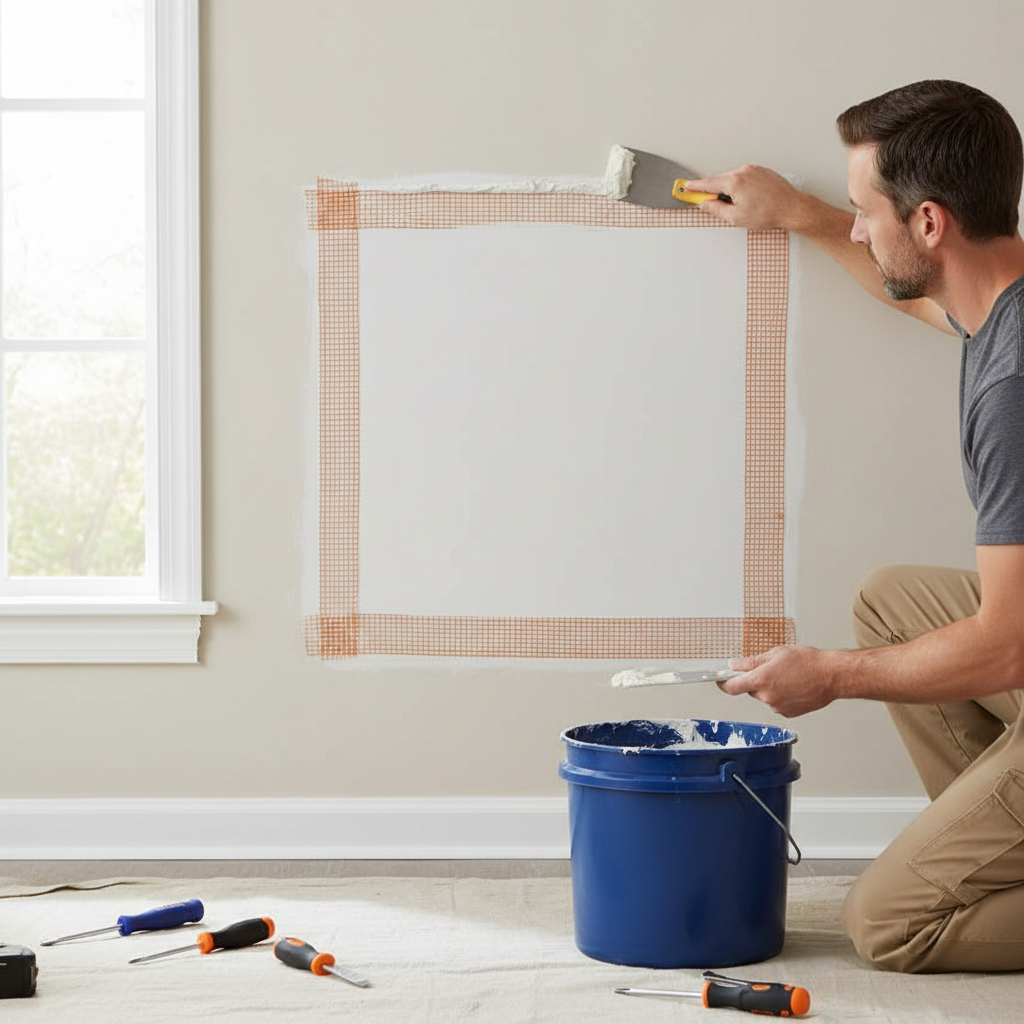
Apply Drywall Tape — Apply self-adhesive fiberglass mesh tape evenly over all the seams where the new patch meets the existing drywall. Press it firmly into place, ensuring there are no wrinkles or bubbles. The tape helps reinforce the joint compound and prevents cracking.
- Alternative: Paper tape can also be used, but it requires a thin coat of joint compound underneath it before pressing it into place. Fiberglass mesh tape is generally easier for DIYers.
-
First Coat of Joint Compound — Using a 6-inch drywall knife, apply a thin, even layer of all-purpose joint compound over the tape, feathering the edges out onto the existing drywall by
2-3 inches. The goal is to embed the tape completely. Let this coat dry completely, which can take4-6 hoursor longer depending on humidity.- Drying Time: Resist the urge to rush. Applying subsequent coats too soon will lead to cracking and poor adhesion.
- Consistency: If the joint compound is too thick, add a tiny amount of water and mix it thoroughly until it reaches a smooth, spreadable consistency, similar to thick peanut butter.
-
Second Coat of Joint Compound — Once the first coat is completely dry, lightly sand any major ridges or bumps with
150-grit sandpaper. Then, apply a second, wider coat of joint compound using an8- or 10-inch drywall knife. Extend this coatanother 2-3 inchesbeyond the first coat's edges, further feathering it out. Allow this coat to dry completely.- Sanding Technique: Don't over-sand. The goal is just to knock down high spots, not to remove the entire layer.
-
Final Coat and Sanding — After the second coat is dry, lightly sand again to smooth out any imperfections. Then, apply a very thin final coat of joint compound, using a
10- or 12-inch drywall knifeto achieve a perfectly smooth, seamless finish. Feather the edges out significantly. Let it dry completely. Once dry, perform a thorough final sanding with220-grit sandpaperor a fine-grit sanding sponge until the patch is perfectly flush and smooth with the surrounding wall. Wipe away all dust with a damp cloth.- Lighting Check: Use a bright light held at an angle (a
Related Articles
Keep troubleshooting with these hand-picked guides from FixlyGuide:
- The Giant Drywall Hole: 3 Hidden Mistakes That Make Fixing It Worse — Don’t just spackle over that huge drywall hole; learn the right way to repair it and avoid common mistakes that lead to an even bigger head…
- The 1 Common Drywall Patching Mistake (and The Right Way to Fix a Hole) — Discover the biggest mistake homeowners make when patching drywall holes and learn the correct, long-lasting method for seamless repairs.
- The 4-Step Drywall Patch Secret That Makes Large Holes Vanish — Discover how to flawlessly repair a large hole in drywall using a simple, effective method that makes the damage disappear without a trace.
- The 4-Inch Drywall Hole Fix: Why Spackle Alone Always Fails — Learn the right way to patch a small drywall hole (up to 4 inches) to ensure a strong, invisible repair that spackle alone can't achieve.
- The Giant Drywall Hole: 3 Hidden Causes (And The Best Permanent Fix) — Don’t just slap a patch on a large drywall hole—understand the common causes and learn the most durable repair method homeowners can tackle.
- That Drywall Hole Isn't Just Ugly, It's a Bat Signal — Learn the pro-approved method for patching drywall holes of any size. We cover the surprising science behind a lasting repair and common mi…
Get the print-ready PDF of this guide
A clean, ad-free, printable version you can keep on your phone or pin to the workshop wall. We'll also send occasional weekly tips matched to your home situation.
- Print-optimized layout
- Tools, materials & every step included
- Unsubscribe anytime
Frequently asked questions
How big of a hole can you spackle in drywall?+
You should only use spackle for very small holes, typically `less than 1/2 inch` in diameter, like nail holes or small screw holes. Anything larger requires a more substantial patch, usually involving a new piece of drywall and backing.
Can I just use joint compound to fill a large hole?+
No, using only joint compound to fill a large hole will result in a weak, unstable patch that will likely crack, sag, or even fall out over time. Joint compound needs a solid surface to adhere to and structural support to bridge the gap effectively.
What's the best way to patch a big hole in drywall?+
The best way to patch a big hole in drywall is to cut out the damaged area into a clean, geometric shape, install wood backing strips inside the wall cavity for support, and then screw a custom-cut drywall patch to these backing strips. This provides a strong, durable repair.
How long does drywall patch take to dry?+
The drying time for drywall patch (joint compound) depends on humidity and the thickness of the application. Each coat typically takes `4-24 hours` to dry completely. It's crucial to allow each layer to fully dry before applying the next or sanding to prevent cracking and ensure proper adhesion.
Do I need to prime after patching drywall?+
Yes, it is highly recommended to prime the patched area with a quality stain-blocking primer before painting. This seals the porous joint compound, prevents "flashing" (where the patch looks different from the surrounding wall after painting), and ensures a uniform finish.
Discussion
Loading comments…