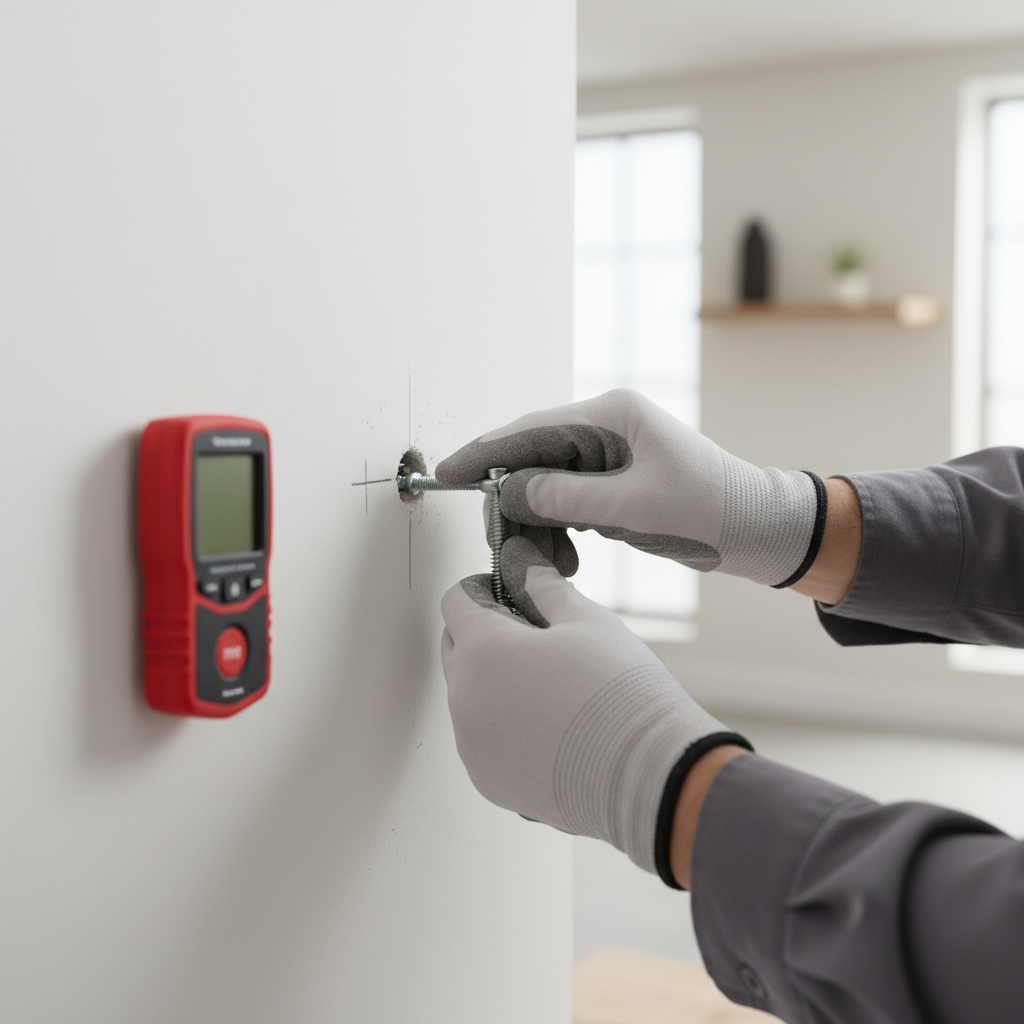
Tools & materials you'll need
Affiliate links- AmazonHeavy-duty toggle bolts or Molly boltsRated for double your mirror's weight
As an Amazon Associate FixlyGuide earns from qualifying purchases — at no extra cost to you. Prices and availability are accurate as of publication and subject to change.
Quick Answer
Many homeowners assume standard drywall anchors are sufficient for heavy mirrors, leading to instability and potential falls. The most secure method involves mounting directly into wall studs using appropriate screws. If a stud isn't available where you want the mirror, the next best solution is to use heavy-duty toggle anchors or specialized picture hangers designed for significant weight, ensuring the weight is distributed over a wider area of the drywall. Always verify the weight capacity of your chosen hardware.
The Problem
That beautiful, heavy mirror you just bought isn't just a decorative piece; it's a significant weight that, if improperly hung, can become a dangerous hazard. The problem arises when homeowners underestimate the sheer gravity-defying challenge and rely on inadequate hanging methods, particularly when dealing with drywall. Drywall, while a common wall material, is essentially gypsum plaster pressed between two sheets of paper. It has very little structural integrity on its own. Standard nails, picture hooks, or even basic plastic drywall anchors can only support a fraction of the weight a large, framed mirror can present. The result? Sagging, pulling out of the wall, unsightly holes, damaged drywall, and a shattered mirror – not to mention the potential for injury. The core issue isn't the drywall itself, but the method of attachment into it, compounded by often-misleading weight ratings on generic hardware that don't account for dynamic loads or long-term stress.
How It Works
Gravity constantly pulls down on your mirror, and the hanging hardware needs to counteract this force safely and sustainably. When you hang something directly into a wooden wall stud, the screw threads bite firmly into the solid wood, creating a strong, direct connection that can hold hundreds of pounds. This is the ideal scenario for heavy items.
However, when you're attaching solely to drywall, the mechanics change. Standard drywall anchors, like expansion anchors or self-drilling anchors, work by expanding or creating a cavity behind the drywall, attempting to grip the back of the gypsum board. They are designed for lighter loads – typically up to 20-30 pounds. A heavy mirror can easily exceed this. Imagine trying to hold a bowling ball with just your fingertips; eventually, your grip fails. Similarly, the face of the drywall can only withstand so much localized stress before the anchor pulls through, tearing a larger, irreparable hole.
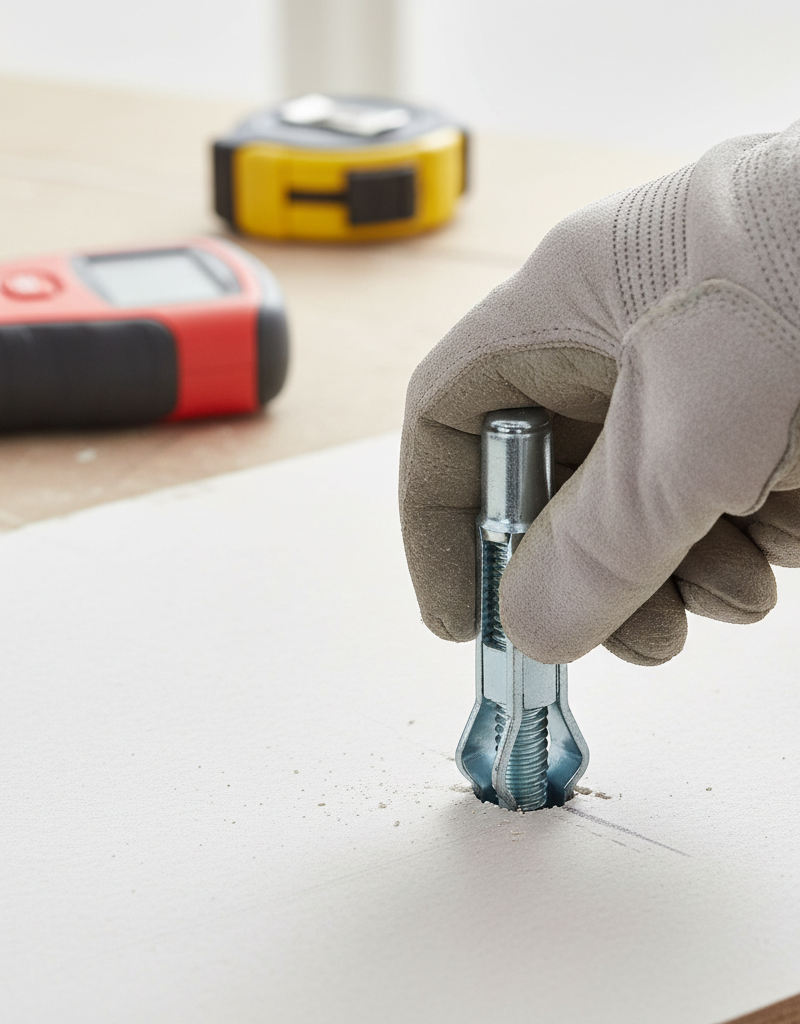
Heavy-duty drywall anchors, such as toggle bolts or Molly bolts, operate on a different principle. Toggle bolts use a spring-loaded wing or strap that deploys behind the drywall, creating a much larger surface area to distribute the weight. This larger 'footprint' reduces the localized stress on the drywall, allowing it to support significantly more weight – often 50-100 pounds or more, depending on the specific design and drywall thickness. Molly bolts, or expansion sleeve anchors, also create a broad bearing surface behind the drywall as they expand. By understanding that drywall itself isn't strong but can be leveraged with the right hardware to distribute weight, you can choose the correct solution.
Step-by-Step Fix
1. Assess the Mirror's Weight and Hardware — Know before you hang
Start by determining the exact weight of your mirror. If the weight isn't listed, use a bathroom scale. Most heavy mirrors start at 25 lbs and can easily exceed 75 lbs. Next, examine the mirror's existing hanging hardware. Does it have D-rings, wire, or a French cleat system? The type of hardware will influence your attachment method. Remember, the stated weight capacity of your new anchors should always be at least double the mirror's actual weight for a safety margin.
2. Locate Wall Studs — The strongest connection
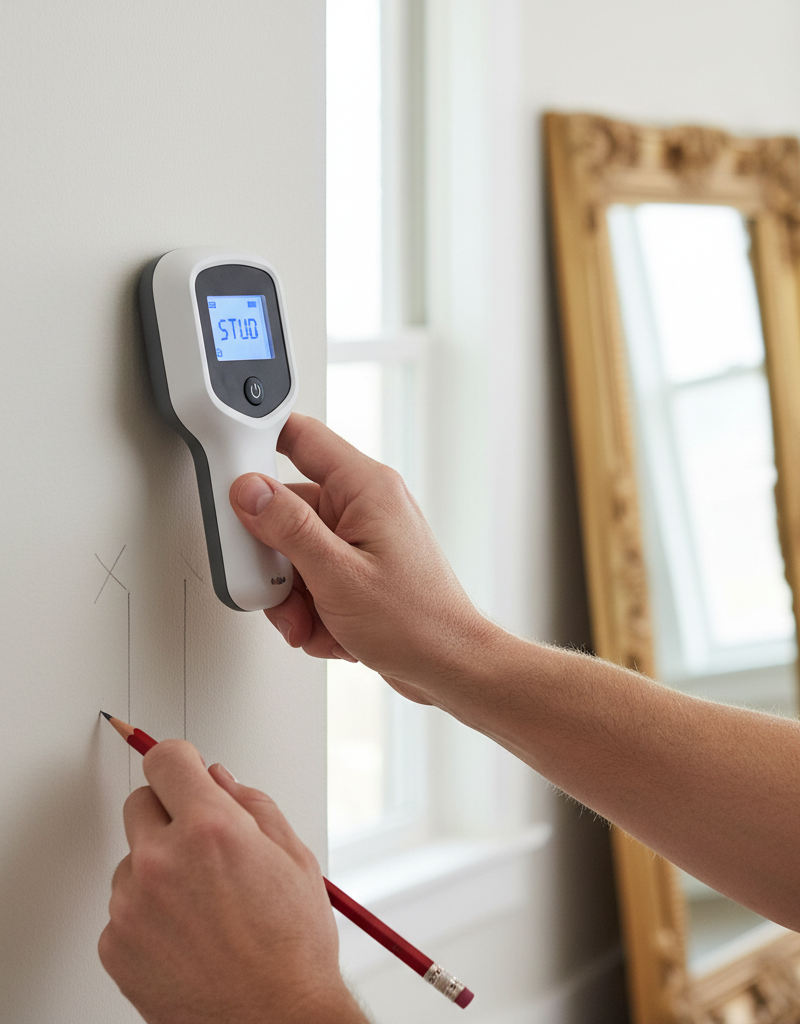
- Tools: Stud finder (electronic or magnetic), pencil.
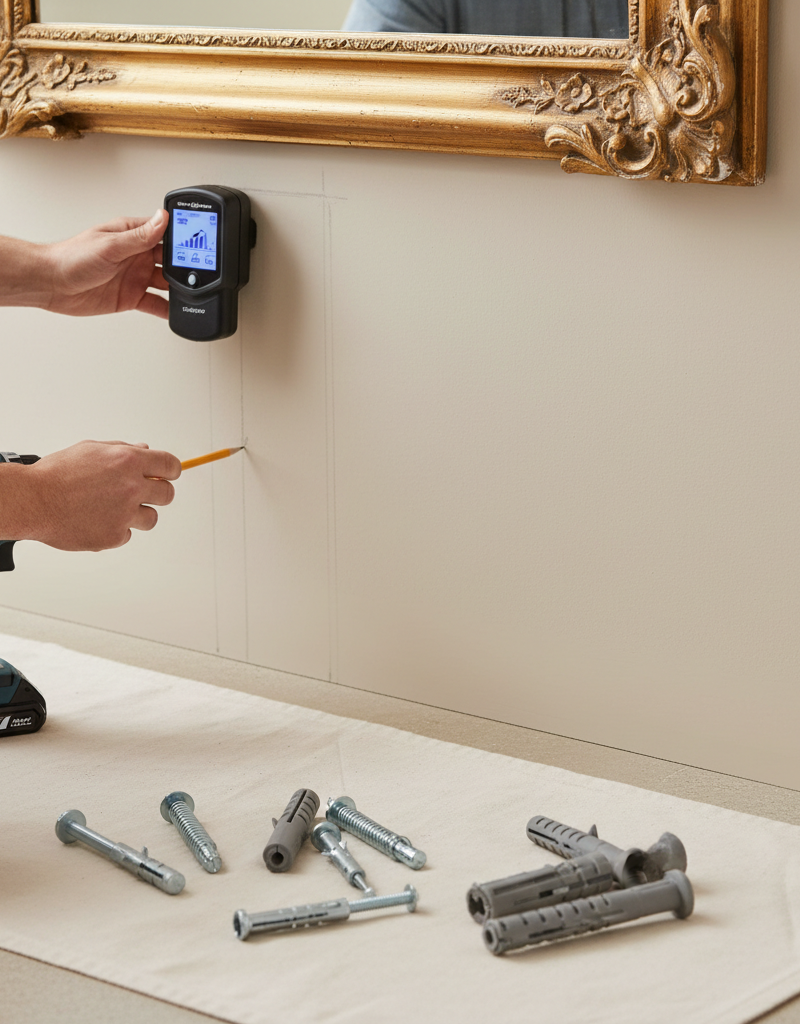
- Using a reliable stud finder, scan the wall horizontally in the area where you plan to hang the mirror. Mark the edges of the studs with a pencil. Studs are typically spaced 16 or 24 inches on center. If your mirror is wide enough, aiming to hit two studs is the absolute strongest and safest method.
- If this doesn't work: If studs aren't where you need them, or your mirror isn't wide enough to span two, you'll need to use heavy-duty drywall anchors.
3. Mark Your Mounting Points — Precision is key
- Tools: Tape measure, level, pencil.
- Hold the mirror against the wall in your desired position. Have a helper mark the top center sparingly with a pencil. Measure down from this mark to the mirror's hanging points (e.g., D-rings or wire). Transfer these measurements to the wall, adjusting for the wire's slack if using a wire hanger (typically measure to the highest point the wire reaches when pulled taut).
- Use a level to ensure your marks are perfectly horizontal for multi-point hanging. This prevents the mirror from appearing crooked or placing uneven stress on the anchors.
4. Pre-Drill Pilot Holes (If Using Studs) — Preventing splits
- Tools: Drill, appropriate drill bit (slightly smaller than your screw shanks).
- If you're mounting into studs, use a drill bit that is slightly smaller in diameter than the shank (the solid part) of your screw. Drill pilot holes at your marked locations. This prevents the wood from splitting and makes driving the screws easier.
- Safety Note: Always wear safety glasses when drilling.
5. Install Mounting Hardware (Studs or Heavy-Duty Anchors) — The secure connection
- Into Studs: Drive heavy-gauge wood screws (e.g., 2-inch long, #10 or #12 screws) directly into the pilot holes in the studs. Ensure the screw head is appropriate for your mirror's hanging hardware (e.g., round head for wire, flat head for D-rings). Leave enough of the screw exposed to accommodate the mirror's hanging mechanism.
- Into Drywall (No Studs):
- Toggle Bolts: Drill a hole according to the toggle bolt manufacturer's instructions (the specified drill bit size is critical). Fold the toggle mechanism closed, insert it into the hole, and ensure it springs open behind the drywall. Then, insert the screw and tighten until snug. Do not overtighten, as this can crush the drywall.
- Molly Bolts/Expansion Anchors: Drill a pilot hole as specified. Insert the Molly bolt and tap it flush with a hammer. Then, use a screwdriver to turn the screw, which expands the anchor behind the drywall. Again, do not overtighten.
- Commercial Heavy-Duty Picture Hangers: Some systems, like specialized heavy-duty picture hangers or French cleats, come with their own fasteners. Follow their specific installation instructions diligently, ensuring they are rated for your mirror's weight.
6. Test the Strength (Pre-Hang Prep) — Trust, but verify
Before lifting your mirror, give each installed anchor a firm tug downwards and outwards. You should feel absolutely no give or movement. If there's any wobbling or a sense of instability, stop immediately and reassess your installation or choose a different anchor type.
7. Hang the Mirror — The moment of truth
- Tools: Helper, if available.
- Carefully lift the mirror and align its hanging hardware with your wall-mounted anchors or screws. Gently lower it into place. Step back and check with a level one last time. Make minor adjustments if needed by carefully lifting and repositioning.
Common Causes
- Underestimating Mirror Weight: The most frequent error. What looks like 20 lbs can easily be 50 lbs or more, especially with ornate frames or thick glass.
- Using Standard Drywall Anchors: Basic plastic or simple metal anchors are not designed for anything more than light to medium frames.
- Missing Studs: Not bothering to locate and utilize wall studs, which are the strongest mounting points.
- Incorrect Hole Size: Drilling a pilot hole that is too large for an anchor, preventing it from gripping properly.
- Overtightening Screws/Anchors: Can crush or strip drywall, making the anchor ineffective.
- Not Using a Level: Causes uneven weight distribution and a crooked appearance.
Common Mistakes
- Assuming 'Heavy Duty' on a Package is Enough: Always check the specific weight rating and compare it to your mirror's actual weight, adding a safety buffer.
- Relying on a Single Anchor for Heavy Mirrors: Spreading the load across two or more anchors, ideally into studs, is always safer than one point of failure.
- Using Only a Hanging Wire: While convenient, a wire can stretch or fray over time. D-rings directly mounted to the frame, paired with appropriate anchors, often offer more stability.
- Ignoring the Wall Material: Drywall, plaster, brick, and concrete each require specific fastening methods. What works for one won't work for all.
- Not Considering the Mirror's Actual Hanging Mechanism: Ensure your chosen wall hardware is compatible with the mirror's built-in hangers (e.g., a tight-fitting D-ring needs a different screw head than a loose wire).
Cost & Time Breakdown
| Task | DIY cost | Pro cost | Time |
|---|---|---|---|
| Stud finder | $15–$30 | N/A | Once (purchase) |
| Heavy-duty anchors (toggle/Molly) | $5–$15 | N/A | 10–20 minutes |
| Drill & bits (if needed) | $30–$80 | N/A | Once (purchase) |
| Level & tape measure | $10–$25 | N/A | 5–10 minutes |
| Hanging the mirror | $0 | $75–$150 | 20–40 minutes |
Tips & Prevention
- Always Over-Engineer: If a mirror weighs 40 lbs, use hardware rated for 80+ lbs. Extra safety margin is cheap insurance.
- Think Long-Term: Consider factors like vibrations from closing doors or foot traffic that can slowly work even secure hardware loose over years. Regularly check heavy wall hangings.
- Use the Right Tools: A good stud finder is invaluable. Don't guess where studs are.
- Consider French Cleats: For exceptionally heavy or large mirrors, a French cleat system (two interlocking wood or metal strips) distributes weight across an entire horizontal line, offering superior stability when mounted into multiple studs.
- Check Drywall Thickness: Standard drywall is 1/2-inch, but 5/8-inch is also common. Some anchors are thickness-specific. Know your wall.
When to Call a Professional
While hanging a mirror might seem straightforward, certain situations warrant calling a professional. If your mirror is exceptionally large or heavy (e.g., over 75 pounds and spanning a significant wall area), and you're unsure about stud locations or anchor types, a handyman or professional installer can ensure it's safely secured. Similarly, if your wall material isn't standard drywall (e.g., plaster and lath, concrete block), or if you're attempting to mount into a tiled surface, a professional will have the specialized tools and expertise to prevent damage to both the wall and the expensive mirror. Don't risk injury or costly breakage; a pro's fee is often less than replacing a shattered mirror or repairing extensive wall damage.
Related Articles
Keep troubleshooting with these hand-picked guides from FixlyGuide:
- The #1 Mistake Homeowners Make Installing Floating Shelves (and How to Fix It) — Discover the crucial error many DIYers make when mounting floating shelves into drywall and learn the simple steps to ensure a secure, sag-…
- The 3 Drywall Anchors That Will NEVER Fail Your Heavy Mirror (And 2 to Avoid) — Safely hanging a heavy mirror on drywall requires choosing the right anchors and proper installation to prevent frustrating falls and damag…
- The #1 Mistake Homeowners Make Installing Floating Shelves (and How to Fix It) — Discover the crucial mistake homeowners make installing floating shelves into drywall and learn the correct, secure method to prevent saggi…
- The #1 Mistake Homeowners Make Installing Floating Shelves (and How to Fix It) — Discover the most common error DIYers make when mounting floating shelves into drywall and how to ensure your shelves are sturdy and secure.
- The 3 Common Floating Shelf Mistakes That Lead to Wall Damage — Learn the critical mistakes homeowners make when installing floating shelves into drywall and how to avoid them for a secure, lasting mount.
- Is Your Gutter Sagging After Every Storm? The Hidden Flaw Most Homeowners Miss — Discover the overlooked reason your gutters sag after every storm and learn the lasting fix that most homeowners miss.
Frequently asked questions
What's the best way to hang a heavy mirror if there are no studs?+
If no studs are available, the best solution is to use heavy-duty toggle bolts or Molly bolts. These anchors expand behind the drywall to create a large bearing surface, distributing the mirror's weight over a wider area and providing exceptional holding power. Always check the anchor's specific weight rating against your mirror's actual weight.
How much weight can standard drywall anchors hold?+
Standard plastic or self-drilling drywall anchors are typically designed for light to medium loads, usually between 10 to 30 pounds. They are generally insufficient for heavy mirrors, which often weigh 25 pounds or more. For anything heavy, opt for anchors rated for much higher capacities.
Can I use picture wire to hang a heavy mirror?+
You can use picture wire if the mirror's frame is robust and the wire itself is heavy-gauge and securely attached. However, the wall anchors must be rated for the *total* weight. For truly heavy mirrors, D-rings directly attached to the frame with screws into studs or heavy-duty anchors are often more stable than a single point of failure on a wire.
How do I know if my mirror is too heavy for DIY hanging?+
A good rule of thumb is if your mirror weighs over 40-50 pounds, takes two people to lift comfortably, or is especially valuable, consider it 'heavy' for DIY purposes, especially if you can't hit a stud. If you're new to using heavy-duty anchors or if the wall material is unusual, calling a professional is a safer bet.
Discussion
Loading comments…