Tools & materials you'll need
Affiliate linksAs an Amazon Associate FixlyGuide earns from qualifying purchases — at no extra cost to you. Prices and availability are accurate as of publication and subject to change.
Quick Answer
Many homeowners inadvertently harm their lawns by watering incorrectly, either too often, not enough, or at the wrong time of day. The most common and damaging mistake is shallow, frequent watering, which promotes weak, surface-level roots. To cultivate a vibrant, resilient lawn, you must shift your approach to deep, infrequent watering. This means applying about 1 inch of water in a single session, allowing the topsoil to dry out slightly before the next watering, typically every 2-3 days depending on your climate and soil type. This method encourages roots to grow deeper, making your lawn more tolerant to drought and less prone to disease and pests. This fundamental change costs nothing but vastly improves lawn health.
The Problem
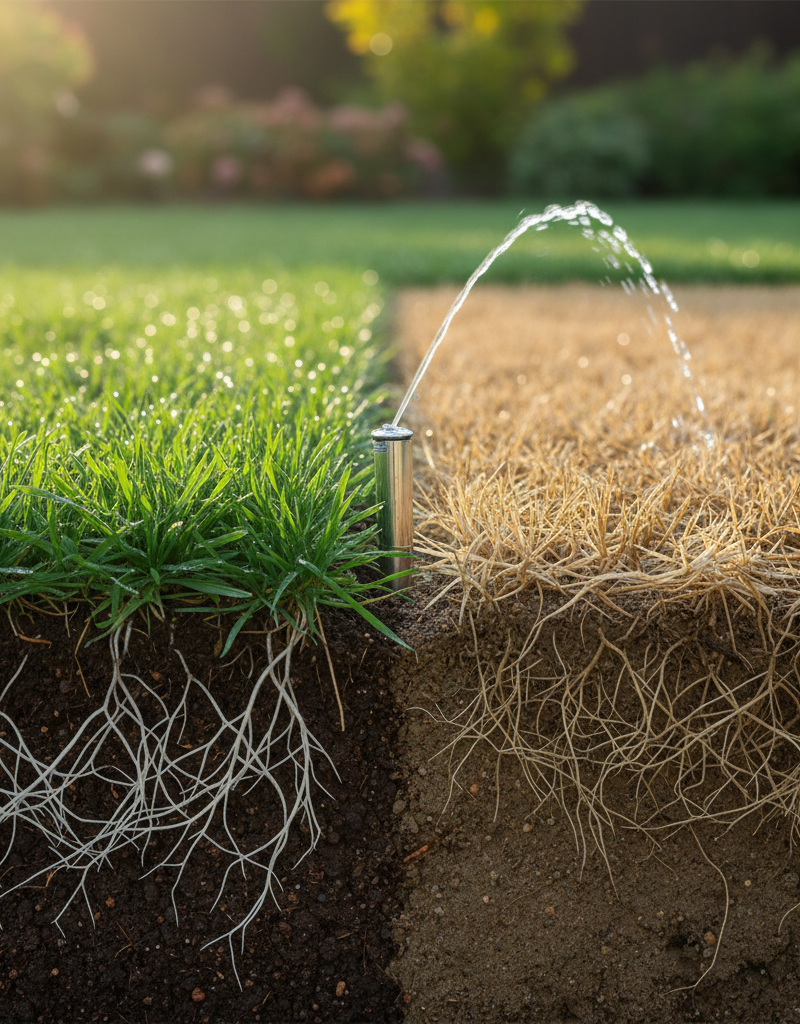
You've noticed your lawn isn't as green as your neighbors', or perhaps it's developing brown patches despite your regular watering efforts. You might be seeing more weeds, or the grass seems to wilt quickly after a sunny day. The underlying issue is likely improper watering, leading to a host of problems. Shallow watering, for instance, trains your grass roots to stay near the surface, seeking the easily accessible moisture. When hot, dry conditions hit, these shallow roots quickly succumb, leading to brown, stressed turf. Conversely, overwatering can create a consistently saturated environment, starving roots of oxygen and fostering fungal growth, moss, and an ideal breeding ground for pests. Both scenarios lead to a weak, unhealthy lawn that's more vulnerable to environmental stressors, diseases, and weed invasions.
How It Works
Grass, like all plants, needs water to photosynthesize, transport nutrients, and maintain its cellular structure. However, how it receives that water is critical to its long-term health. When you water, moisture penetrates the soil. If only a small amount is applied, it only wets the top few inches. Grass roots, being opportunistic, will concentrate in this moist upper layer. This is fine for a short period, but it makes the lawn incredibly dependent on frequent top-ups. Think of it like a human living on snack foods – they get some energy, but lack the deep nutrition for sustained health.
Deep watering, on the other hand, saturates the soil to a depth of 4-6 inches for most turf grasses. As the surface water evaporates and the upper soil layer dries out, the roots have no choice but to grow downwards, following the retreating moisture. This development of a deep, extensive root system is the cornerstone of a healthy lawn. Deep roots can access water and nutrients stored deeper in the soil, making the grass far more resilient during dry spells, requiring less frequent watering, and better equipped to outcompete weeds. Furthermore, allowing the soil surface to dry out between waterings helps to disrupt the life cycle of many common lawn diseases and pests that thrive in consistently damp conditions. The goal is to create a cycle of 'wet then 'dry' for the top few inches, encouraging root exploration downwards while discouraging surface-dwelling problems.
Step-by-Step Fix
Step 1: Understand Your Soil Type — *Assess how your soil retains water.
Sandy soil drains quickly and requires more frequent but still deep watering. Clay soil retains water longer and needs less frequent watering. Loamy soil is ideal, holding water well but draining effectively. To test, dig a small hole 6 inches deep and feel the soil. Sandy soil will feel gritty, clay will be sticky, and loam will be crumbly.
Step 2: Calibrate Your Sprinklers — *Ensure even water distribution.
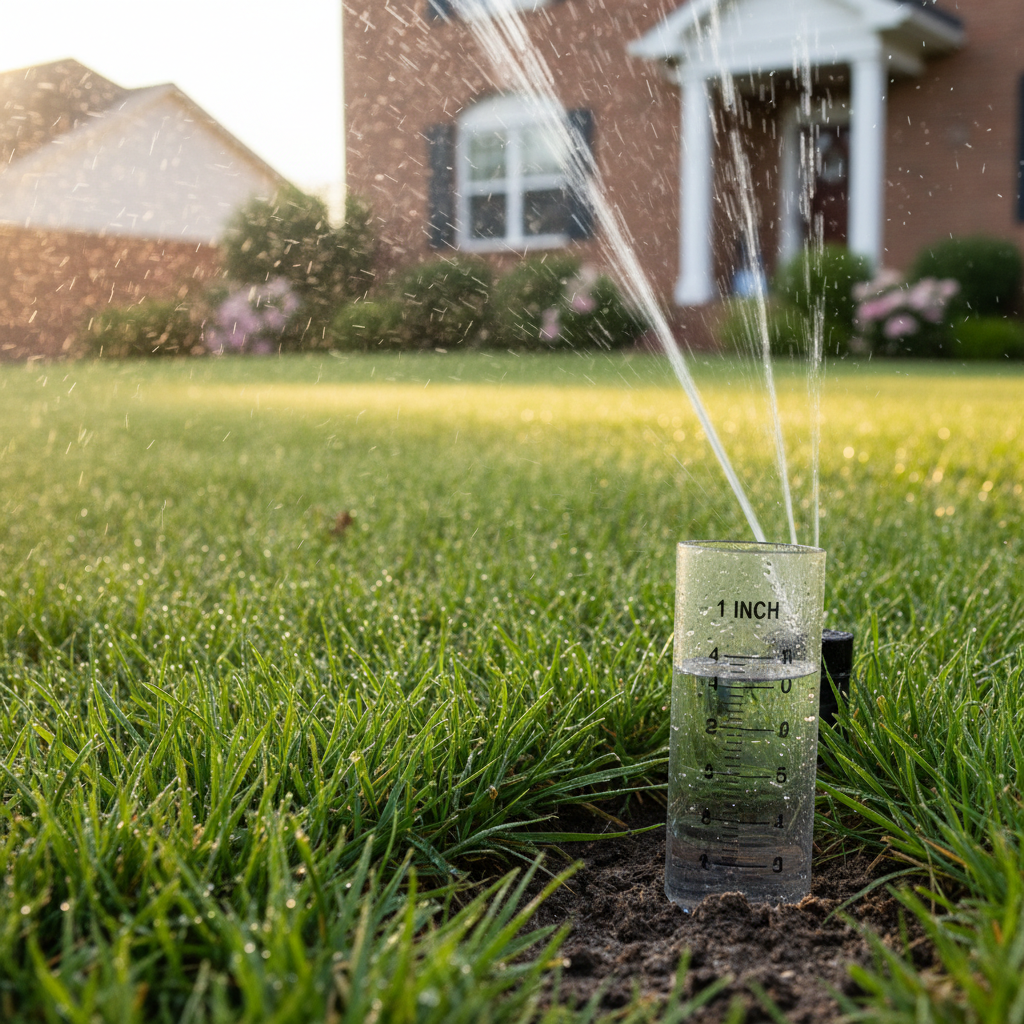
Place several tuna cans or rain gauges (empty, straight-sided cans work) across different areas of your lawn. Run your sprinklers for 15 minutes. Measure the water collected in each can. This helps you understand how long it takes to deliver a specific amount of water and if coverage is even. Adjust sprinkler heads as needed to eliminate dry spots.
Step 3: Determine Your Lawn's Water Need — *Aim for 1 inch of water per session.
Most lawns need about 1 inch of water per week, delivered in 1-2 deep soakings, not daily sprinkles. Based on your sprinkler calibration (Step 2), calculate how long you need to run your system to achieve 1 inch of water. For example, if your cans collected 0.25 inches in 15 minutes, you'd need to run your sprinklers for 60 minutes (4 x 15 minutes) to apply 1 inch.
Step 4: Water Deeply and Infrequently — *Encourage deep root growth.
Instead of short, daily bursts, water for the full duration determined in Step 3. Water early in the morning, between 4 AM and 9 AM, to minimize evaporation and allow grass blades to dry before nightfall, reducing disease risk. If water starts to run off before you've applied enough, split the watering into two sessions an hour apart to allow for better absorption.
Step 5: Observe and Adjust — *Pay attention to your lawn's signals.
Watch for signs of stress. If your grass takes on a dull, bluish-gray tint or if footprints remain visible after walking on it, it's starting to get thirsty. This is generally the time to water again. Too much water might manifest as mushrooms, excessive weed growth, or a spongy feel. Adjust your watering frequency based on weather, season, and your lawn's specific needs rather than a rigid schedule.
Step 6: Use a Screwdriver Test — *Check water penetration depth.
After watering, wait about an hour. Take a long screwdriver or a soil probe and try to push it into the lawn. It should easily penetrate 4-6 inches into the soil. If it meets resistance sooner, you need to water longer. If it goes in too easily and the soil feels squishy, you might be overwatering.
Common Causes
- Shallow, Frequent Watering: The most prevalent cause of weak lawns. Keeps roots near the surface, making the grass vulnerable to heat and drought.
- Watering at the Wrong Time: Watering midday leads to excessive evaporation; watering at night keeps grass blades wet too long, promoting fungal diseases.
- Compacted Soil: Hard, dense soil prevents water from penetrating deeply, leading to runoff and shallow root growth. Often exacerbated by heavy foot traffic or machinery.
- Uneven Sprinkler Coverage: Some areas get too much water, others not enough, leading to inconsistent lawn health and wasted water.
- Ignoring Soil Type: Different soil types (sandy, clay, loamy) have vastly different water retention capabilities, requiring adjusted watering schedules.
- Seasonal Inflexibility: Not adjusting watering frequency based on changes in temperature, rainfall, and grass dormancy cycles.
Common Mistakes
- Mistake: Watering on a fixed, unthinking schedule (e.g., every morning for 20 minutes) regardless of actual need or weather conditions.
- Instead: Use the screwdriver test and visual cues (bluish tint, footprints) to determine when your lawn needs water. Adjust for rainfall.
- Mistake: Assuming all areas of your lawn receive the same amount of water from your irrigation system.
- Instead: Perform a sprinkler calibration test (tuna cans) to ensure even coverage and adjust sprinkler heads.
- Mistake: Watering in the afternoon heat or late in the evening.
- Instead: Water early morning (4 AM-9 AM) to minimize evaporation and allow grass blades to dry before night, preventing disease.
- Mistake: Only watering for a short duration, thinking
Related Articles
Keep troubleshooting with these hand-picked guides from FixlyGuide:
- The #1 Watering Mistake That Kills Lawns (And How to Fix Yours in 10 Minutes) — Discover the most common watering mistake homeowners make and how to adjust your watering routine for a healthier, more resilient lawn.
- The #1 Mowing Mistake That Leaves Your Lawn Brown and Patchy — Discover the most common mowing mistake homeowners make that leads to unhealthy, patchy grass and how to fix it for a vibrant lawn.
- The #1 Watering Mistake That's Killing Your Lawn (And How to Fix It) — Discover the most common watering error homeowners make and how to correct it for a healthier, greener lawn.
- The #1 Mistake Killing Your Summer Lawn (It's Not What You Think) — Uncover the surprising truth behind your yellow summer lawn and learn how to fix the most common, yet overlooked, culprit: overwatering.
- Thatched Lawn Secret: Why Brown Spots Bloom AFTER Watering (and the $15 Fix) — Brown spots appearing after watering your lawn often point to underlying thatch issues, hindering water absorption and nutrient delivery.
- The 3 Hidden Mistakes That Make Your Deck Sealer Fail (And How to Fix Them) — Properly sealing your wood deck protects it from the elements, but common mistakes often lead to early failure. Learn how to reseal your de…
Frequently asked questions
How do I know if I'm overwatering or underwatering my lawn?+
Overwatering often leads to a spongy feel, excessive weed growth (especially moss or sedges), and sometimes yellowing grass due to nutrient leaching or root rot. Underwatering results in a dull, bluish-gray grass color, wilting, and footprints remaining visible after walking across the lawn. The best indicator is a soil probe or screwdriver test – if it's consistently wet 6+ inches down, you're likely overwatering; if it's bone dry after a visual cue, you're underwatering.
What's the best time of day to water my lawn?+
The ideal time to water your lawn is early morning, between 4 AM and 9 AM. This minimizes water loss to evaporation, and it gives the grass blades time to dry out before nightfall, which significantly reduces the risk of fungal diseases. Watering in the afternoon leads to excessive evaporation, and watering at night keeps the grass wet too long, promoting disease.
How can I tell if my lawn is getting 1 inch of water?+
The easiest way is to perform a sprinkler calibration test. Place several empty tuna cans or rain gauges across your lawn in areas your sprinklers hit. Run your sprinklers for a set time (e.g., 15 minutes). Measure the amount of water collected in the cans. Then, calculate how long you need to run your system to achieve a total of 1 inch per watering session. You can also use a soil probe or screwdriver after watering to confirm water has penetrated 4-6 inches deep.
Should I water my lawn every day?+
No, watering your lawn every day is a common mistake. Daily, shallow watering encourages grass roots to stay near the surface, making the lawn weak and susceptible to drought, heat stress, and disease. Instead, aim for deep, infrequent waterings – typically 1 inch of water applied every 2-3 days, or even less frequently in cooler weather or with more mature root systems – to encourage deep root growth and a more resilient lawn.

Discussion
Loading comments…