Tools & materials you'll need
Affiliate linksAs an Amazon Associate FixlyGuide earns from qualifying purchases — at no extra cost to you. Prices and availability are accurate as of publication and subject to change.
Quick Answer
Achieving an invisible drywall patch comes down to one critical technique: proper feathering of the joint compound. Many homeowners make the mistake of globbing on too much compound, trying to fill the hole in one go. This creates an uneven surface that, no matter how much you sand, will always show through paint. The key is to apply multiple thin coats, extending each subsequent coat slightly beyond the last, and meticulously sanding smooth after each application. This gradual tapering, or feathering, allows the patch to blend seamlessly with the existing wall, creating an imperceptible repair.
The Problem
You've patched a small hole in your drywall, meticulously (or so you thought) applied joint compound, sanded it smooth, and painted it. Yet, after all that effort, you can still see where the repair was made. Perhaps there's a slight bulge, a subtle depression, or a texture mismatch that screams "patch job!" This common frustration stems primarily from improper compound application and inadequate blending. Small holes, whether from a picture hook, a doorknob mishap, or a moving incident, are deceptively simple to fix in theory, but achieving an invisible repair requires a specific methodology that often eludes the casual DIYer. The visible patch isn't just an aesthetic annoyance; it signals a hurried or incorrect process that can detract from the overall finish of a room and even reduce your home's perceived value.
How It Works
Drywall, also known as gypsum board, consists of a gypsum plaster core pressed between two sheets of heavy paper. When a small hole occurs, the paper backing and gypsum core are compromised. The goal of patching is to restore the structural integrity locally and, more importantly, create a perfectly flat, uniform surface for painting. For small holes (typically less than 4 inches in diameter), the most effective repair method often involves a self-adhesive mesh patch or a small piece of replacement drywall.
The patch itself provides a stable base over the hole. However, the real magic happens with the joint compound, commonly called "mud." Joint compound is a gypsum-based paste designed to fill gaps, smooth surfaces, and create an even finish. When applied, it adheres to the drywall and the patch. As it dries, water evaporates, causing the compound to shrink slightly. This shrinkage is precisely why multiple thin coats are superior to one thick coat; thick coats shrink more unevenly, leading to depressions or cracks.
Feathering is the technique of gradually increasing the application area with each successive coat of joint compound, thinning the edges of the applied mud until it is virtually flush with the existing drywall surface. Imagine a ramp so gradual you can't feel the rise. This ramp is established by using progressively wider taping knives or joint compound spatulas for each coat. The first coat fills the immediate void and adheres the patch. The second coat extends slightly beyond the first, feathering its edges. The third or final coat extends even further, creating that imperceptible transition. Sanding between coats removes minor imperfections and helps to level the surface, ensuring that the final painted wall appears as if no damage ever occurred.
Step-by-Step Fix
1. Prepare the Area — Clean and cut away any loose debris around the hole to ensure a smooth, stable surface for the patch.
- Safety First: Dust from sanding can be an irritant. Consider wearing safety glasses and a dust mask. Lay down a drop cloth or old newspaper to protect your flooring from dust and compound.
- Use a utility knife to carefully trim any jagged or loose paper or gypsum around the hole. You want a clean, defined edge.
- Wipe the area clean with a damp cloth to remove any dust or grease that could prevent adhesion.
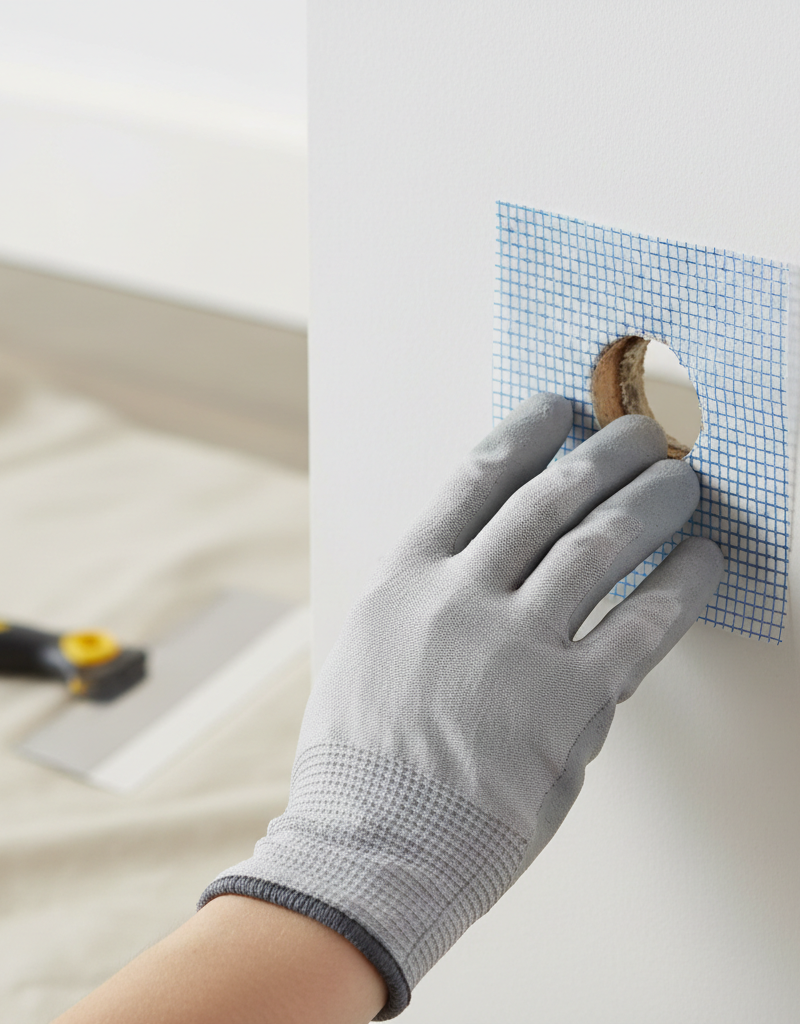
2. Apply the Self-Adhesive Patch — *Center the mesh patch over the hole and press firmly.
- For holes up to about 4 inches, a self-adhesive fiberglass mesh patch is ideal. These patches often have a metal plate in the center for added rigidity.
- Peel off the backing and carefully center the patch over the hole, ensuring it completely covers the damaged area with a slight overlap on all sides.
- Press firmly around the edges of the patch to secure it to the wall. Make sure there are no air bubbles or loose edges.
- If your hole is precisely circular or very small (under 1 inch): You might opt for a pre-cut drywall repair kit with a solid panel. Follow the kit instructions, which typically involve applying a compound directly over the panel.
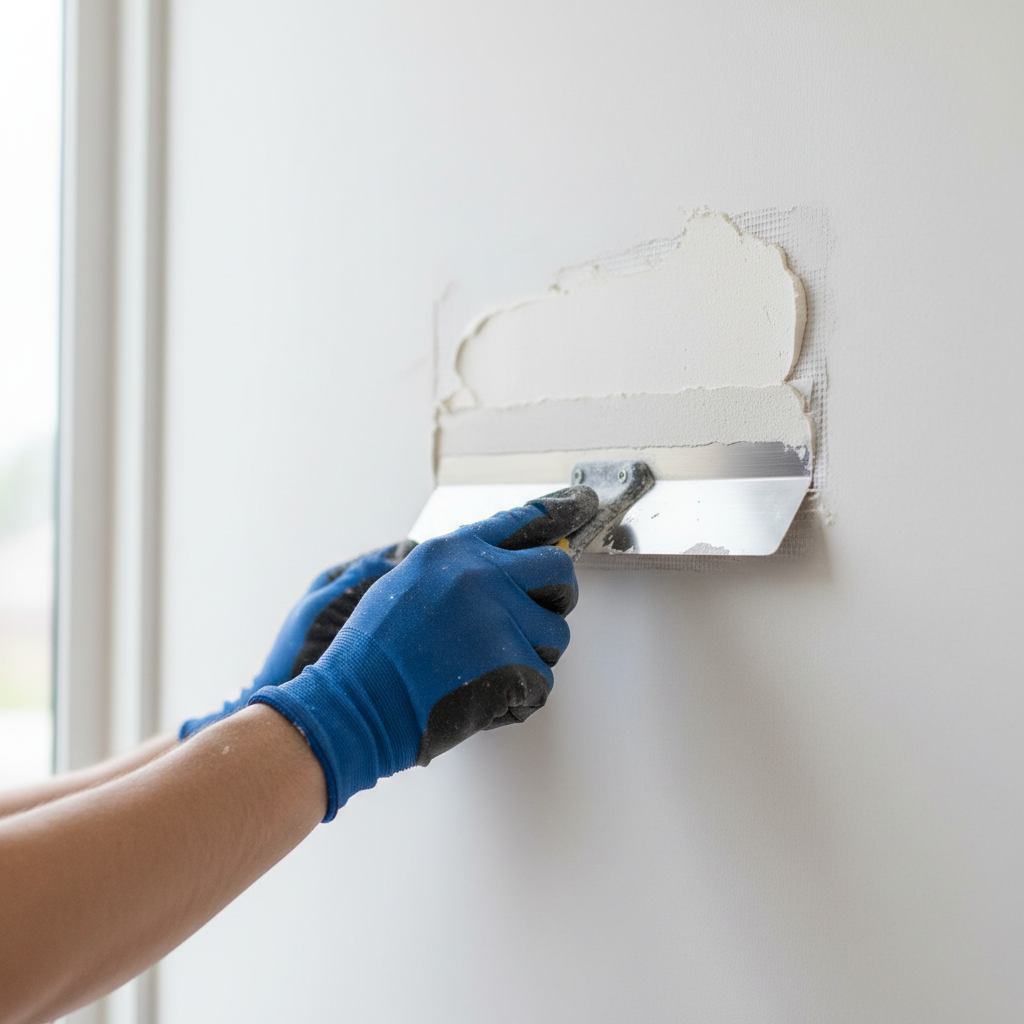
3. First Coat: Fill the Patch — Apply a thin, even layer of joint compound over the patch and slightly beyond its edges, pressing firmly to fill the mesh.
- Use a 4-inch or 6-inch taping knife. Scoop a small amount of all-purpose joint compound onto your knife.
- Starting from the center of the patch, apply the compound with moderate pressure, spreading it evenly and smoothly over the entire patch. Ensure the mesh is completely covered and the hole is filled.
- Extend the compound about 1-2 inches beyond the edges of the mesh patch, feathering the edges as thinly as possible onto the existing drywall.
- Allow this coat to dry completely, which can take 2-4 hours, or longer in humid conditions. The compound should turn a uniform white color when dry.
4. Sand the First Coat — *Lightly sand the dry compound to remove any high spots or ridges, preparing for the next layer.
- Use 150-grit to 220-grit sandpaper or a sanding sponge. Sand gently in a circular motion, focusing on smoothing out any visible lines or bumps.
- Crucial Step: Do not sand down to the mesh of the patch. You are only aiming to knock down imperfections and ensure a smooth, level surface. Over-sanding can expose the mesh and ruin the feathering.
- Wipe away all sanding dust with a damp cloth.
5. Second Coat: Widen and Feather — *Apply a second, slightly wider coat of joint compound, extending further from the patch and feathering aggressively.
- Switch to a wider taping knife, such as an 8-inch or 10-inch knife. This helps create a flatter, more feathered transition.
- Apply another thin layer of compound, extending it about 2-3 inches beyond the edges of your first coat. Focus on maintaining a very thin edge where the new compound meets the old drywall.
- Hold the knife at a shallow angle (around 15-20 degrees) to help feather the edges effectively. The goal is to create a repair spot that gradually tapers into the existing wall.
- Allow this second coat to dry completely (4-8 hours or overnight).
6. Sand the Second Coat — Repeat the sanding process, focusing on creating a truly flush and invisible transition.
- Use the same 150-grit or 220-grit sandpaper. Sand thoroughly but gently, checking for any undulations or ridges with your hand.
- Run your hand over the patched area and the surrounding wall. You should feel a smooth, continuous surface without any noticeable bumps or dips.
- Wipe away all sanding dust.
7. Optional Third Coat (If Needed) — *For stubborn imperfections or if you prefer extra smoothness, apply a final, very thin, very wide coat.
- If you still see minor imperfections or want an even smoother finish, apply a third, very thin "skim coat" using your widest taping knife (10-inch or 12-inch).
- Extend this coat another 2-3 inches beyond the second coat, feathering the edges to near transparency.
- Allow to dry and sand very lightly with fine-grit (220-grit) sandpaper.
- Wipe clean.
8. Prime and Paint — Apply a primer and then paint to complete the repair, ensuring the patch blends perfectly with the rest of the wall.
- Apply a good quality primer (PVA or stain-blocking drywall primer) to the entire sanded area. Primer helps seal the compound and ensures the paint adheres evenly, preventing "flashing" (where the patch shows through the final paint coat due to different porosity).
- Allow the primer to dry according to manufacturer instructions.
- Apply two coats of your wall paint, allowing adequate drying time between coats.
- Pro Tip: If you
Related Articles
Keep troubleshooting with these hand-picked guides from FixlyGuide:
- The 4-Inch Drywall Hole Fix: Why Spackle Alone Always Fails — Fix a small drywall hole (up to 4 inches) properly with a simple patch kit and avoid common mistakes that lead to visible repairs.
- The 1 Common Drywall Patching Mistake (and The Right Way to Fix a Hole) — Discover the biggest mistake homeowners make when patching drywall holes and learn the correct, long-lasting method for seamless repairs.
- The 7 Mistakes That Ruin a Paint Job (Before You Even Open the Can) — Proper wall preparation is the unseen foundation of a flawless interior paint job, preventing issues like peeling, uneven finishes, and vis…
- The 7 Critical Mistakes Almost Everyone Makes When Painting a Room — Unlock the secrets to a flawless, professional-looking paint job by avoiding common pitfalls and mastering essential techniques for perfect…
- The 7 Painting Secrets Pros Use (And Why Your Walls Always Look Streaky) — Learn the surprising pro secrets to achieving flawless, streak-free walls, transforming your room from DIY disaster to professional perfect…
- The #1 Mistake Homeowners Make After Finding Missing Shingles (And How to Fix It Right) — Discover the crucial steps to take after a storm rips shingles from your roof, ensuring a proper, lasting repair and preventing costly futu…
Frequently asked questions
Why does my drywall patch still show after painting?+
Most often, a visible drywall patch is due to improper feathering of the joint compound. Applying too much compound in thick layers or not gradually blending the edges outwards creates a noticeable ridge or bump. Insufficient sanding between coats and not using a primer can also contribute to the patch showing through.
What is feathering in drywall repair?+
Feathering is the technique of applying progressively thinner and wider layers of joint compound, extending each layer further out from the center of the patch. This creates a very gradual slope that seamlessly blends the patched area with the existing wall, making the repair invisible once painted.
Do I need to prime after patching drywall?+
Yes, absolutely. Priming after patching drywall is crucial. Joint compound is more porous than drywall paper, so unprimed patches will absorb paint differently, leading to 'flashing' where the patched area looks dull or discolored compared to the rest of the wall. Primer creates a uniform surface for the paint.
How long does joint compound take to dry?+
Drying times for joint compound vary significantly based on humidity, temperature, and compound thickness. Small, thin coats can dry in 2-4 hours, while thicker applications might take 8-24 hours. Always ensure the compound is uniformly white and firm before sanding or applying the next coat to avoid cracking and unevenness.
What kind of patch should I use for a small hole?+
For small holes (up to 4 inches), a self-adhesive fiberglass mesh patch with a metal backing is highly recommended. These provide good stability and are easy to apply. For very small nail holes, a dab of spackle may suffice, but for anything larger, a dedicated patch is better.
Discussion
Loading comments…