Tools & materials you'll need
Affiliate linksAs an Amazon Associate FixlyGuide earns from qualifying purchases — at no extra cost to you. Prices and availability are accurate as of publication and subject to change.
Quick Answer
Patching a small hole (under 4 inches) in drywall can be done quickly and easily using a mesh patch kit and joint compound. This method allows for a smooth, seamless repair without needing to cut out and replace large sections of drywall, making it ideal for minor damage like nail pops, screw blowouts, or minor bumps.
The Problem
Small holes in drywall are common in any home. Whether from an errant picture nail, a doorknob ding, or a furniture bump, these imperfections can be visually distracting and make a room feel less maintained. While large holes require more extensive repairs, small holes (typically 1/2 inch to 4 inches in diameter) can be repaired by a homeowner with minimal tools and experience. The challenge often lies in achieving a smooth, invisible finish without creating a bigger mess or needing advanced drywall finishing techniques. Many DIYers fear the 'mudding' and sanding process, leading them to delay these simple repairs.
How It Works
Small drywall holes are effectively repaired by creating a new, stable surface over the damaged area that can then be seamlessly blended with the existing wall. For holes under 4 inches, a self-adhesive mesh patch is the cornerstone of this method. This patch provides structural integrity and a uniform surface for the joint compound. The mesh itself is typically fiberglass, offering excellent adhesion and resisting cracking. Once the mesh is applied, layers of joint compound (often called 'mud') are spread over it. This compound is a gypsum-based paste that dries hard and can be sanded smooth. The key to a good finish is applying thin, even layers, allowing each to dry completely before the next. The first layer embeds the mesh, filling the hole and creating a base. Subsequent layers feather out the repair, gradually blending it into the surrounding wall surface. Feathering means extending the compound slightly beyond the actual patch area, making the transition almost imperceptible. Finally, sanding smooths out any ridges or imperfections, preparing the surface for primer and paint.
Step-by-Step Fix
1. Inspect and Prepare the Area — Ensure the area around the hole is clean and free of loose debris.
- Remove any loose bits of drywall or paint flakes around the hole using a utility knife or your fingers. The surface needs to be as smooth as possible for the patch to adhere correctly.
- Wipe the area clean with a damp cloth to remove dust or grease. Allow it to dry completely before proceeding.
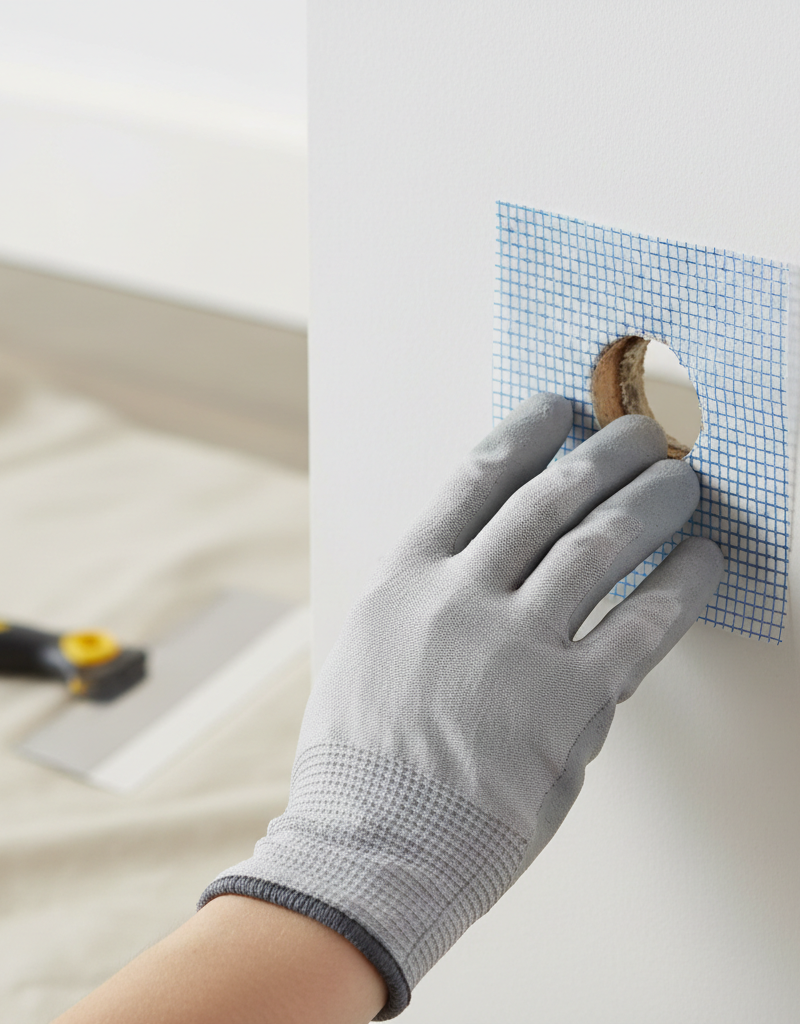
2. Apply the Self-Adhesive Patch — Center the mesh patch over the hole, ensuring full coverage.
- Peel the backing off the self-adhesive fiberglass mesh patch. Choose a patch size that extends at least one inch beyond the edges of the hole on all sides.
- Carefully center the patch over the hole and press it firmly onto the drywall. Ensure there are no air bubbles or wrinkles in the mesh. The adhesive needs to bond well to create a stable base.
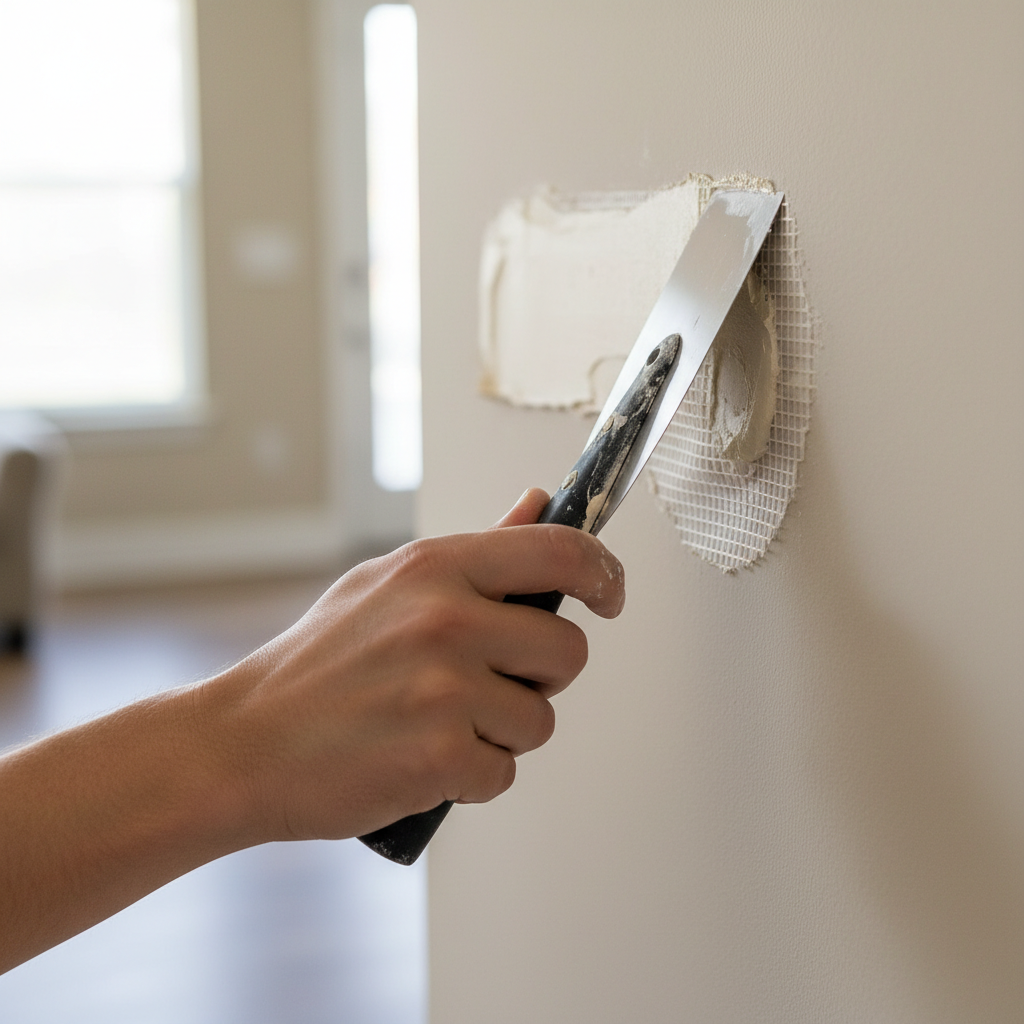
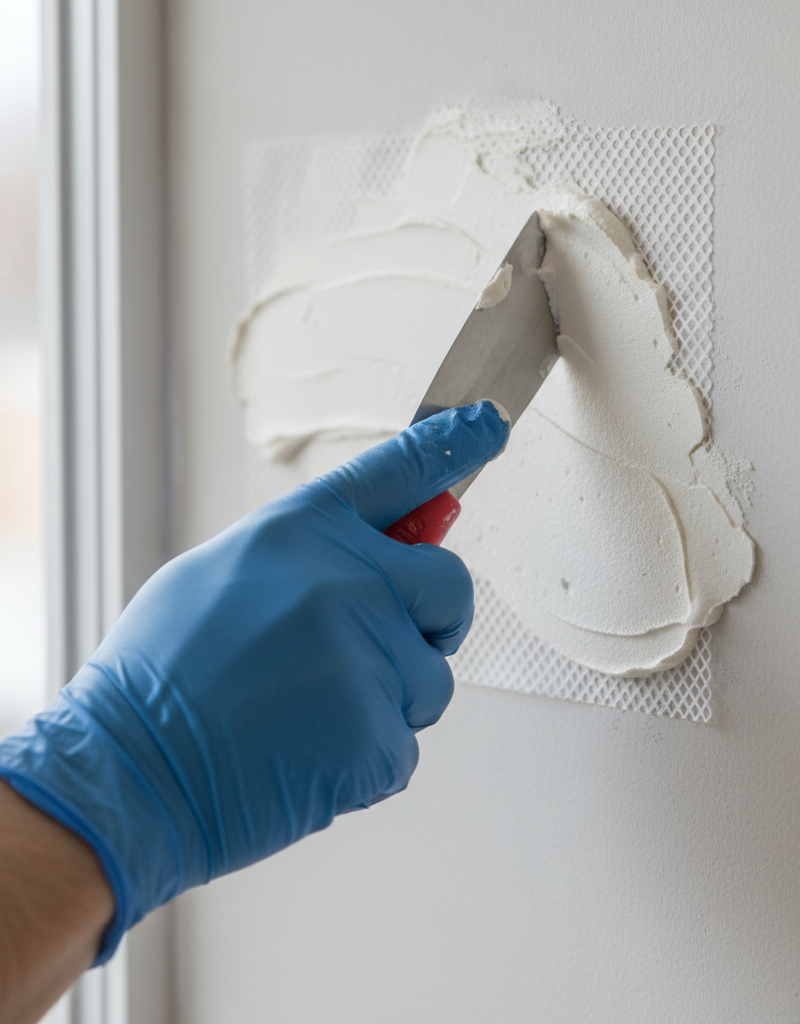
3. Apply the First Coat of Joint Compound — Embed the mesh and fill the hole with a thin layer of mud.
- Using a 6-inch drywall knife, scoop a small amount of all-purpose joint compound. Apply a thin, even coat directly over the mesh patch, working from the center outwards.
- Press down firmly enough to force the compound through the mesh, effectively embedding it. The goal is to fill the hole and slightly cover the mesh, creating a smooth, flat surface. Avoid thick application; thinner coats dry faster and are easier to sand.
4. Allow to Dry and Lightly Sand — Wait for the first coat to completely harden.
- Allow the first coat of joint compound to dry thoroughly. This can take 2-4 hours, depending on humidity and compound thickness. The compound should change from a wet gray to a uniform off-white color.
- Once dry, use 120-grit sandpaper or a sanding sponge to lightly sand down any high spots or ridges. Dust lightly with a damp cloth.
- Safety Note: Always wear a dust mask when sanding drywall compound to avoid inhaling fine dust particles.
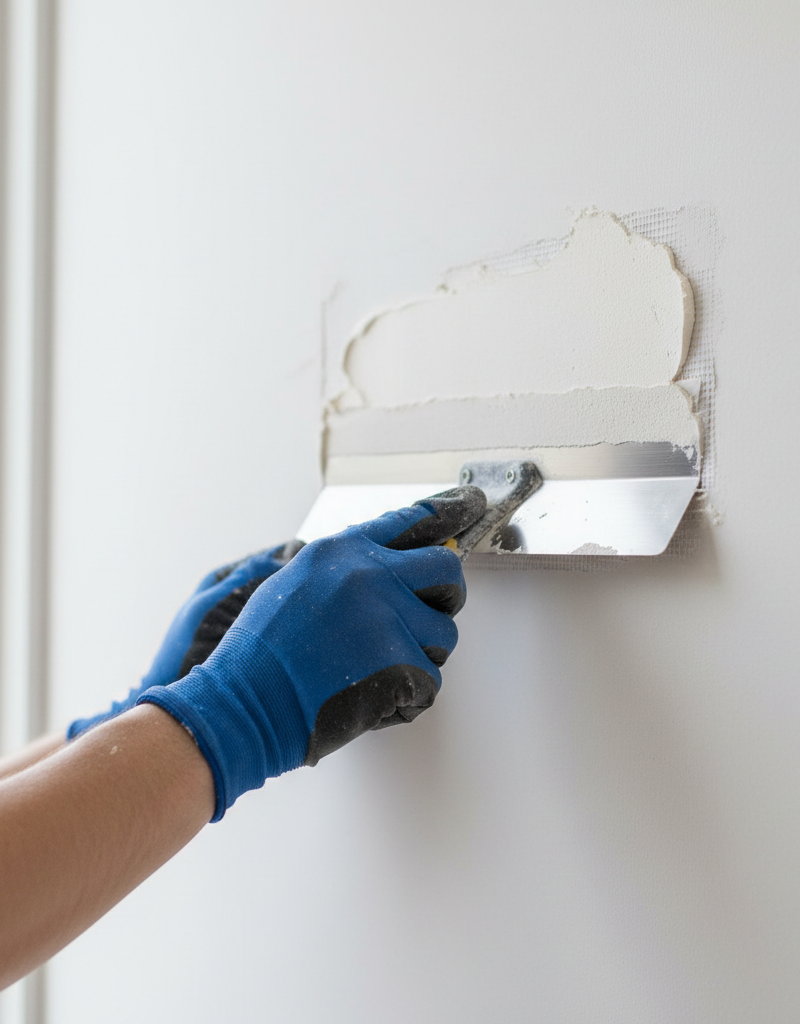
5. Apply the Second Coat of Joint Compound — Feather the edges to blend the repair.
- Using a 10-inch drywall knife, apply a second, slightly wider coat of joint compound over the first. This time, feather the edges by applying less pressure on the outer edges of the knife, allowing the compound to thin out gradually into the surrounding wall.
- Extend this coat about 2-3 inches beyond the first coat's edges. The goal is to smooth out the transition between the patch and the existing wall, making it less noticeable.
6. Allow to Dry and Sand Smooth — Ensure the second coat is fully dry before final sanding.
- Let the second coat dry completely (another 2-4 hours). Again, it should be uniform in color.
- Using 150-grit or 220-grit sandpaper, gently sand the entire patched area until it feels perfectly smooth to the touch. Use a circular motion for best results.
- Wipe away all dust with a damp cloth. Run your hand over the repair to feel for any imperfections; if you find any, apply a very thin third coat and re-sand once dry.
7. Prime the Repaired Area — Prepare the patch for paint adhesion.
- Apply a thin coat of drywall primer (PVA primer is ideal) over the entire patched area using a small brush or roller. Extend the primer slightly beyond the repair onto the surrounding wall.
- Primer helps seal the porous joint compound, preventing 'flashing' (where the paint looks different over the patch due to varying absorption). Allow the primer to dry according to the manufacturer's instructions, typically 1–2 hours.
8. Paint the Wall — Blend the repair seamlessly with the existing wall.
- Once the primer is dry, apply two coats of your wall paint, allowing adequate drying time between coats. Use the same paint and application method (roller, brush) as the existing wall to ensure a consistent finish.
- Feather the paint slightly beyond the patched area to blend it into the surrounding wall.
Common Causes
- Doorknob Damage: Doorknobs repeatedly hitting a wall without a doorstop can create circular indentations or holes.
- Picture Frame or Mirror Hanging: Incorrectly installed anchors, heavy items pulling away from the wall, or simply removing old picture nails can leave small holes.
- Furniture Impacts: Moving furniture can sometimes result in accidental bumps or scrapes that perforate the drywall surface.
- Screw or Nail Pops: Often seen in newer homes, these occur when screws or nails securing the drywall to studs begin to pull away slightly, creating a small bulge and sometimes a hole in the surface.
- Minor Accidents: Toys, tools, or other household items can accidentally ding or puncture the wall.
Common Mistakes
- Applying too much compound at once: Thick layers take forever to dry and are much harder to sand smooth, often leading to an uneven finish. Apply thin, buildable coats.
- Not sanding between coats: Skipping sanding creates an uneven surface that will show through the final paint. Light sanding removes imperfections and helps subsequent coats adhere better.
- Not feathering the edges: Failing to extend and thin out the joint compound at the edges of the patch will leave a noticeable hump or ridge on the wall. Always feather the edges gently.
- Using the wrong size patch: A patch that is too small won't provide adequate coverage or stability, while one too large creates unnecessary work. Ensure the patch extends at least an inch beyond the hole.
- Forgetting to prime: Skipping primer can lead to an inconsistent paint finish (flashing) because the porous joint compound absorbs paint differently than the surrounding drywall. Primer ensures an even base.
- Not cleaning the area: Dust, grease, or loose debris can prevent the patch and joint compound from adhering properly, leading to a weak or visible repair.
Cost & Time Breakdown
| Task | DIY Cost | Pro Cost | Time |
|---|---|---|---|
| Materials (patch, compound) | $10–$25 | N/A | N/A |
| Prep & Patch Application | $0 | Included | 10–15 minutes |
| 1st Compound Coat & Dry Time | $0 | Included | 3–5 hours |
| 2nd Compound Coat & Dry Time | $0 | Included | 3–5 hours |
| Sanding | $0 | Included | 15–20 minutes |
| Priming & Painting | $0 | Included | 2–4 hours |
| Total | $10–$25 | $75–$150 | 8–15 hours |
Pro costs include labor for patch and paint, assuming a small area. Time estimates include drying times for compound and paint.
Tips & Prevention
- Install Door Stops: Prevent doorknob damage by installing wall-mounted or hinge-pin door stops. They're inexpensive and highly effective.
- Use Proper Anchors: When hanging pictures or shelves, always use appropriate drywall anchors for the weight of the item. Avoid relying solely on nails for heavier decor.
- Move Furniture Carefully: When rearranging or moving furniture, plan your route and consider using furniture sliders to prevent accidental wall impacts.
- Address Nail Pops Early: If you notice a screw or nail pop, address it promptly. Often, driving a new screw a few inches above or below the old one into the stud can re-secure the drywall, followed by a small patch.
- Keep Spare Paint: Hold onto leftover wall paint from previous projects. This makes touch-ups and patch blending much easier and ensures color consistency.
- Regular Inspections: Periodically inspect high-traffic areas or areas behind doors for minor damage and address it before it becomes a larger issue.
When to Call a Professional
While small drywall repairs are excellent DIY projects, there are instances when calling a professional is wise. If the hole is larger than 4-6 inches in diameter, particularly if it extends through to the stud cavity, a professional drywaller can ensure a structurally sound and cosmetically invisible repair. Similarly, if you notice multiple large cracks or widespread damage, it might indicate a more significant underlying issue like foundation settlement or water damage, which requires a professional assessment. If the damage is in a visible, high-traffic area and you're not confident in achieving a perfectly smooth, seamless finish, a pro can guarantee a flawless result that blends perfectly with the existing wall texture and paint. This is especially true for textured walls, where matching the existing texture can be challenging for a novice.
Related Articles
Keep troubleshooting with these hand-picked guides from FixlyGuide:
- The 4-Inch Drywall Hole Fix: Why Spackle Alone Always Fails — Fix a small drywall hole (up to 4 inches) properly with a simple patch kit and avoid common mistakes that lead to visible repairs.
- The 1 Common Mistake That Makes Drywall Patches Obvious (And How to Fix It) — Learn the common pitfall in drywall repair that leaves unsightly patches and how to achieve a seamless, invisible fix every time.
- The 7 Critical Mistakes Almost Everyone Makes When Painting a Room — Unlock the secrets to a flawless, professional-looking paint job by avoiding common pitfalls and mastering essential techniques for perfect…
- The 1 Common Drywall Patching Mistake (and The Right Way to Fix a Hole) — Discover the biggest mistake homeowners make when patching drywall holes and learn the correct, long-lasting method for seamless repairs.
- The #1 Mistake Homeowners Make Installing Floating Shelves (and How to Fix It) — Discover the crucial error many DIYers make when mounting floating shelves into drywall and learn the simple steps to ensure a secure, sag-…
- The #1 Mistake Homeowners Make After Finding Missing Shingles (And How to Fix It Right) — Discover the crucial steps to take after a storm rips shingles from your roof, ensuring a proper, lasting repair and preventing costly futu…
Frequently asked questions
How big of a hole can you patch without cutting drywall?+
You can effectively patch holes up to 4-6 inches in diameter using a self-adhesive mesh patch or a California patch method without needing to cut out and replace a large section of drywall. For larger holes, or those near electrical boxes or studs, more involved techniques or professional help may be needed.
What is the easiest way to patch a small hole in drywall?+
The easiest way to patch a small hole (under 4 inches) is by using a self-adhesive fiberglass mesh patch and all-purpose joint compound. This method eliminates the need for backing boards and screws, streamlining the repair process.
Do I need to prime before painting a drywall patch?+
Yes, it is highly recommended to prime a drywall patch before painting. Joint compound is very porous and will absorb paint differently than the surrounding drywall, leading to 'flashing' (visible differences in sheen or color) if not primed first. A good quality PVA primer will seal the patch and ensure an even paint finish.
How long does joint compound take to dry?+
The drying time for joint compound depends on the thickness of the application, humidity, and temperature. Thin coats typically dry within 2-4 hours, while thicker coats can take 12-24 hours or longer. Always ensure each coat is completely dry and has changed to an off-white color before sanding or applying the next layer.
Discussion
Loading comments…