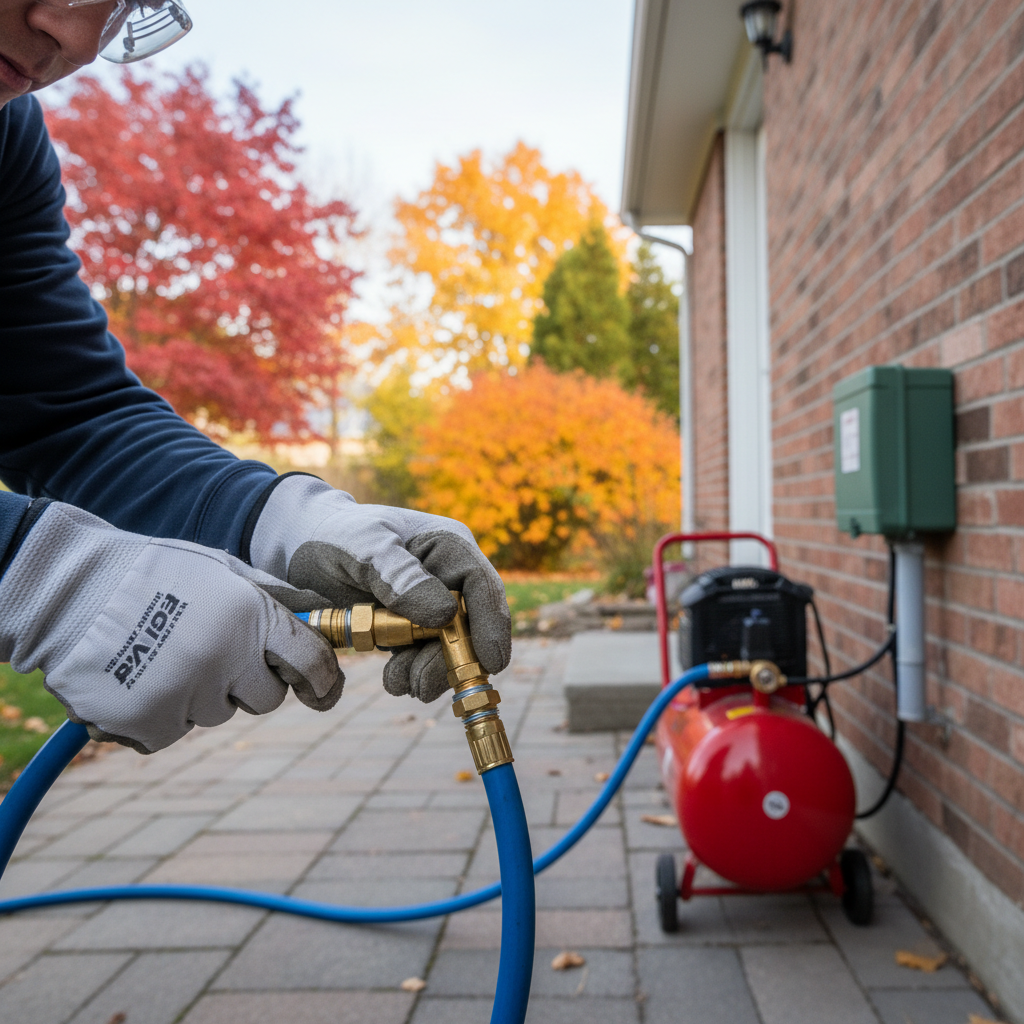
Tools & materials you'll need
Affiliate linksAs an Amazon Associate FixlyGuide earns from qualifying purchases — at no extra cost to you. Prices and availability are accurate as of publication and subject to change.
Quick Answer
The most common and costly mistake in sprinkler winterization is failing to completely remove all water from the lines, often by not using an air compressor or by using one improperly. This leads to residual water freezing, expanding, and cracking pipes, sprinkler heads, and valves. Proper winterization requires using an air compressor to blow out the system zone by zone, ensuring every drop is expelled before freezing temperatures arrive.
The Problem
As temperatures drop, any water remaining in your underground sprinkler system automatically becomes a ticking time bomb. Even a small amount of residual water can expand when it freezes, exerting immense pressure on PVC pipes, solenoid valves, and delicate sprinkler heads. This expansion can cause pipes to crack lengthwise, fittings to burst, and valve bodies to split, even shattering the internal mechanisms of sprinkler heads. The damage, often hidden underground or within valve boxes, isn't apparent until spring when you try to reactivate your system, only to find yourself with geysers, constant leaks, and dysfunctional zones. Repairing a freeze-damaged sprinkler system can quickly escalate into a project costing hundreds or even thousands of dollars, involving extensive digging, pipe replacement, and troubleshooting. The good news is that this entirely preventable disaster can be avoided with a thorough, albeit often misunderstood, winterization process.
How It Works
An automatic irrigation system operates by pushing pressurized water through a network of pipes to individual sprinkler heads. Water enters the system from your main water supply, typically through a backflow preventer (essential for preventing irrigation water from contaminating your potable supply). From there, it's routed through a series of solenoid valves, each controlling a specific 'zone' or area of your yard. When a valve opens, water flows into that zone's lateral lines, reaching the sprinkler heads, which then distribute water over your lawn or garden.
When winterizing, the goal is to remove all this water. Simply turning off the main water supply and opening drain valves (if your system has them) is usually insufficient. Gravity alone cannot drain all the water from the dips, low spots, and upward sloping sections of your horizontal pipe runs. Furthermore, many systems, especially those installed in recent decades, are 'head-to-head' or 'loop' designs that actively trap water. This is where compressed air comes in. By introducing a controlled blast of high-volume, low-pressure air into the system, you force all the remaining water out of the pipes, through the open sprinkler heads, and onto the surface. The air acts like a piston, pushing the water out of every nook and cranny, ensuring that when the cold arrives, there's nothing left to freeze and expand. Understanding this hydraulic principle is key to a successful, damage-free winterization.
Step-by-Step Fix
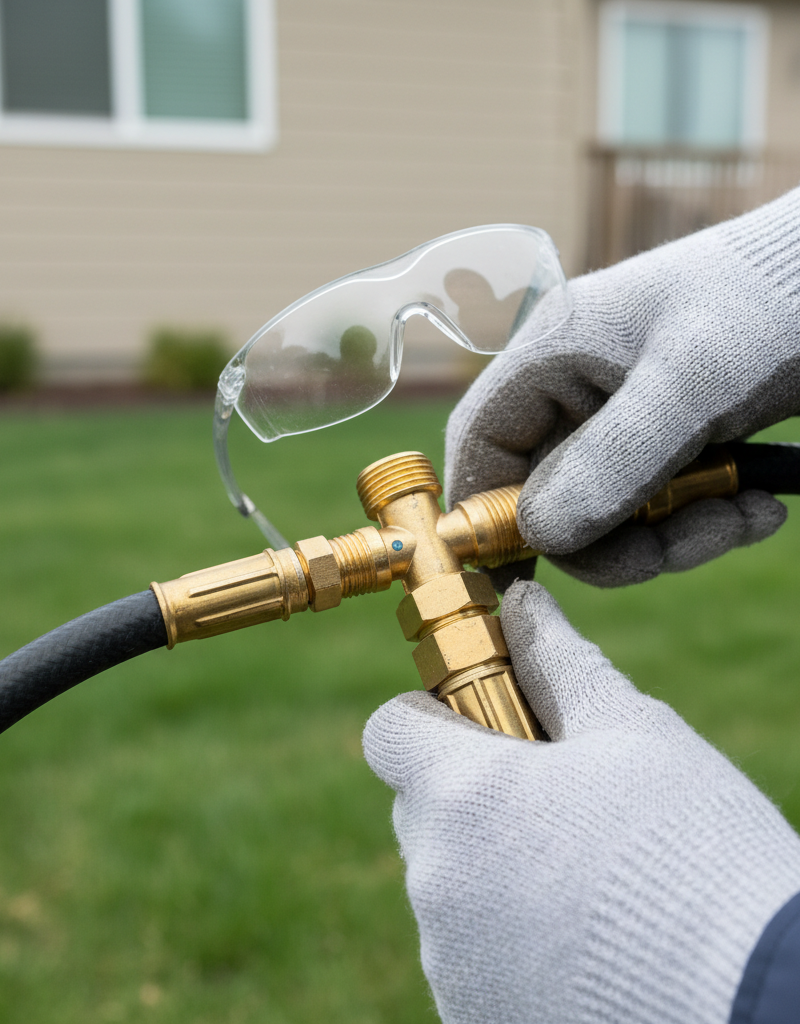
Safety First — Always wear eye protection when working with compressed air and never stand directly over an active sprinkler head during blowout. Air pressure, even at safe levels, can propel dirt or debris.
1. Shut Off Water Supply — Locate your main sprinkler shut-off valve, typically near your water meter or where the irrigation line branches off your main house supply. Turn it off completely to stop water flow into the system. If you have a backflow preventer, close its upstream and downstream shut-off valves.
2. Drain Backflow Preventer — If your system has a backflow preventer (e.g., a PVB or RPZ), open the test cocks or bleed valves. Allow all water to drain out. Angle the test cocks to a 45-degree position for optimal drainage. Some backflow preventers have a main drain plug; remove it. You can also cover the backflow with insulation or a specialized cover after drainage to protect it from extreme cold.
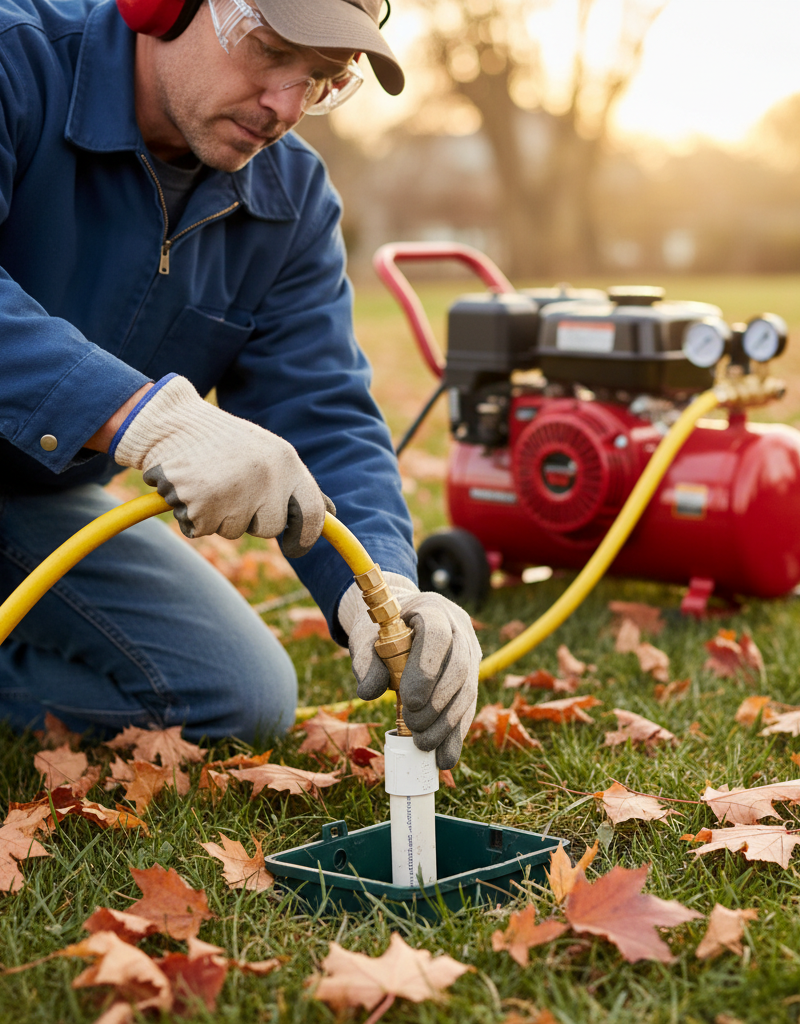
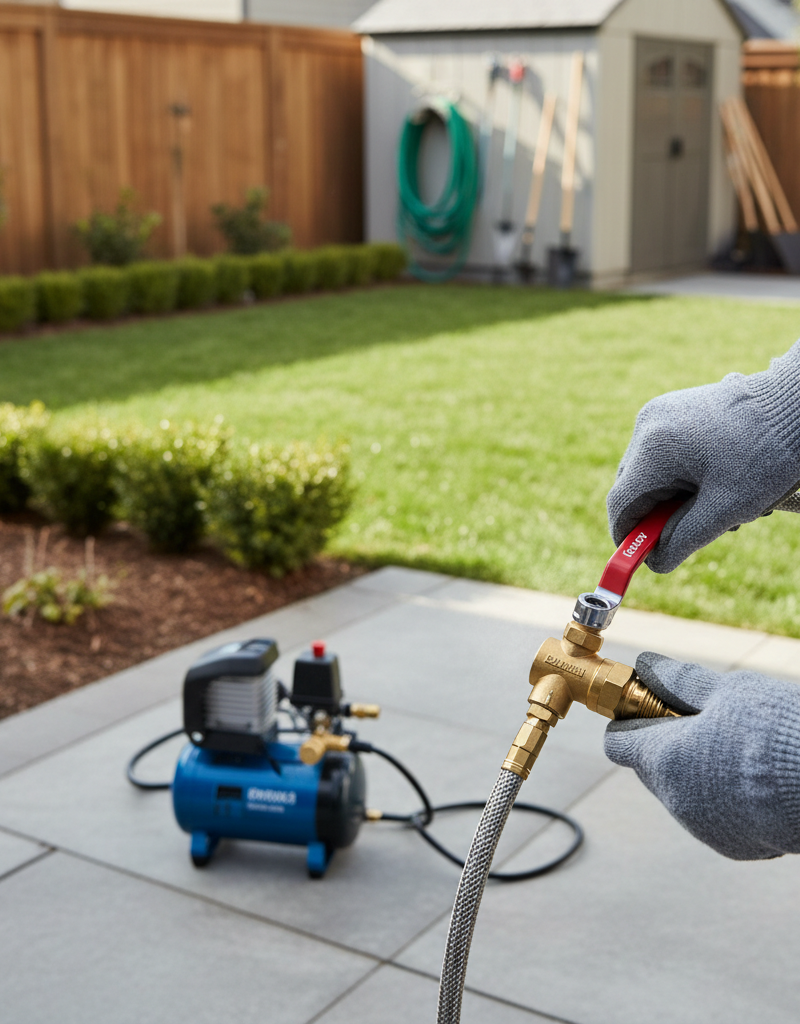
3. Connect Air Compressor — Find the 'blowout port' or 'winterization port' on your system. This is usually a threaded cap or valve near your backflow preventer or main shut-off valve. It's often a 3/4-inch or 1-inch male threaded connection. Attach your air compressor's hose adapter here. Ensure a tight, leak-free connection. Use plumbers tape if necessary for a better seal. Set your compressor to a maximum of 50 PSI for PVC systems and 80 PSI for polyethylene (black flexible pipe) systems. Lower PSI is always safer to avoid pipe damage.
4. Isolate Zones at Controller — Go to your sprinkler system's control panel. Manually activate only one zone at a time. Starting with the farthest zone from your compressor connection can sometimes be more efficient, but the order isn't as critical as ensuring high air volume for each zone.
5. Blow Out the First Zone — Gradually open the compressor's air valve, allowing air to flow into the activated zone. You'll see water spraying from the sprinkler heads in that zone, followed by a mist. Allow the air to run until only mist or air is coming out of all heads in that zone, indicating most water is expelled. Do not run the compressor for more than 1-2 minutes continuously per zone to avoid overheating or damaging plastic components from friction. If heads are still spitting water, close the air valve, wait a minute, and repeat the blowout.
6. Repeat for All Zones — Once the first zone is clear, close the compressor's air valve. Deactivate the completed zone on your controller and activate the next zone. Repeat the blowout process until all zones have been cleared of water. Periodically check your compressor's tank pressure and allow it to build back up if it drops too low for effective clearing.
7. Address Residual Water (Rotor Heads & Drip) — For rotor-style sprinkler heads, you may need to gently pull up the riser on each head to help drain any water trapped in the body. For drip irrigation zones, ensure the air runs long enough to clear the thinner drip lines and emitters. Often, the end caps of drip lines can be opened to assist with drainage during the blowout.
8. Disconnect and Depressurize — Once all zones are clear and the compressor is off, slowly and carefully disconnect the air compressor from the blowout port. There may be some residual air pressure; stand clear. Also, open any drain valves again on the backflow preventer or other parts of the system to release any final pressure. Leave all backflow test cocks and drain valves open/half-open for the winter.
9. Turn Off Controller — Go back to your sprinkler controller and turn it to the 'OFF' or 'RAIN' setting to prevent it from cycling on during the winter. You can also unplug it if you wish.
10. Insulate Exposed Components — Consider wrapping any exposed pipes, backflow preventers, or manifold assemblies with insulation sleeves or old towels secured with electrical tape. This offers an extra layer of protection against frost damage, especially in regions with extreme cold snaps.
Common Causes
There's only one
Related Articles
Keep troubleshooting with these hand-picked guides from FixlyGuide:
- The #1 Sprinkler Winterizing Mistake That Leads to $1,000s in Damage — Discover the crucial mistake homeowners make when winterizing sprinkler systems and how to avoid costly freeze damage with a simple, effect…
- The #1 Sprinkler Winterizing Mistake That Leads to $1,000s in Damage — Learn how to properly winterize your sprinkler system and avoid costly damage from freezing temperatures with this comprehensive guide.
- The #1 Sprinkler Winterization Mistake That Leads to $1,000s in Damage — Learn the critical step most homeowners miss when winterizing their sprinkler system to avoid costly freeze damage and burst pipes.
- The #1 Mistake Homeowners Make Winterizing Sprinklers (And How to Avoid Burst Pipes) — Discover the crucial mistake homeowners make when winterizing sprinkler systems and learn the correct way to prevent costly burst pipes thi…
- The #1 Mowing Mistake That Leaves Your Lawn Brown and Patchy — Discover the most common mowing mistake homeowners make that leads to unhealthy, patchy grass and how to fix it for a vibrant lawn.
- The #1 Mistake Homeowners Make with a Slow Kitchen Drain (and the Real Fix) — Before you reach for harsh chemicals, learn the right way to fix a slow kitchen sink drain and prevent future clogs.
Frequently asked questions
How much pressure should I use to blow out my sprinkler system?+
For most residential sprinkler systems with PVC pipes, use an air compressor set to a maximum of 50 PSI (pounds per square inch). If your system uses polyethylene (black flexible pipe), you can go up to 80 PSI. It's crucial not to exceed these limits, as excessive pressure can damage pipes, valves, and sprinkler heads. Always start with lower pressure and gradually increase if needed to clear water.
What happens if I don't properly winterize my sprinkler system?+
If you don't properly winterize your sprinkler system and water remains in the pipes, valves, and heads, that water will freeze and expand when temperatures drop below 32°F (0°C). This expansion will cause pipes to crack, fittings to burst, and valve bodies to split. You won't notice the damage until spring, when you try to turn the system back on, leading to significant leaks, water waste, and costly repairs.
Can I winterize my sprinkler system without an air compressor?+
Some very basic sprinkler systems that are gravity-drained and designed with drain valves at all low points *might* be winterized without an air compressor. However, for most modern residential systems, especially those with backflow preventers, multiple zones, or complex piping layouts, an air compressor is essential to ensure all water is expelled. Relying solely on manual drains often leaves residual water, risking freeze damage.
How long should I blow air into each zone?+
Blow air into each zone until only mist or air emerges from all the sprinkler heads in that zone. This typically takes 1-2 minutes for residential zones, depending on the zone size, pipe length, and compressor volume. Avoid running the compressor for more than 2 minutes continuously per zone to prevent excessive heat buildup which can damage plastic components. If water is still spitting, pause, let the compressor rebuild pressure, and repeat briefly.
What if I can't find my sprinkler system's blowout port?+
The blowout port is usually a brass or PVC fitting with a cap, located near your backflow preventer or main irrigation isolation valve. It's designed for an air compressor connection. If you cannot locate it, consult your system's installation diagram or the original installer. If one doesn't exist, a professional can install one, or you may need a specialized connection at the backflow preventer's test cocks, which is best left to an experienced professional.
Discussion
Loading comments…