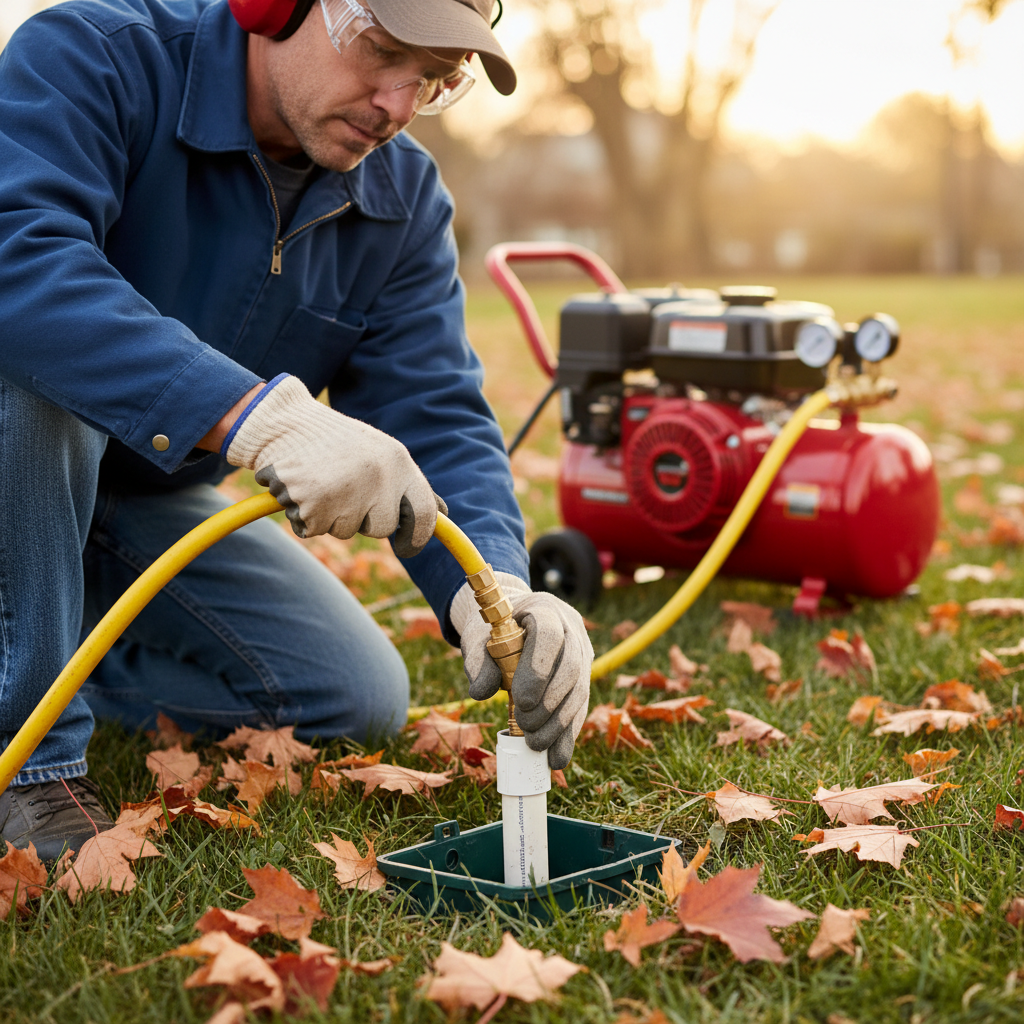
Tools & materials you'll need
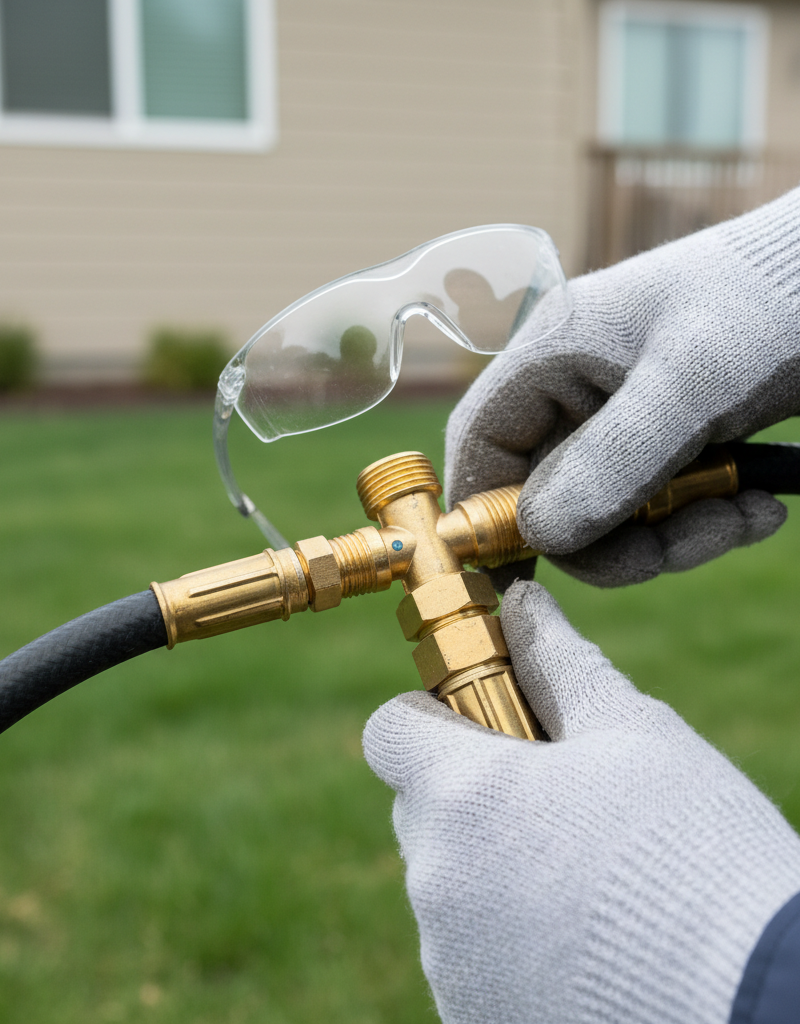
Affiliate links- AmazonCompressor connection kit/adapterSpecific to your irrigation system's blow-out port
As an Amazon Associate FixlyGuide earns from qualifying purchases — at no extra cost to you. Prices and availability are accurate as of publication and subject to change.
Quick Answer
The most common mistake homeowners make when winterizing their sprinkler system is not completely removing all water from the lines, especially the backflow preventer. This oversight can lead to frozen pipes, cracked sprinkler heads, and extensive damage when temperatures drop below freezing, costing hundreds or even thousands to repair. Proper blow-out with an air compressor is essential for complete drainage.
The Problem
As temperatures plummet, residual water left in your underground sprinkler system expands when it freezes, exerting immense pressure on pipes, valves, and sprinkler heads. This pressure inevitably leads to cracks, bursts, and costly repairs come spring. Many homeowners believe simply draining the main line is enough, but hidden pockets of water, particularly within the backflow preventer and low spots in the irrigation lines, are often overlooked. The backflow preventer, a crucial device protecting your drinking water from contamination, is especially vulnerable due to its intricate internal components and often above-ground installation. Failure to properly winterize means facing unexpected expenses and the frustrating task of repairing or replacing components right when you want your yard ready for spring.
How It Works
An irrigation system typically consists of a main supply line connected to your home's water, a backflow preventer, a master valve (or sometimes individual zone valves acting as masters), various zone valves, and a network of underground pipes leading to sprinkler heads. Water enters the system under pressure, passes through the backflow preventer to prevent cross-contamination, and is then directed to different zones by their respective valves. When a zone valve opens, water flows through the lateral lines and exits through the sprinkler heads.
During winterization, the goal is to evacuate all this water. Simply turning off the main supply and opening a drain valve might remove most water from the primary lines, but capillary action and gravity will inevitably leave water in low points, horizontal sections, and within the many small chambers of the backflow preventer. The blow-out method uses an air compressor to force pressurized air through the system, pushing all remaining water out of the lines and sprinkler heads. This process relies on creating enough air pressure (but not too much to damage components) to overcome the resistance of water and gravity, ensuring lines are completely dry before freezing temperatures arrive. The critical part is understanding that air, unlike water, compresses. As air pushes through the lines, it will expand into any open space, effectively chasing out water that would otherwise remain stagnant.
Step-by-Step Fix
Safety First – Always use appropriate personal protective equipment, including safety glasses and hearing protection, when operating an air compressor. Ensure your compressor is in good working order and relief valves are functioning correctly. Never exceed the recommended pressure for your irrigation system.
1. Shut Down the Water Supply — Cut off the main water source to your sprinkler system.
Locate the main shut-off valve for your irrigation system, usually near your main water meter or where the irrigation line branches off from your home's water supply. Turn it completely off. If your system has a dedicated pump from a well or pond, turn off its power supply.
2. Drain the Backflow Preventer — Evacuate water from this critical device.
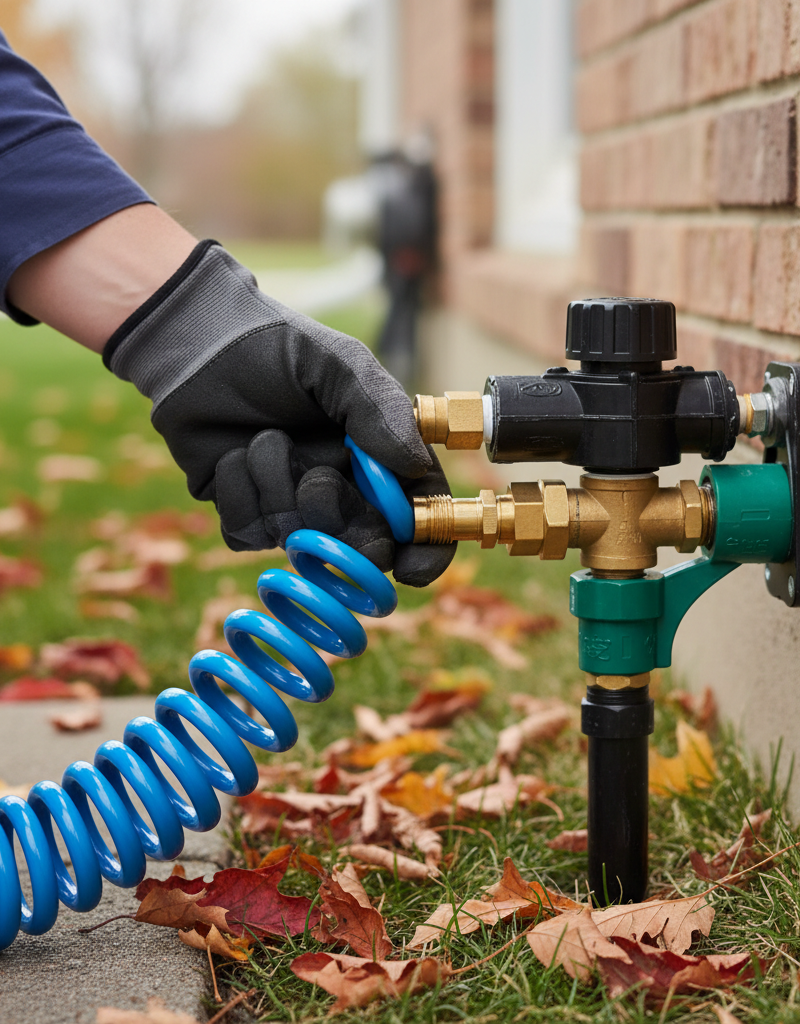
- For PVB (Pressure Vacuum Breaker) or RPZ (Reduced Pressure Zone) devices: Locate the test cocks (small valves, often brass, with slotted screws) on the backflow preventer. Using a flathead screwdriver, open the lower test cock first, then the upper one, allowing water to drain out. Angle the main shut-off valves on either side of the backflow preventer to a 45-degree position (or fully open/closed, depending on the manufacturer's recommendation for winter storage) This helps ensure water doesn't pool inside the main body. Some backflow preventers (especially older ones) have a small drain plug at the bottom – remove this if present.
- If water doesn't drain immediately: The backflow might be partially clogged or the main supply valve wasn't fully closed. Double-check your main shut-off.
3. Connect the Air Compressor — Prepare for the blow-out procedure.
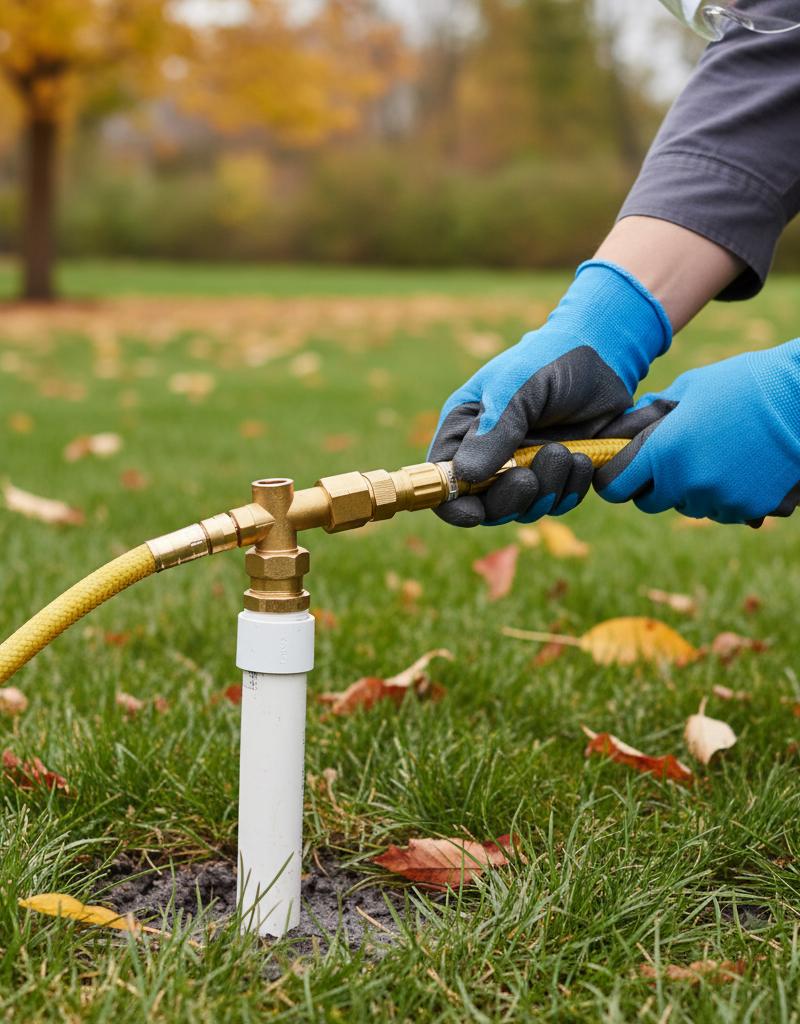
Locate the compressor connection point on your irrigation system. This is typically a dedicated blow-out port, a threaded cap near the backflow preventer, or a drain valve. Attach your air compressor hose connection kit here. Ensure a snug, leak-free connection. Set your compressor's pressure regulator to no more than 50 PSI for PVC systems and 80 PSI for polyethylene (black flexible pipe) systems. Exceeding these pressures can severely damage your irrigation pipes and components. * Tools: Air compressor (6 CFM or higher), air hose, compressor connection kit (often an adapter and quick-connect fitting). * Safety: Wear safety glasses and hearing protection.
4. Open the Furthest Zone Valve — Start clearing lines from the point furthest away.
Go to your irrigation controller and manually activate the zone valve that is geographically the furthest from your compressor connection point. This ensures you're pushing water the entire length of the system. Let the compressor build pressure.
5. Blow Out Each Zone Systematically — Force water out of every sprinkler head.
With the furthest zone active, slowly open the main valve from your compressor connection, allowing air to gradually enter the system. Watch as water and mist escape from the sprinkler heads in that zone. Continue blowing air until only mist or clear air comes out. This usually takes 2-3 minutes per zone, but vary depending on the zone's size. Once clear, close the active zone on your controller and move to the next furthest zone. Repeat this process for every single zone in your system. * Do not exceed recommended air pressure. If a zone isn't clearing, it's more likely a pressure or volume issue with your compressor, not a reason to increase PSI. * If a sprinkler head isn't popping up: This might indicate a blockage or a broken head. Be extra diligent blowing out this line, as residual water will definitely freeze.
6. Re-Check Backflow Preventer (Optional but Recommended) — Ensure no water was reintroduced.
After blowing out all zones, quickly re-check the backflow preventer for any pooling water or moisture. The goal is completely dry. If you see any, briefly open the low point drain/test cocks again for a few seconds.
7. Power Off the Controller — Prevent accidental activation.
Turn off your irrigation controller completely. This prevents the system from accidentally turning on during winter, which could cause immediate freezing and damage if water were to be reintroduced.
Common Causes
The primary cause of winter sprinkler damage is incomplete drainage. This isn't just about turning off the water; it's about actively expelling every last drop. Specific causes for incomplete drainage include:
- Overlooking the Backflow Preventer: This is the single most vulnerable component. Its internal check valves and chambers easily trap water if not systematically drained and aligned for winter storage. These are often above ground, exposing them to colder ambient temperatures.
- Insufficient Air Compressor Volume (CFM): Many DIYers use small shop compressors with low CFM (Cubic Feet per Minute). While they can produce high PSI, they lack the volume to effectively push all water out of long, wide irrigation lines quickly. This results in air bypassing water rather than pushing it all. A minimum of 6 CFM is recommended for most residential systems.
- Excessive Air Pressure: While counter-intuitive, too much pressure can damage seals, fittings, and even crack pipes without effectively removing water. The goal is sufficient pressure and volume to clear, not blast. High pressure can cause air to
Related Articles
Keep troubleshooting with these hand-picked guides from FixlyGuide:
- The #1 Sprinkler Winterizing Mistake That Leads to $1,000s in Damage — Discover the crucial mistake homeowners make when winterizing sprinkler systems and how to avoid costly freeze damage with a simple, effect…
- The #1 Sprinkler Winterizing Mistake That Leads to $1,000s in Damage — Learn how to properly winterize your sprinkler system and avoid costly damage from freezing temperatures with this comprehensive guide.
- The #1 Mistake Homeowners Make Winterizing Sprinklers (And How to Avoid Burst Pipes) — Discover the crucial mistake homeowners make when winterizing sprinkler systems and learn the correct way to prevent costly burst pipes thi…
- The #1 Mistake Killing Your Lawn's Thickness (and How to Fix It for $50) — Overseeding can transform a thin, patchy lawn into a lush, vibrant carpet, but many homeowners miss a critical step, hindering success.
- Is Your Drip System Failing? The #1 Overlooked Cause of Uneven Watering — Uneven watering in drip irrigation is often caused by clogged emitters, but the real secret to a healthy system lies in proper pressure reg…
- The Secret to Lush Raised Beds? It's Not Just About How You Water — Smart irrigation for raised garden beds isn't just about automation; it's about delivering the right amount of water precisely when your pl…
Frequently asked questions
How much PSI do I need to blow out my sprinkler system?+
For safety and effectiveness, use no more than 50 PSI for PVC irrigation systems and 80 PSI for polyethylene (flexible black pipe) systems. Most residential systems can be effectively cleared with a compressor that provides at least 6-10 CFM (Cubic Feet per Minute) at these pressures. Using too much pressure can damage your system.
Can I winterize my sprinkler system without an air compressor?+
While some basic 'drain and leave' systems exist in very mild climates, most modern irrigation systems, especially those with backflow preventers or in areas subject to hard freezes, require an air compressor for proper blow-out. Manual draining alone often leaves residual water that will freeze and cause damage. It's highly recommended to use a compressor or hire a professional.
What happens if I don't winterize my sprinkler system?+
If you don't properly winterize your sprinkler system before freezing temperatures, any water left in the pipes, valves, and sprinkler heads will freeze, expand, and likely burst or crack components. This can result in costly repairs, including replacing pipes, backflow preventers, and sprinkler heads, which can easily cost hundreds to thousands of dollars.
When should I winterize my sprinkler system?+
You should winterize your sprinkler system before the first hard freeze of the season in your area. This typically means when nighttime temperatures consistently drop below 32°F (0°C). It's better to do it a little early than to wait too long and risk unexpected cold snaps.
How long does it take to blow out a sprinkler system?+
The actual blow-out process, once set up, typically takes 2-3 minutes per zone. For most residential systems with 4-8 zones, the hands-on time for blowing out the system is usually 15-30 minutes, after accounting for setup and backflow draining.
Discussion
Loading comments…